Stanford Hosts Free Public Lecture Tonight on Gravitational Waves: KIPAC Scientist Explains How LIGO Detects Black Hole Collisions, In Person and Online
Stanford University, in Santa Clara County, California, will host a public science lecture tonight. The Kavli Institute for Particle Astrophysics and Cosmology (KIPAC) presents "Measuring the Impossible: How We Detected Gravitational Waves" today, October 27, from 7:00 to 8:00 p.m. PT, delivered by Dr. Alexandra Mitchell of Stanford/KIPAC. The lecture takes place in Room 111 of the Sapp Center for Science Teaching and Learning, 376 Lomita Dr, Stanford, CA 94305, and will be livestreamed on YouTube at the same time. The lecture is free and open to all, and is recommended for adults and students in 9th grade and above.
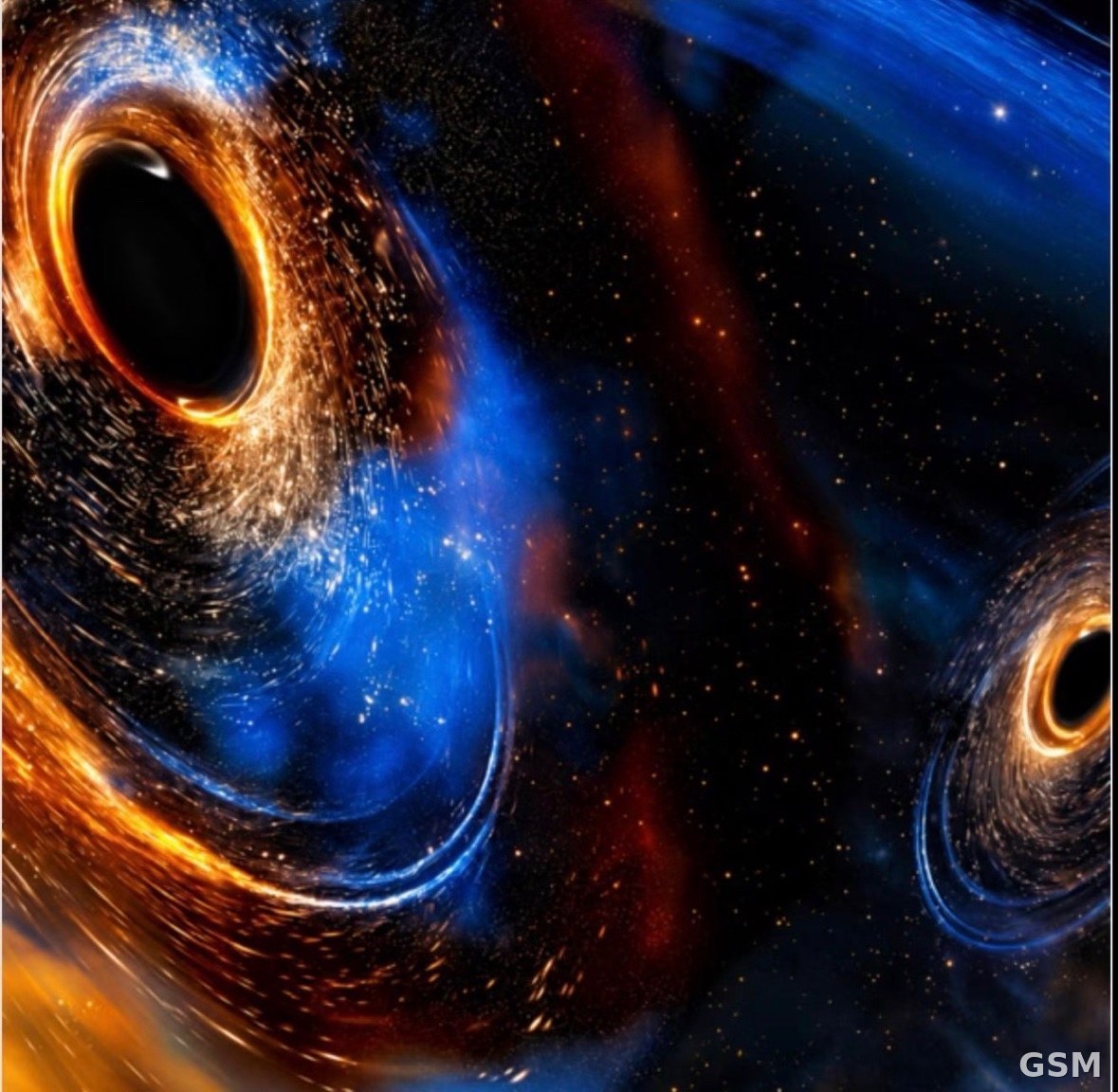
The talk begins with two black holes colliding over a billion light-years away: by the time the ripples in the fabric of spacetime reach Earth, their effect is so small that they would change light-years of distance by less than the width of a human hair. Einstein predicted gravitational waves as a consequence of general relativity, but detecting them required an instrument more sensitive than anything ever built — at that level of precision, ground motion, the thermal vibrations of the atoms making up the detector, and even the quantum nature of light all get in the way. Dr. Mitchell will explore how generations of scientists and engineers turned a measurement that once seemed impossible into one of the great experimental achievements of modern physics. She will also highlight some of LIGO's recent gravitational-wave discoveries, what they have revealed about our Universe, and how researchers are pushing these instruments even further.
How to attend: Doors open at 6:30 p.m. for the in-person audience, and free parking is available. Registration is through Eventbrite and is free of charge (the Eventbrite registration page lists tickets at 0 USD). Online attendees also register through Eventbrite; the YouTube livestream URL can be found at the bottom of the Eventbrite registration confirmation email. The registration link is available from the Stanford events page and the KIPAC website.
Source: GSM · USA (original Chinese edition)
Photo: 图:两个黑洞相互绕转、即将并合的艺术家概念图。双黑洞并合正是激光干涉引力波天文台(LIGO)捕捉引力波的典型来源,也是今晚斯坦福大学 KIPAC 讲座的主题。 / Artist's concept of two black holes spiraling toward a merger. Such mergers are a prime source of the gravitational waves LIGO detects, and the subject of tonight's Stanford KIPAC lecture.