Canada Unveils First National Security Strategy in More Than 20 Years, Putting Economic Security First
OTTAWA — Canadian Prime Minister Mark Carney unveiled "The Plan for a Stronger Canada: National Security for Canadians" on October 29, the country's first comprehensive national security strategy in more than 20 years and only the second in its history, the previous one being "Securing an Open Society," released by Paul Martin's government in 2004.
The new strategy puts economic security first among five lines of effort, the others being foreign policy, defence policy, public safety and intelligence. It identifies eight strategic sectors in which Canada intends to build its own capabilities: emerging technologies, critical minerals, defence, energy, transportation, pharmaceuticals and biotechnology, food security, and the financial system.
On the United States, the strategy describes Canada's approach as cooperative and clear-eyed, based on mutual respect, national sovereignty and shared responsibility for the security of North America, while also calling for diversified diplomatic, trade and defence relationships so that excessive dependence on a single partner does not leave Canada exposed. On defence spending, it restates Canada's path from about 2 percent of GDP in 2025-26 toward NATO's 5 percent defence investment commitment by 2035.
The government said five follow-on policies, on foreign policy, defence, public safety, economic security and intelligence, will be released in sequence under the framework, with the foreign policy expected first, and committed to renewing the national security strategy every four years. The release coincided with an EU-Canada summit in Montreal, at which Canada and the European Union also announced a Canada-EU Alliance for the Future.
(Source: Government of Canada)
Source: Government of Canada
Published by GSM · USA (original Chinese edition)
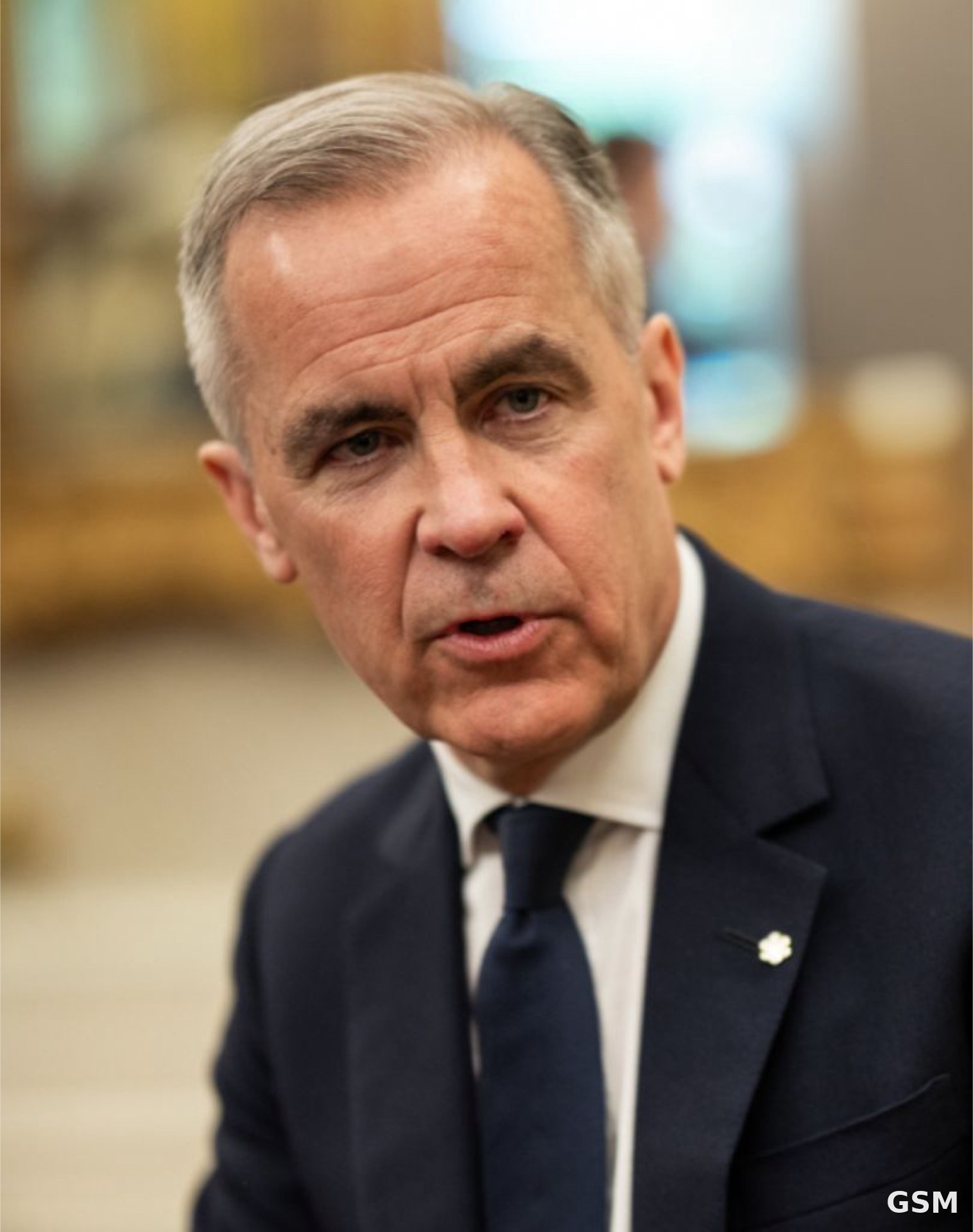
Photo: 图:加拿大总理马克·卡尼,2025年5月访问华盛顿白宫期间摄(资料图)。白宫官方照片,公共领域,经 Wikimedia Commons。 / Photo: Canadian Prime Minister Mark Carney during his visit to the White House in Washington in May 2025 (file photo). White House photo, public domain, via Wikimedia Commons.