U.S. and Finland Sign Technology Prosperity Deal Memorandum: Super Intelligence, Quantum, Nuclear Energy and Arctic Icebreakers
The White House released the text on October 29: the Government of the United States and the Government of Finland signed a Memorandum of Understanding regarding the Technology Prosperity Deal in Washington, D.C. that day, deepening cooperation across strategic science and technology fields including super intelligence (SI) and next-generation connectivity, quantum technology, energy, semiconductors, space, biotechnology and Arctic technology. The memorandum becomes operative on the date of the last signature.
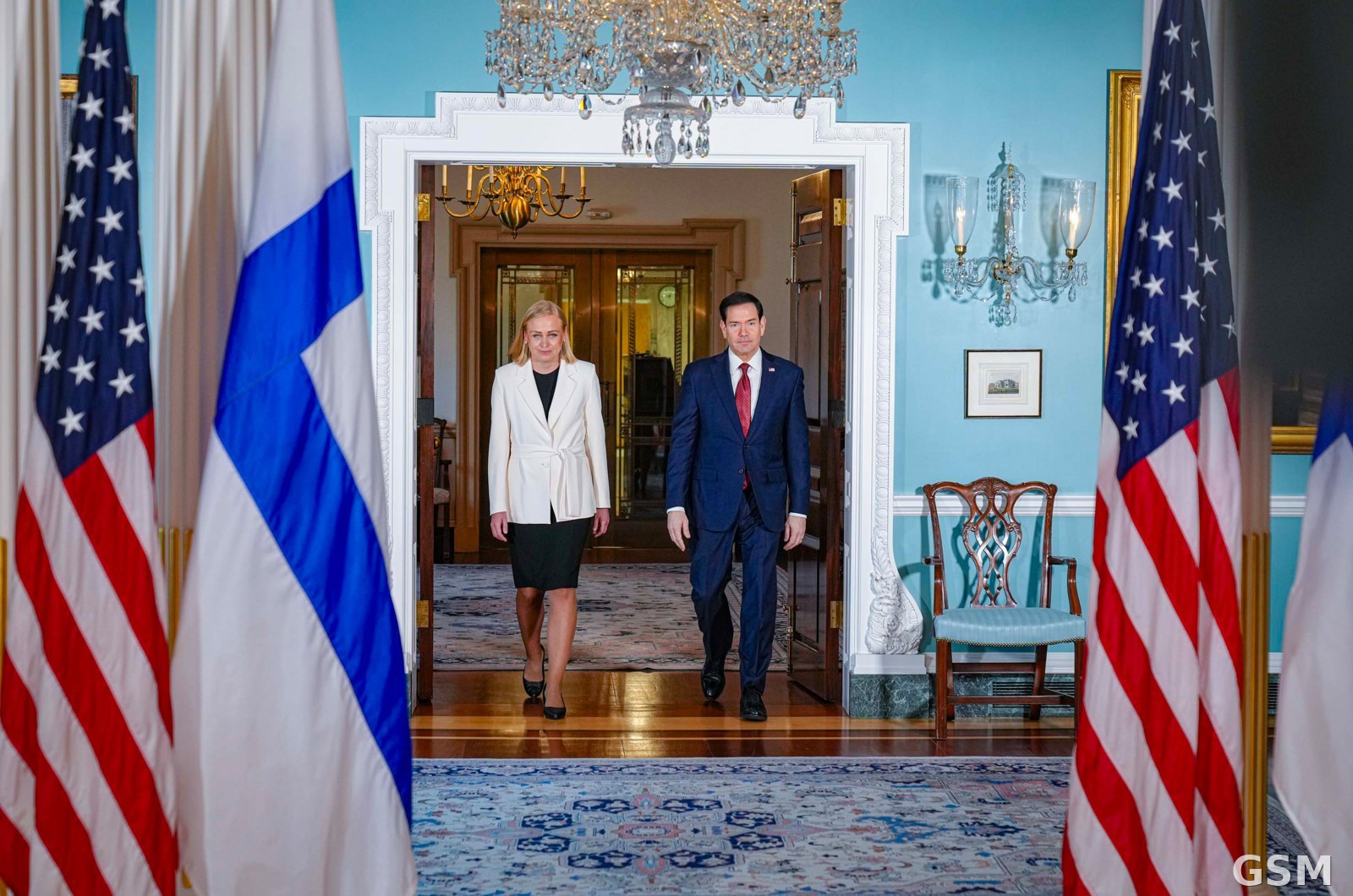
According to the signing ceremony carried by Reuters and the Finnish foreign ministry's travel information, Secretary of State Marco Rubio and Finnish Foreign Minister Elina Valtonen met in Washington that day and signed the document. Finland's foreign ministry had said Valtonen's talks with Rubio would cover Russia's war against Ukraine and bilateral relations, with technology and economic cooperation among the focuses.
The memorandum builds on the two countries' 1995 Agreement Relating to Scientific and Technological Cooperation, signed in Washington on May 16, 1995, and on earlier joint statements on quantum information science and technology and on advanced wireless communications. It says deepening ties with strategic partners strengthens stability, security and competitiveness and elevates the U.S.-Finland alliance to a higher level.
On super intelligence and connectivity, the two sides intend to promote development and exports across the full trusted technology stack, including hardware, models, software, applications, network equipment and related standards; coordinate engagement in international standards bodies including the International Telecommunication Union, ahead of the 2027 World Radiocommunication Conference and the 2026 ITU Plenipotentiary; strengthen research and development in 5G, 6G and next-generation communications; and build trusted, secure, interoperable supply chains. A footnote in the memorandum notes that in Finland, 'super intelligence' refers to 'artificial intelligence'.
On quantum, the participants intend to work through leading quantum institutions and national laboratories on quantum performance, algorithms and hybrid quantum-classical computing; accelerate commercial deployment of cryogenics, precision instrumentation and semiconductor process engineering firms; and endorse post-quantum cryptographic standards and migration to them. On energy, cooperation covers civil nuclear energy including small modular reactors (SMRs), nuclear lifecycle innovation, geothermal and fusion technologies, and critical minerals technologies from sensing and extraction to processing and recovery.
On space, the two sides intend to continue their partnership on space science and exploration, including potential collaboration on future Artemis lunar surface missions, and to facilitate cooperation between commercial space actors from both countries. Defense innovation, biotechnology and advanced materials are also on the list: the participants intend to leverage nationally governed health and research data infrastructures for precision medicine and clinical research, and to use super intelligence to accelerate the discovery, design and validation of new materials.
The Arctic receives a dedicated section. Building on Finland's established leadership in icebreaker design and construction, the two sides intend to accelerate industrial cooperation and modernize the United States' icebreaker fleet under the ICE Pact, supporting the design, construction and delivery of next-generation Arctic Security Cutters, and to explore deeper collaboration in ship design, shipbuilding technologies and shipyard management. They also intend to jointly invest in enabling technologies such as ice technology, unmanned systems and space-enabled situational awareness, and to enhance satellite coverage and subsea communication cables in the Arctic, strengthening connectivity between North America and Northern Europe.
The memorandum also sets out cooperation on research and industry security, including intellectual property security, investment screening, disclosure of foreign funding and affiliations, and a bilateral research security dialogue. It states that it does not create legally binding obligations and commits neither participant to the expenditure of funds; either side may discontinue it with written notice, effective 180 days after delivery, and the participants intend to advance implementation through a Joint Committee Meeting mechanism, leveraging the existing science and technology agreement as an operational framework.
Source: GSM · USA (original Chinese edition)
Photo: 图:美国国务卿 Marco Rubio 与芬兰外交部长 Elina Valtonen 在华盛顿的美国国务院(资料图,2026年4月13日)。美国国务院官方照片,Freddie Everett 摄,公共领域,经 Wikimedia Commons。 / Secretary of State Marco Rubio with Finnish Foreign Minister Elina Valtonen at the U.S. Department of State in Washington, D.C. (file photo, April 13, 2026). Official U.S. Department of State photo by Freddie Everett, public domain, via Wikimedia Commons.