FDA Approves Lucamzi as a Biosimilar to Lucentis, Backed by a 582-Patient Wet AMD Study; U.S. Launch Planned for 2027
The U.S. Food and Drug Administration (FDA) has approved Lucamzi (ranibizumab-blrz) as a biosimilar to Lucentis for the treatment of neovascular (wet) age-related macular degeneration (AMD) and other serious eye conditions. Developer Xbrane Biopharma announced the approval on October 29 in Solna, Sweden, and said it is finalizing preparations, together with its partners, for a U.S. launch during 2027.
According to the company, the FDA rigorously reviews biosimilars based on the totality of the evidence presented by the sponsor, so that healthcare providers and patients can be confident of their safety, effectiveness and quality. For Lucamzi, that evidence included a comprehensive comparative analytical assessment at a structural and functional level, as well as a Phase 3 clinical study in 582 patients with wet AMD that demonstrated equivalent efficacy and comparable safety to the reference product.
"FDA approval of Lucamzi is a landmark event for Xbrane, representing a key opportunity to reach many more patients and to realize a return on our development investments," said Martin Åmark, CEO of Xbrane Biopharma.
Ranibizumab is an anti-VEGF (vascular endothelial growth factor) drug for treating retinal vascular disorders, a leading cause of blindness globally. Around 20 million people in the United States are living with AMD, and the total economic burden of late-stage AMD in the U.S. is estimated at $49.4 billion annually, the company said. Increased biosimilar competition on ranibizumab provides cost-effective options to deliver equivalent therapy at lower prices, reducing U.S. healthcare costs and improving patient access.
Source: GSM · USA (original Chinese edition)
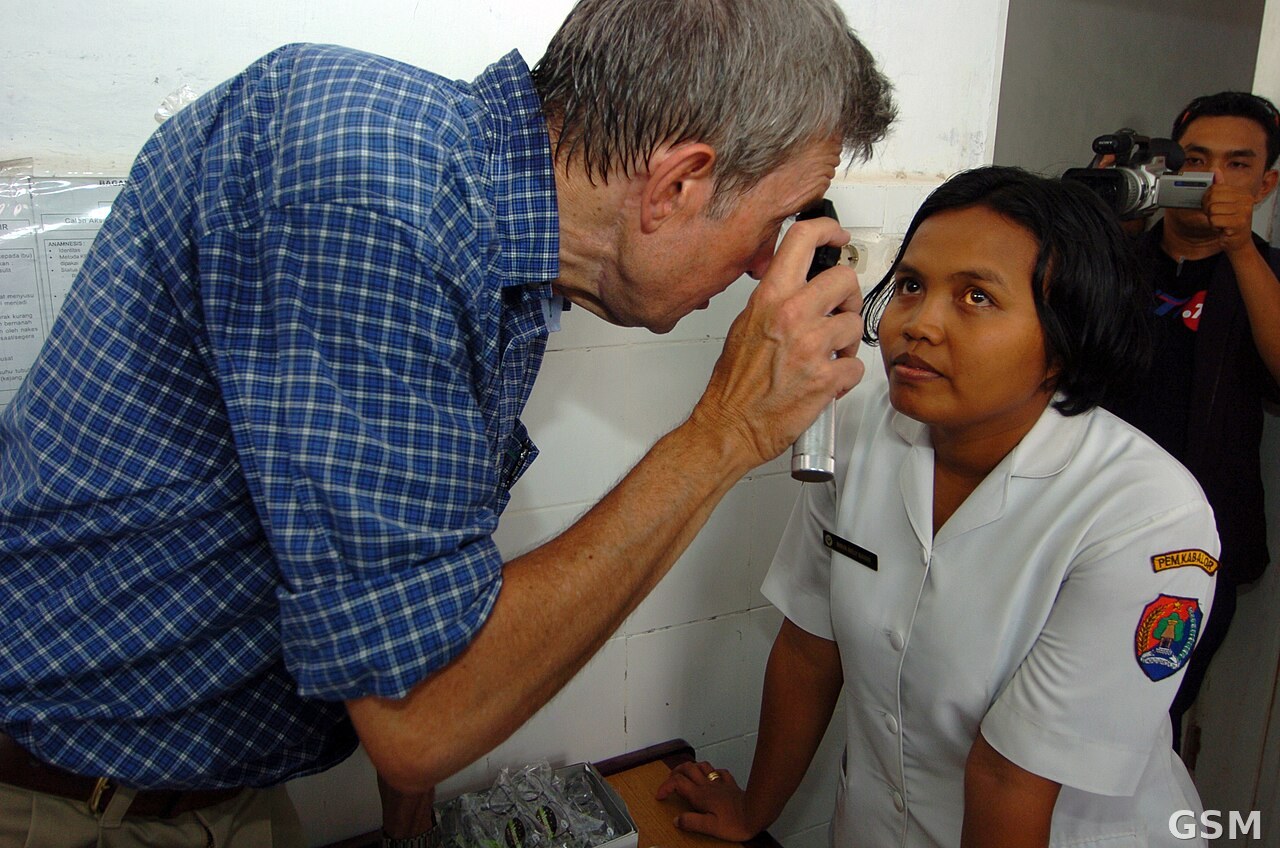
Photo: 图:医务人员为患者做眼科检查(资料图)。美国海军照片,Photographer's Mate 3rd Class Rebecca J. Moat 摄,公共领域,经 Wikimedia Commons。 / A medical professional conducts an eye examination (file photo). U.S. Navy photo by Photographer's Mate 3rd Class Rebecca J. Moat, public domain, via Wikimedia Commons.