California Adopts First Major Bay-Delta Plan Update Since 1995: Protections Rise for a Water Source Serving Nearly 30 Million People
In Sacramento, Sacramento County, California, Governor Gavin Newsom's office announced on October 30 that the State Water Resources Control Board has adopted a major update to the Bay-Delta Plan, the first major update to the plan's Sacramento River and Delta protections since 1995. The update incorporates the Governor's Healthy Rivers and Landscapes Program, pairing river flows with large-scale habitat restoration and enforceable safeguards.
The Bay-Delta supplies water to nearly 30 million Californians and 4 million acres of farmland, while sustaining salmon, other native wildlife and tribal communities. Under the Governor's leadership, his administration brought local, state and federal partners together in 2022 to advance a voluntary-agreements framework and secured $2.9 billion in funding commitments to support the program.
"We don't have to choose between healthy rivers and reliable water supplies - California needs both," Newsom said. "This plan brings people together to restore habitat, protect salmon, and support the communities and farms that depend on the Delta. And we're backing it up with enforceable commitments and science to measure what's working. That's how we build a stronger water future for a hotter, drier California."
Key elements include restoring more than 27,000 acres of aquatic habitat and, for the first time, recognizing Tribal Tradition and Culture as a protected beneficial use of water. The plan uses the best available science, with annual reporting, triennial board review and a dedicated science program for data collection and monitoring.
Water users can meet requirements through two pathways: the Healthy Rivers and Landscapes pathway, combining flow contributions with habitat restoration under binding, enforceable commitments and scientific oversight, or a traditional regulatory pathway focused mainly on river flows. Flow contributions must be verified through public accounting and restoration projects must meet construction milestones; the board can revisit the pathway if commitments are not met.
Early projects include a $360 million Instream Flow Water Purchase Program, the Tide's End project restoring more than 2,200 acres of tidal and floodplain habitat in the north Delta, the roughly 3,000-acre Little Egbert Tract flood-and-habitat project, the 1,600-acre Prospect Island tidal restoration, and the Sunset Weir and Pumps Fish Passage Project.
California Secretary for Natural Resources Wade Crowfoot said accelerating climate change demands a new approach to balancing the state's diverse water needs. State Water Board Chair E. Joaquin Esquivel said the plan provides modern tools, especially increased monitoring and data collection, to manage the Bay-Delta for the 21st century.
The decision followed four iterations of draft language, more than 200 days of public comment, tribal and environmental justice listening sessions and public workshops. The update now goes to the Office of Administrative Law for approval; board staff will release a draft implementation methodology within one year and develop implementing regulations within two years, and implementation of the voluntary-agreements pathway will begin no later than October 1, 2027. Source: Office of Governor Gavin Newsom press release of October 30, 2026 (subscription original).
Source: GSM · USA (original Chinese edition)
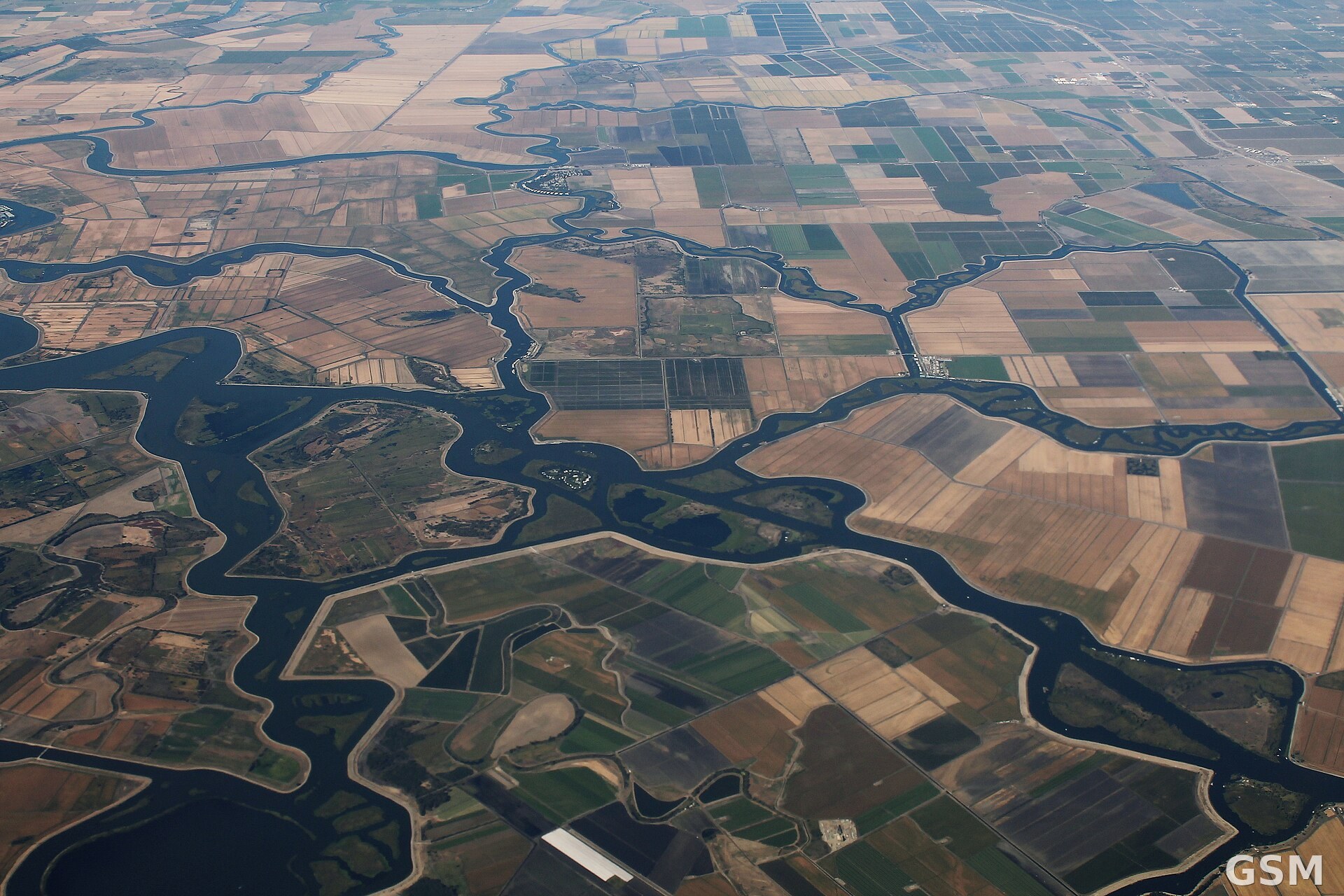
Photo: 图:美国加利福尼亚州萨克拉门托—圣华金河三角洲航拍。formulanone 摄,CC BY-SA 2.0,经 Wikimedia Commons。 / Aerial view of the Sacramento-San Joaquin Delta in California. Photo by formulanone, CC BY-SA 2.0, via Wikimedia Commons.