Borrowers Sue Education Department Over Stalled Closed-School Loan Discharges
A nonprofit borrower advocacy group, Student Defense, filed a lawsuit in federal court on October 28 accusing the U.S. Department of Education of illegally refusing to fully follow the rules of the closed school discharge program, according to NPR. The named plaintiff, Kendrick Gaussoin, attended Brooks Institute, a private, for-profit college in Ventura, California, that was shut down by its parent company in August 2016. He still owes nearly $22,000 in student loans and never earned his degree.
Closed school discharge has been part of federal law for more than three decades: when a school closes suddenly, the education secretary is required to cancel the debts of qualified borrowers. Under the traditional rules, a borrower must have been enrolled when the school closed or have left no more than six months before the closure. The rules also allow the secretary to extend that look-back period when a school closed under exceptional circumstances.
Brooks Institute, founded in 1945, was once well regarded, but enrollment declined after its sale in 1999, and borrowers accused it of high-pressure sales tactics and lying about graduation and job placement rates. Gaussoin took an eight-month leave of absence in December 2015 to work as a photographer, and the school closed as he was preparing to return; he arrived on campus to find the doors chained shut. Because his leave put him beyond the standard look-back window, he was initially ineligible. His mother, Christine Gaussoin, had taken out Parent PLUS loans for his education and still owes about $28,000.
On January 6, 2025, in the waning days of the previous administration, then-Undersecretary James Kvaal signed an order expanding eligibility for several closed schools, writing that they had been closed under exceptional circumstances: any borrower enrolled as of May 6, 2015, would qualify for a loan discharge and a refund of past payments. Gaussoin and his mother suddenly became eligible. According to Inside Higher Ed, the borrowers bringing the suit attended schools including colleges owned by Career Education Corporation, Education Management Corporation and Education Corporation of America, as well as Bay State College.
According to the lawsuit, Gaussoin learned of the expansion this summer and applied for his discharge on August 23, 2026. A week later, in a letter dated August 31, the department denied his request, judging him against the traditional pre-expansion requirements; his mother's discharge application was also denied this month. The complaint argues the expansion was made well within the department's legal authority and cannot simply be ignored or abandoned. Multiple higher education attorneys not associated with the case told NPR that reversing the change would require the department to build a reasoned, legal explanation and share it with the public, as the previous administration had done; the department did not respond to NPR's request to share its legal justification.
The Education Department defended its handling of the program. Spokesperson Ellen Keast told NPR that the previous administration was laser-focused on implementing unlawful policies to shift student loan debt onto every single hardworking American taxpayer, and that its under secretary used the stroke of a digital pen to inappropriately expand the closed-school discharge period for certain institutions days before leaving office. The department told NPR it stands by its implementation of the program. Bonnie Latreille, a former top official in the Federal Student Aid office during the transition, told NPR the secretary has the authority to expand the window, and that a top department official instructed her not to process discharges using the expanded window without approval from the incoming team; two other former officials corroborated her account to NPR. NPR also noted that in November 2019, then-Education Secretary Betsy DeVos used the same authority, citing exceptional circumstances, to expand the look-back window for students of the Art Institute of Colorado and the Illinois Institute of Art.
A review by the U.S. Government Accountability Office (GAO) found that more than 1,100 colleges closed between 2010 and 2020, leaving 246,000 borrowers eligible for a closed school discharge. The lawsuit has only just been filed; filing suit does not by itself cancel any loans. Student Defense says the case is brought on behalf of Gaussoin and potentially thousands of borrowers in a similar position, and which borrowers ultimately receive relief remains for the court to decide.
Source: GSM · USA (original Chinese edition)
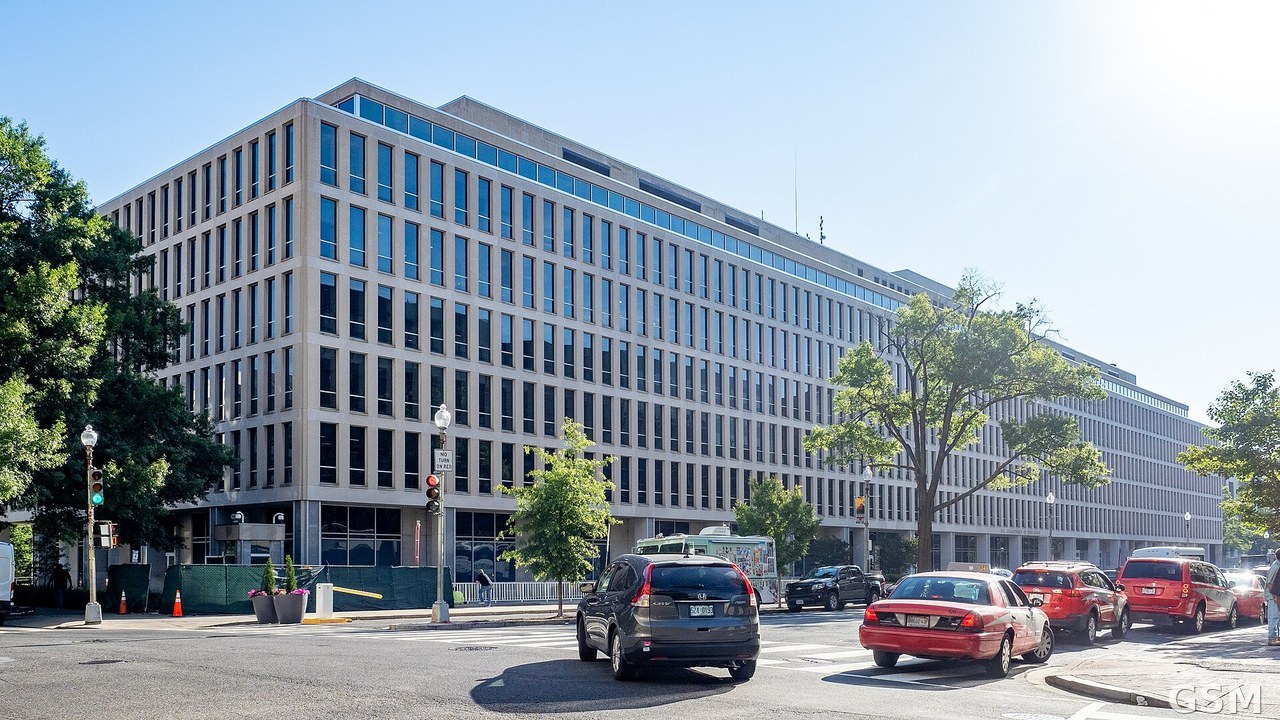
Photo: 图:美国教育部总部 Lyndon Baines Johnson 大楼(资料图)。Wikimedia Commons,CC BY 2.0。 / File photo: the Lyndon Baines Johnson Building, headquarters of the U.S. Department of Education in Washington, D.C. Via Wikimedia Commons, CC BY 2.0.