NASA's TSIS-2 Sun-Measuring Satellite Passes Vacuum and Vibration Testing: Launch From New Zealand in Early 2027
NASA said on October 29 that its next sunlight-measuring satellite, TSIS-2, the Total and Spectral Solar Irradiance Sensor-2, passed a series of environmental tests in Colorado this fall, including thermal vacuum and vibration testing, moving closer to a launch from New Zealand in early 2027. The mission will extend a continuous record of total solar irradiance measurements dating to 1978.
The tests took place at General Atomics Electromagnetic Systems (GA-EMS) in Centennial, Colorado, where the team subjected TSIS-2 to below-freezing temperatures and vacuum-level pressures and to shaking similar to launch. NASA said the spacecraft “passed the test with flying colors.”
Environmental testing is meant to ensure the instruments can withstand the rigors of launch and the harsh conditions of space. In low Earth orbit the satellite will experience a vacuum and temperatures well below freezing; hot-and-cold testing under vacuum confirms the spacecraft and its instruments can perform as designed. Nearby facilities also handle mass-properties testing, which measures the observatory's mass, center of gravity and mass distribution.
“Preparing the spacecraft for launch drew on nearly the full range of integration and test capabilities at our Centennial facility, including our clean room and environmental testing facilities,” said Dan Scheuer, director of engineering for the company's remote sensing satellite directorate. GA-EMS also handles spacecraft design and manufacturing, payload integration and testing, and mission operations support. With testing complete, TSIS-2 moves closer to being packed in a custom shipping container for transport to the launch site.
TSIS-2 carries two instruments that measure solar irradiance, the intensity of sunlight reaching the top of Earth's atmosphere: the Total Irradiance Monitor measures all of the sunlight, while the Spectral Irradiance Monitor measures how that energy is distributed across different wavelengths. Together they help scientists understand how changes in the Sun's energy influence Earth. The instruments were developed by the University of Colorado's Laboratory for Atmospheric and Space Physics (LASP), which also supports on-orbit operations and science data processing.
NASA leads the mission and said TSIS-2 will extend the continuous total solar irradiance record begun in 1978, provide insight into minute changes in the Sun's energy output over time, and help improve climate predictions. It will launch in early 2027 aboard Rocket Lab's Electron rocket from New Zealand.
Source: GSM · USA (original Chinese edition)
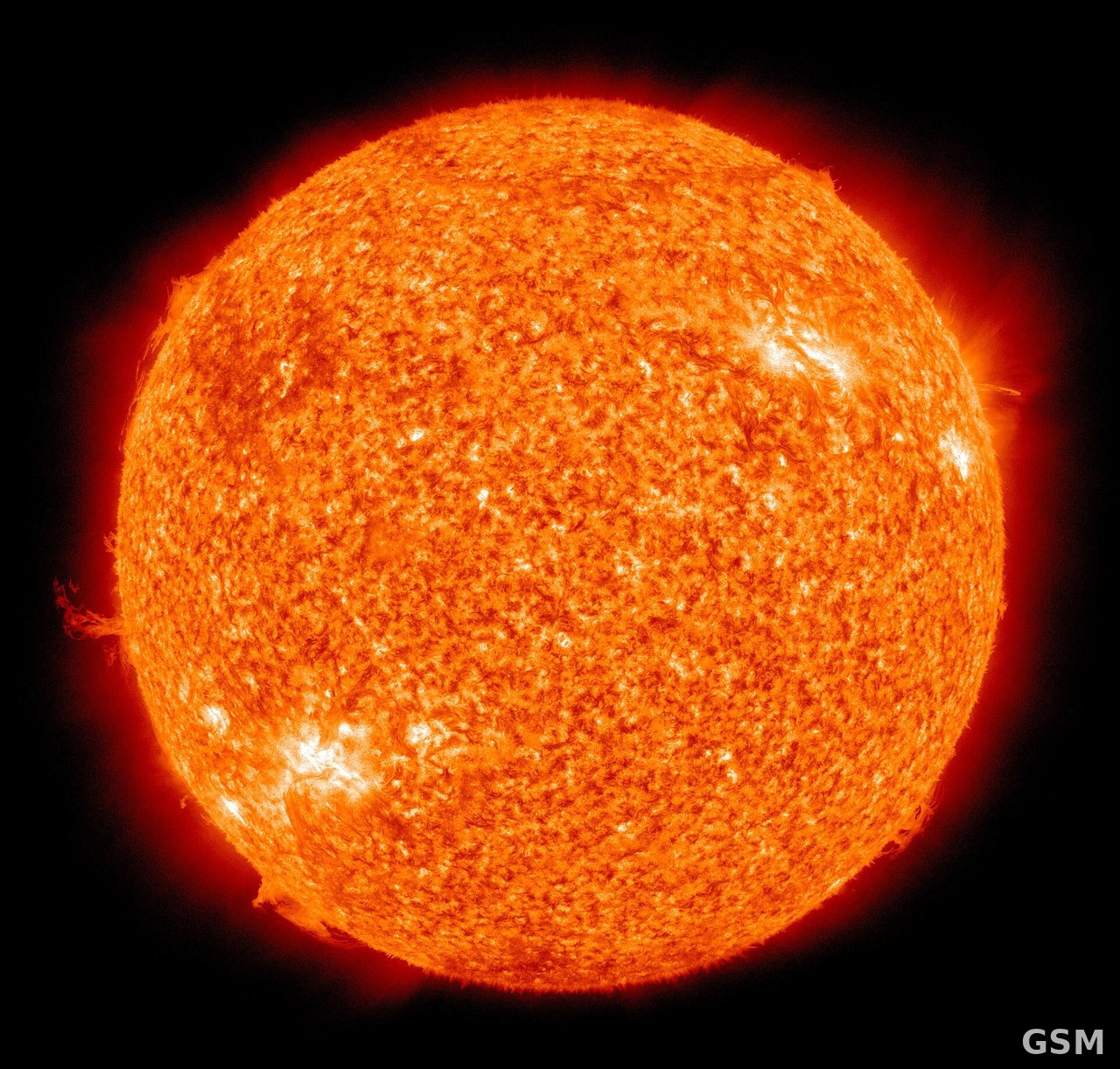
Photo: 图:太阳(资料图,TSIS-2 的测量对象)。照片:NASA 太阳动力学天文台(SDO),公共领域。 / The Sun (file photo; TSIS-2 will measure its energy output). Photo: NASA Solar Dynamics Observatory (SDO), public domain.