Executive Branch Versus Judicial Branch: Trump Administration Asks Appeals Court to Revive Its Lawsuit Against Every Federal Judge in Maryland
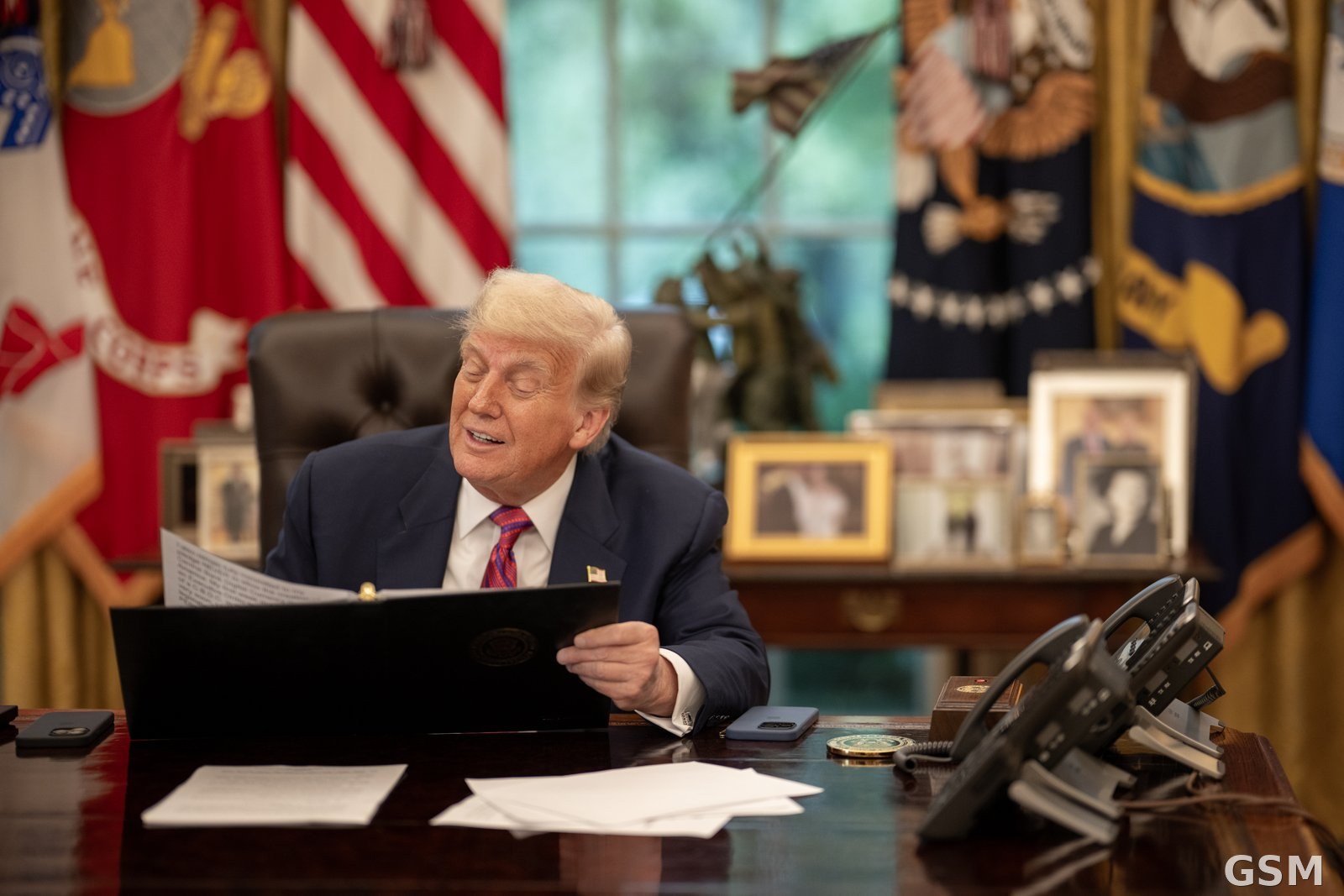
President Donald Trump's administration on Friday, October 30, urged a federal appeals court to allow it to pursue an unusual lawsuit against every federal judge in Maryland, challenging a court order slowing its efforts to rapidly deport immigration detainees, Reuters reported.
U.S. Department of Justice attorney Sarah Welch told a three-judge panel of the Richmond, Virginia-based 4th U.S. Circuit Court of Appeals that a judge improperly threw out the lawsuit. Welch said that while the dispute between the executive and judicial branches may be unique, the government has authority to bring such a case to protect its sovereign interests.
'The injury is that the standing order, the local rule, enjoins the federal government from executing immigration enforcement,' Welch said.
The Justice Department filed the lawsuit in June 2025 after the U.S. District Court for the District of Maryland adopted a standing order automatically blocking for two business days the removal of migrants in Maryland who filed new lawsuits challenging their detention.
The order, signed by Chief U.S. District Judge George Russell, cited a recent influx of habeas petitions concerning alien detainees purportedly subject to improper and imminent removal from the United States. A habeas petition is a legal action challenging the legality of a person's detention.
Rather than challenge the order in an individual immigration case, the Justice Department sued every federal judge in Maryland, arguing the policy unlawfully interfered with the executive branch's authority over immigration enforcement.
Because every Maryland judge was sued, the case was assigned to U.S. District Judge Thomas Cullen, a Trump appointee in the Western District of Virginia. He tossed the case, which he said was part of an unprecedented and unfortunate broader campaign to smear and impugn judges who rule against Trump's policies.
At Friday's argument, several judges questioned whether the government was allowed to pursue such a case against the judges and if it was overstating the reach of the U.S. Supreme Court's 1895 decision in In re Debs, which the administration says allows it to seek injunctive relief to protect federal interests.
'This is against an entire court,' U.S. Circuit Judge Stephanie Thacker, an appointee of Democratic President Barack Obama, told Welch. 'This is the executive branch versus the judicial branch. I don't see a limiting principle to your position.'
Paul Clement, a prominent appellate advocate retained to represent the federal judges, urged the appeals court to send a message by upholding that ruling and preventing a future case like it from being filed. 'The executive's extraordinary effort here to sue an entire judicial district in the name of the United States is a grave threat to the separation of powers that suffered multiple threshold defects,' Clement said.
U.S. Circuit Judge Marvin Quattlebaum pushed back, saying just because it is unprecedented does not mean it is wrong. But Quattlebaum, a Trump appointee and the only Republican appointee on Friday's panel, told Welch that many of the historical examples of cases pursued under the Debs ruling involved private companies or individuals and were traditionally tied to property interests, and that if that is true, this case seems perhaps outside of that.
The case is United States v. Russell, 4th U.S. Circuit Court of Appeals, No. 25-2004. For the United States: Sarah Welch of the U.S. Department of Justice. For the Maryland judges: Paul Clement of Clement & Murphy.
Source: Reuters, October 30, court report
Source: GSM · USA (original Chinese edition)
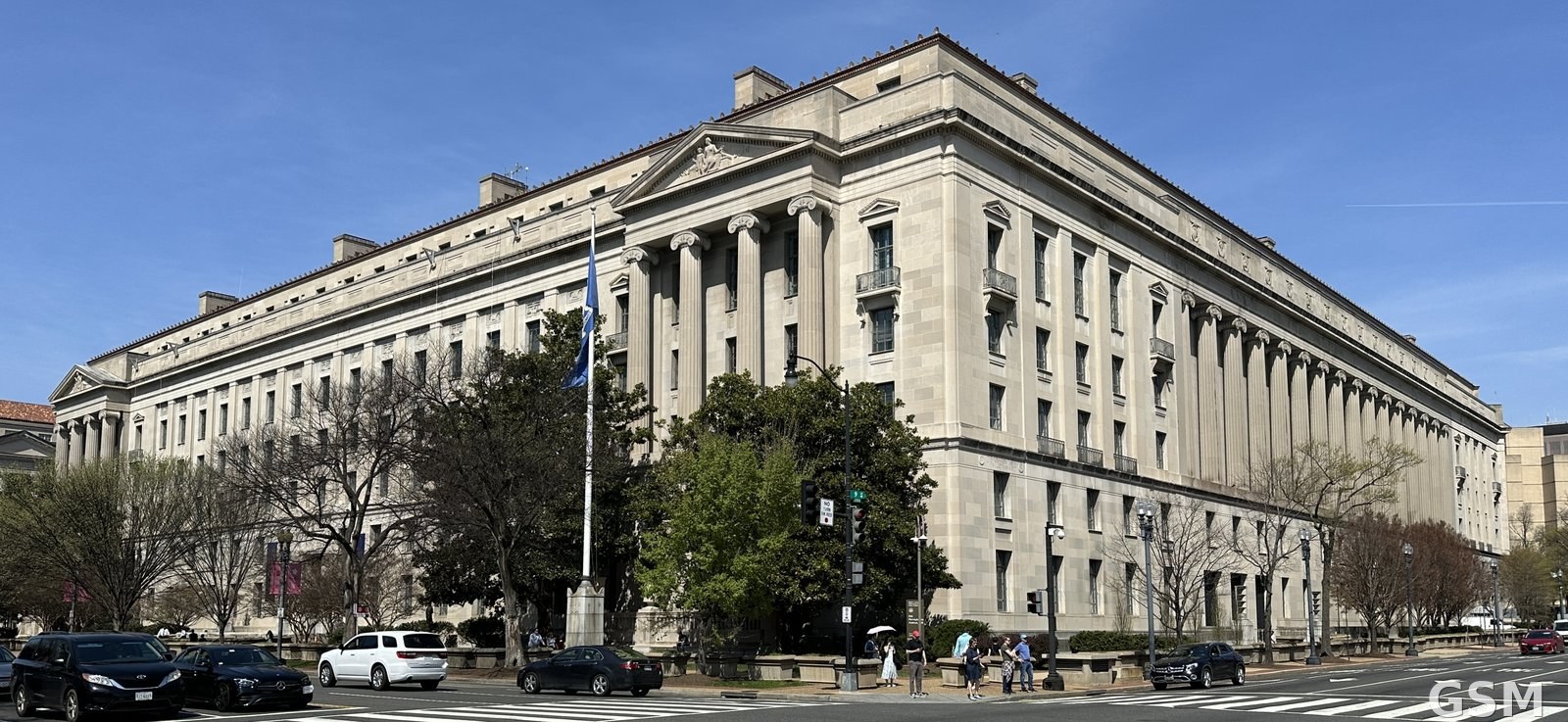
Photo: 图:位于 Washington 的美国司法部大楼。GSM联邦机构固定图库照片,摄影 APK,CC BY 4.0,来源 Wikimedia Commons。 / Photo: U.S. Department of Justice headquarters in Washington. GSM federal agency library photo by APK, CC BY 4.0, via Wikimedia Commons.