Federal Appeals Court Hears Arguments in Summit Church Zoning Case, With a Ruling Still to Come
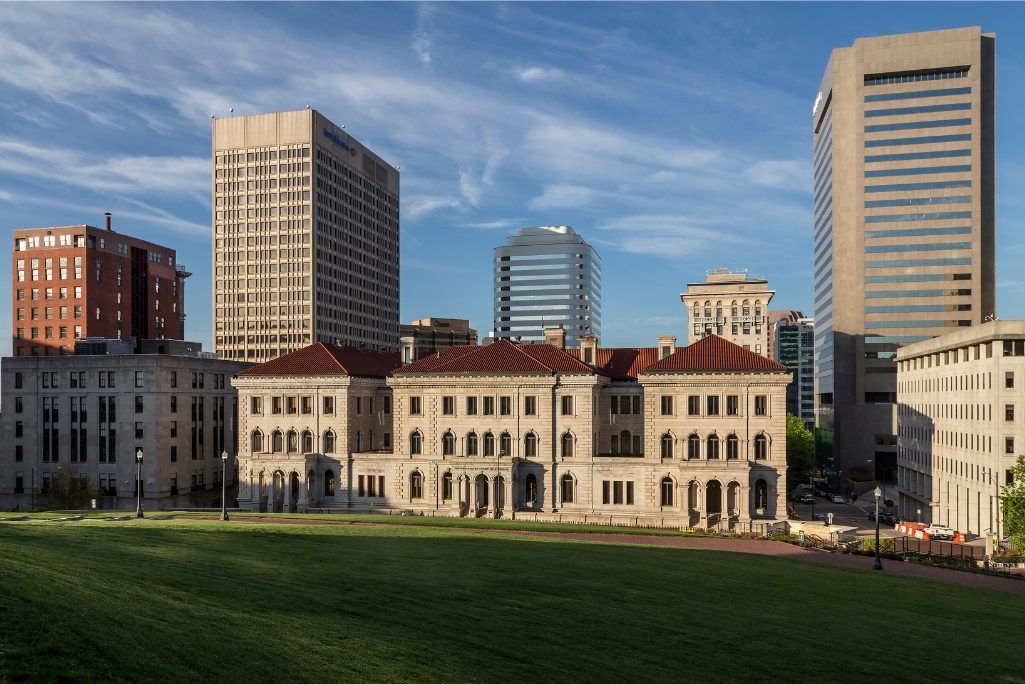
A three-judge panel of the 4th U.S. Circuit Court of Appeals heard oral arguments on Tuesday, October 27, in Chatham County's appeal of a federal court order that bars it from denying The Summit Church's request to rezone land for a new church campus, Baptist Press reported on October 30. The hearing took place in Richmond, Virginia, and the dispute concerns land in Chatham County, North Carolina.
The hearing was before Judge A. Marvin Quattlebaum Jr., Senior Judge Barbara Milano Keenan and U.S. District Judge Deborah L. Boardman of the District of Maryland. The panel took the appeal under advisement and did not say when it would rule. One attorney each for the county, the church and the U.S. Department of Justice presented to the panel; each side was allotted 20 minutes, and the arguments lasted approximately 45 minutes.
The county's appeal is narrow. It concerns only the preliminary injunction that a federal district court judge issued in June 2025, which bars the county from denying The Summit's rezoning request while the lawsuit continues. The underlying lawsuit, including The Summit's claims of religious discrimination under the Religious Land Use and Institutionalized Persons Act (RLUIPA), remains pending.
Steven Bader, the attorney who argued for Chatham County, said the injunction intrudes on the commissioners' authority by going beyond what a federal court may order a local government to do. Under North Carolina law, he said, conditional rezoning is a legislative act, and barring the county from denying the request effectively means it must approve it. "This is not a case about religious discrimination as my colleagues would have it," Bader said. "It's a case about separation of powers."
Elbert Lin, the attorney who argued for The Summit, said the injunction does not require the county to approve the rezoning. The district court declined to order the county to approve The Summit's rezoning request, he said, and simply put the application on hold while the case continues. Lin also said federal law, not state labels, decides what counts as zoning under RLUIPA.
Noah Sacks, a Justice Department attorney whose agency has supported the church in the case, said the department has "a strong interest in ensuring that RLUIPA provides broad protection for religious land use across the country," and that the county's argument would let a local government use state law to shield its decision from RLUIPA. Asked whether a court-ordered rezoning would be lawful, Sacks said the department had no position because that question had not been reached.
The Summit Church, a multisite congregation with 13 campuses across the Triangle region of North Carolina, has held services for its Chapel Hill campus at an area high school since 2013. In December 2023 it acquired an option to buy six parcels totaling about 97 acres in northeast Chatham County. In May 2024, The Summit asked the county to rezone three of them, about 50 acres, for a church campus. The commissioners unanimously denied the request in December 2024. The Summit says the denial reflected religious bias, a claim the county rejects; the county says the request was inconsistent with its land-use plan.
The Summit filed suit against Chatham County in February 2025 in the U.S. Middle District of North Carolina. The district judge found The Summit likely to succeed on its claim that the denial substantially burdened its religious exercise, barred the county from denying the rezoning request, but declined to order it to approve the request. The county appealed in July 2025. First Liberty Institute, a nonprofit religious liberty law firm, is among the attorneys representing The Summit on appeal. An audio recording of the oral arguments can be accessed on the appeals court's website.
Baptist Press report, originally in the Biblical Recorder
Source: GSM · USA (original Chinese edition)
Photo: 美国联邦第四巡回上诉法院大楼(官方报道配图)。Biblical Recorder/Baptist Press,2026年10月30日。 / The U.S. Court of Appeals for the Fourth Circuit building (photo published with the report). Biblical Recorder / Baptist Press, October 30, 2026.