NASA's Second Mars Simulation Ends: Four Volunteers Exit Houston Habitat After 378 Days
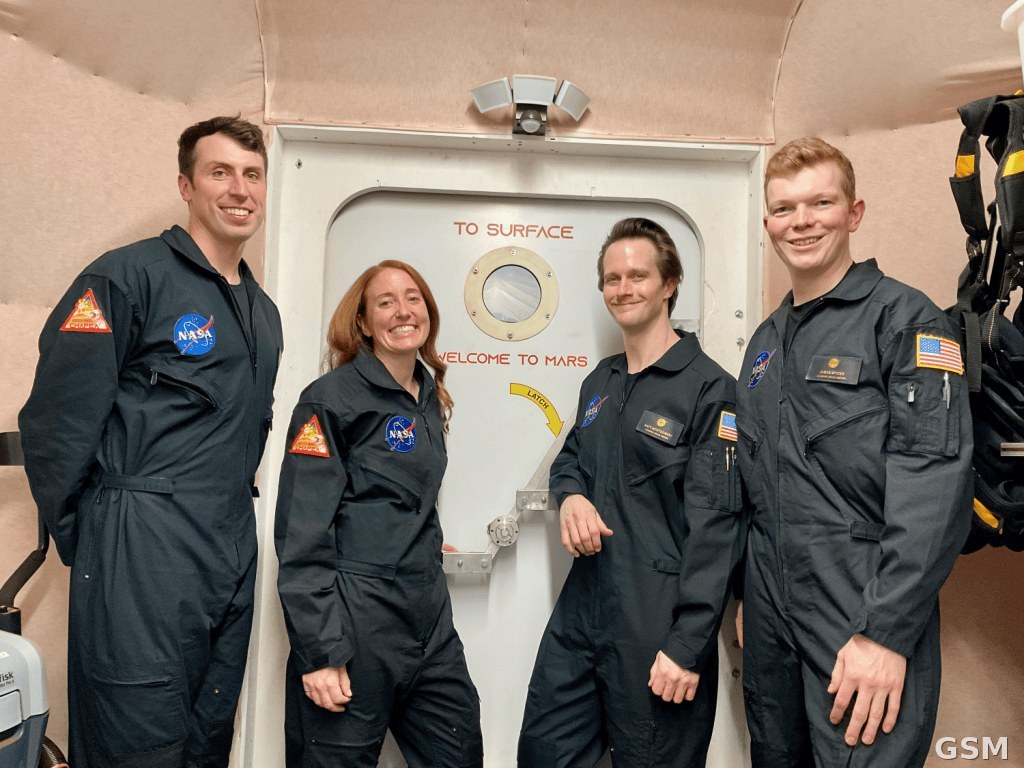
NASA's second Mars simulation mission ended on October 31, when four volunteers stepped out of a simulated Mars habitat at the agency's Johnson Space Center in Houston, Harris County, Texas, after 378 days of isolation. NASA Johnson's official channel livestreamed the egress ceremony, and the replay is now posted on the channel.
The crew members are Commander Ross Elder, Medical Officer Ellen Ellis, Flight Engineer James Spicer and Science Officer Matthew Montgomery. Johnson Center Director Vanessa Wyche and NASA astronaut Jack Hathaway gave remarks at the ceremony, as did the four crew members.
The mission began on October 19, 2025. The four volunteers lived and worked inside Mars Dune Alpha, a 3D-printed, roughly 1,700-square-foot habitat, conducting simulated Marswalks, robotic operations, habitat maintenance, physical exercise and crop cultivation.
During the mission the crew dealt with stressors future deep-space crews are likely to face, including isolation, limited resources, communication delays of up to 22 minutes and equipment failures; a simulated communications blackout was also part of the mission.
NASA said the health and performance data collected from the simulation will help the agency develop methods to counter human spaceflight risks for future Artemis and Moon Base missions. The data will also inform food system design, efficient use of crew time and Deep Space Network bandwidth, and stronger medical and behavioral support for crews.
CHAPEA stands for Crew Health and Performance Exploration Analog. Its first mission ran from 2023 to 2024 and also lasted 378 days. NASA said it is already accepting applications for a broader Moon and Mars Exploration Analog campaign combining elements of CHAPEA with other simulations, scheduled to start no earlier than August 2027.
Source: GSM · USA (original Chinese edition)
Photo: 图:CHAPEA第二期四名队员在模拟火星栖息舱舱门前合影。照片由美国航空航天局 NASA 发布(公共领域)。 / The four CHAPEA Mission 2 crew members pose at the habitat airlock door. Photo: NASA (public domain).