Swing-State Households Pay $50 to $60 More a Month for Power and Gasoline as Energy Bills Weigh on the Midterms
WASHINGTON — With the November 3 midterm elections days away, energy bills are squeezing voters in the battleground states most likely to decide control of Congress. A Reuters column drawing on U.S. Energy Information Administration (EIA) data found that households in Michigan, Georgia, Pennsylvania, Nevada, Arizona, North Carolina, Wisconsin and Ohio are paying $50 to $60 more a month for power and gasoline than a year ago.
In the first seven months of 2026, the average American household spent about $456 a month on electricity and gasoline combined, roughly $54 more than a year ago, an increase of around 14%, according to the EIA. Combined spending in the eight swing states rose between 13% and 17% over the same period, and costs are up by more than a third in every one of them compared with 2019. Monthly costs rose by $42 in Wisconsin, $50 in Michigan, $51 in Georgia, $59 in North Carolina and Pennsylvania, $60 in Ohio, $61 in Nevada and $62 in Arizona.
Gasoline is the most visible part of the increase. Reuters identified the U.S. war with Iran as the primary force pushing up gasoline prices this year: since the conflict broke out on February 28 and began disrupting shipments through the Strait of Hormuz, pump prices have climbed to levels not seen since the summer of 2022. Estimated household spending on gasoline in the swing states was up 19% to 23% in the first nine months of this year, EIA data show; in September alone, spending in Georgia, Ohio and North Carolina was about 40% higher than a year earlier, while Pennsylvania, Michigan and Wisconsin were up by more than a third. Nevada households face the highest fuel bill of the eight states, at roughly $360 a month this year compared with around $300 a month in 2025. Georgia sells some of the cheapest gasoline in the country, but its households also drive the most, averaging around 91 gallons a month against about 66 for the average U.S. household, leaving them with monthly bills of around $324 this year, up from around $260 in 2025.
Electricity prices have been climbing for years for more local reasons. Average residential power bills in the swing states have risen between 15% and 58% since 2019, and by an average of around 7% year-on-year this year, according to the EIA. Pennsylvania has seen the steepest increases: the typical household paid about $182 a month for electricity this year, up 12% from last year and up 58% since 2019, now the highest of the eight states. Ohio is not far behind, with bills up 9.4% from a year ago and up 53% since 2019. Both states sit inside PJM, the grid operator serving 13 states and Washington, D.C., whose capacity auctions have set three consecutive pricing records this year, driven in part by rising demand from data centers as well as grid investment, natural gas prices and power-plant retirements. Michigan's bills rose 8% this year, North Carolina's 6%, Wisconsin's 5% and Arizona's 5%. Georgia's power bills barely moved this year, up about 1%, after six rate increases in two years. Nevada has the lowest power bills of the eight states, helped by massive solar farms that can generate over half of daytime electricity supplies during the summer.
Where voters place the blame is contested. A recent Reuters/Ipsos poll found that 78% of Americans blame President Donald Trump's policies for rising prices that are outpacing their earnings, with tariffs and the Iran war bearing the brunt of the blame; in another Reuters/Ipsos poll earlier this year, 77% of respondents cited rising electricity costs as a chief reason for opposing data centers. Reuters also noted that electricity rates are generally approved by state utility regulators, wholesale power costs are shaped by regional grid operators answering to federal regulators, and gasoline prices are set largely by global crude markets. Electricity costs continue to be pulled higher by rising consumption from technology firms and manufacturers and by grid upgrades, while gasoline remains hostage to events in the Middle East, so whoever wins next week's midterms will inherit these bills.
Source: GSM · USA (original Chinese edition)
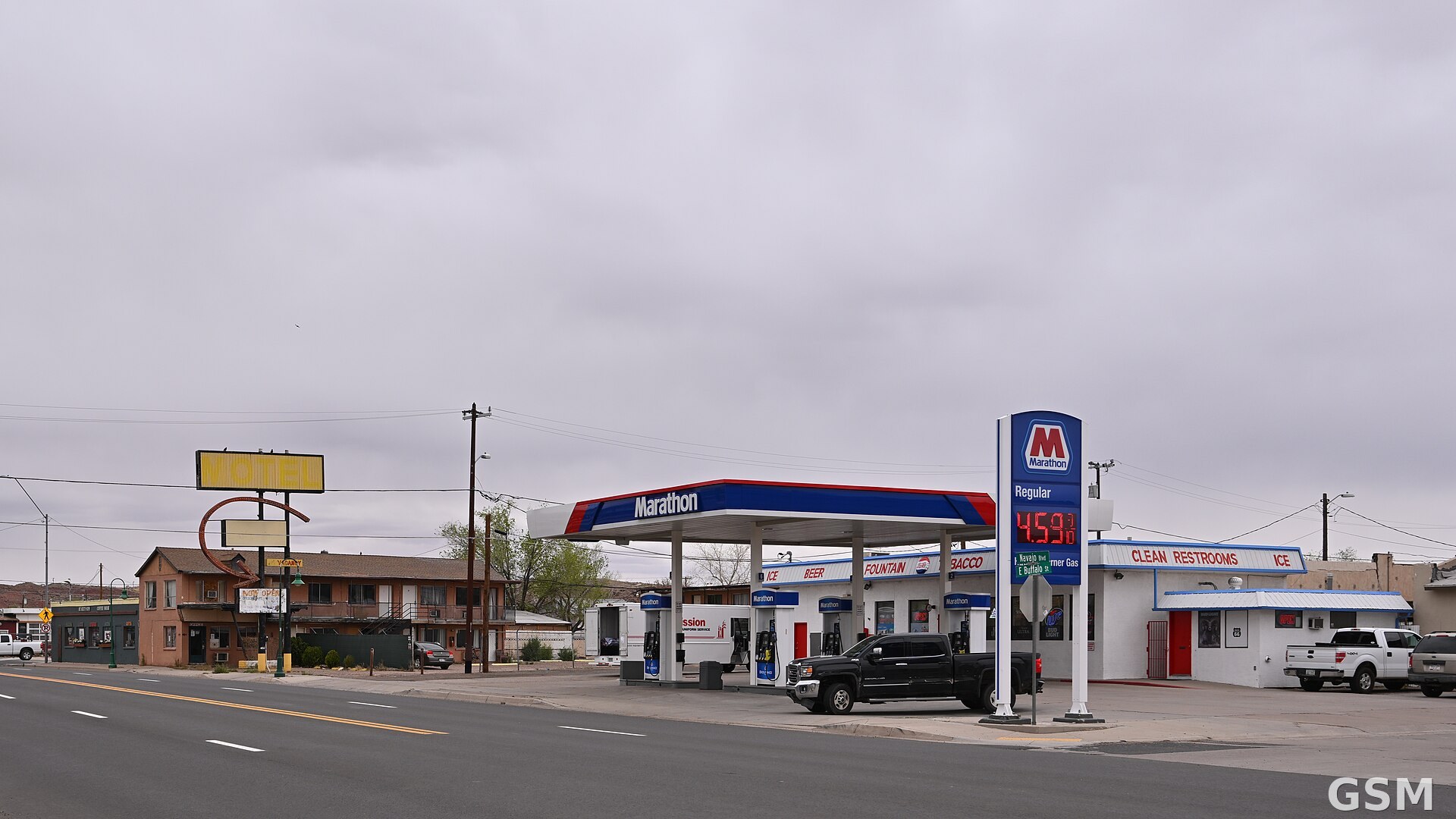
Photo: 图:Arizona 州 Holbrook 的一家 Marathon 加油站,2026年4月摄,价牌显示普通汽油每加仑4.59美元,为资料画面。G. Edward Johnson,CC BY 4.0,经维基共享资源。 / A Marathon gas station in Holbrook, Arizona, photographed in April 2026, with regular gasoline priced at $4.59 a gallon; file photo. By G. Edward Johnson, CC BY 4.0, via Wikimedia Commons.