Fed Survey: Business Loan Demand Weakens, Mortgage Demand Falls Across All Categories
Washington — The Federal Reserve Board on November 2 released its October 2026 Senior Loan Officer Opinion Survey on Bank Lending Practices (SLOOS), summarizing banks' reports on lending standards, terms and demand for business and household loans over the third quarter of 2026. Responses were received from 61 domestic banks and 18 U.S. branches and agencies of foreign banks; respondent banks received the survey on September 21, 2026, and responses were due by October 5, 2026.
For business lending, banks reported that standards for commercial and industrial (C&I) loans to large and middle-market firms were basically unchanged, while standards tightened for C&I loans to small firms. Banks reported weaker demand, on net, for C&I loans from firms of all sizes, citing decreasing customer investment in plant or equipment and customer borrowing shifting to more attractive bank or nonbank funding sources. The most frequently cited reasons for tighter standards were a less favorable or more uncertain economic outlook and a worsening of industry-specific problems.
For commercial real estate (CRE) loans, banks reported having tightened, on net, lending standards for all CRE categories — construction and land development, nonfarm nonresidential properties and multifamily properties — and weaker demand for all CRE categories.
For residential real estate lending, banks left standards basically unchanged for most types of mortgage loans, eased standards for qualified mortgage (QM) jumbo and non-QM jumbo mortgages, and tightened standards for subprime mortgages; standards for home equity lines of credit (HELOCs) were also basically unchanged. Banks reported weaker demand across all residential real estate loan categories and unchanged demand for HELOCs.
For consumer lending, standards and most terms were basically unchanged for credit card, auto and other consumer loans, but banks tightened credit limits on credit card accounts, raised the minimum required credit score for auto loans, and tightened the extent to which loans are granted to borrowers not meeting credit scoring thresholds for credit card and other consumer loans. Demand for credit card loans was stronger, demand for auto loans was weaker, and demand for other consumer loans was basically unchanged. In special questions on the past year, banks reported being more likely to approve credit card applications from super-prime and prime borrowers and less likely to approve applications from subprime borrowers, with small banks driving the trend for subprime borrowers; the most frequently cited reason for stronger credit card demand was changes in customers' spending needs in response to price changes for goods and services.
For loans to nondepository financial institutions (NDFIs), banks reported, on net, having tightened standards for all queried types — including loans to mortgage credit intermediaries, business credit intermediaries, private equity funds and consumer credit intermediaries — citing a less favorable or more uncertain economic outlook and a deterioration in the financial strength of NDFI borrowers.
According to Reuters, the survey showed business demand for bank loans weakening for the first time in more than a year, and the report was among the data Federal Reserve policymakers had in hand when they decided to keep short-term borrowing costs unchanged at their October 27-28 meeting.
(Source: Federal Reserve Board)
Source: Federal Reserve Board
Published by GSM · USA (original Chinese edition)
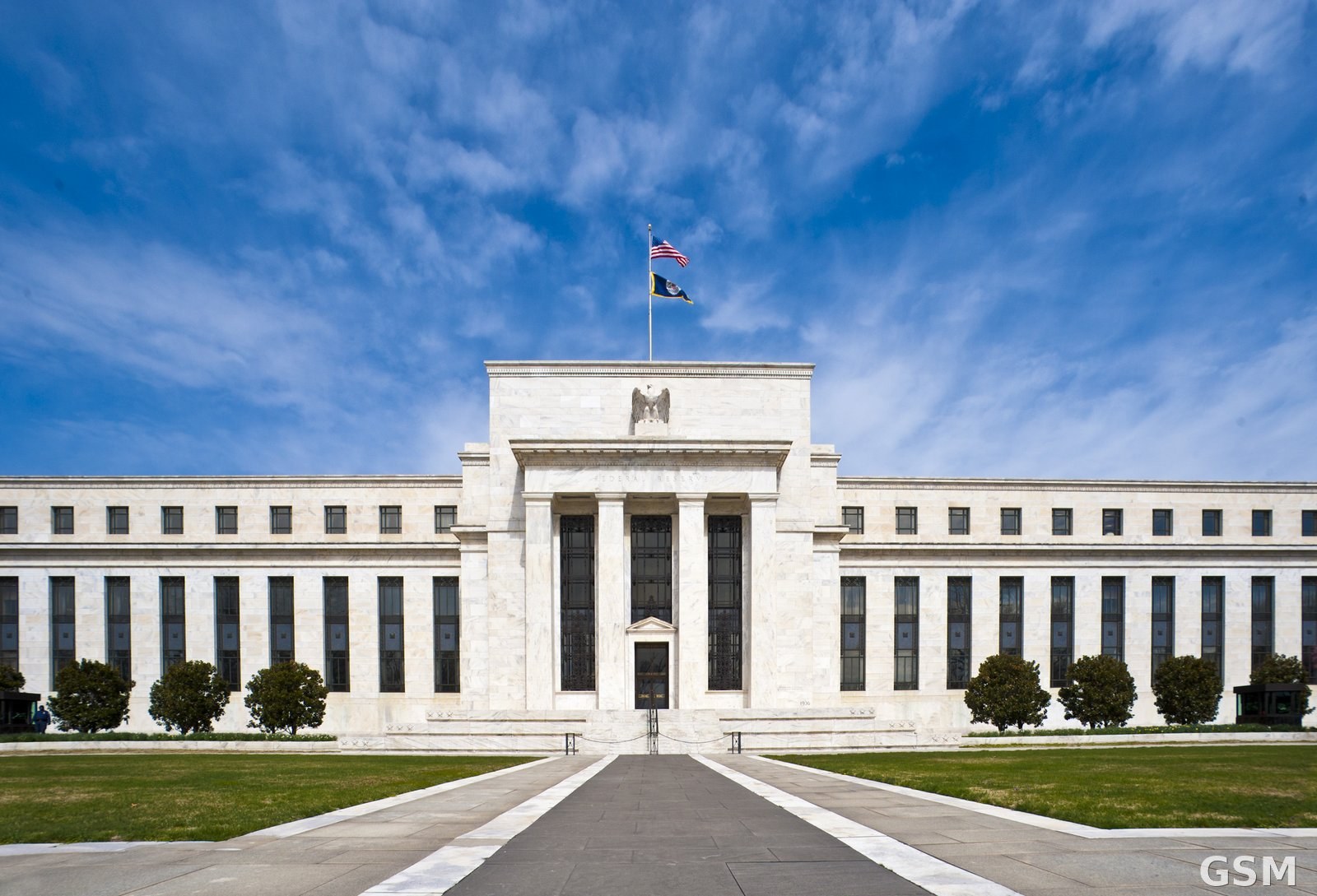
Photo: 图:美联储总部埃克尔斯大楼(Eccles Building),华盛顿。照片:美联储,公共领域,经 Wikimedia Commons。 / Photo: The Eccles Building, headquarters of the Federal Reserve, Washington. Photo by the Federal Reserve, public domain, via Wikimedia Commons.