SEC's Uyeda: 20-Year-Old Corporate Penalty Framework Needs Updating So Innocent Shareholders Don't Pay Twice
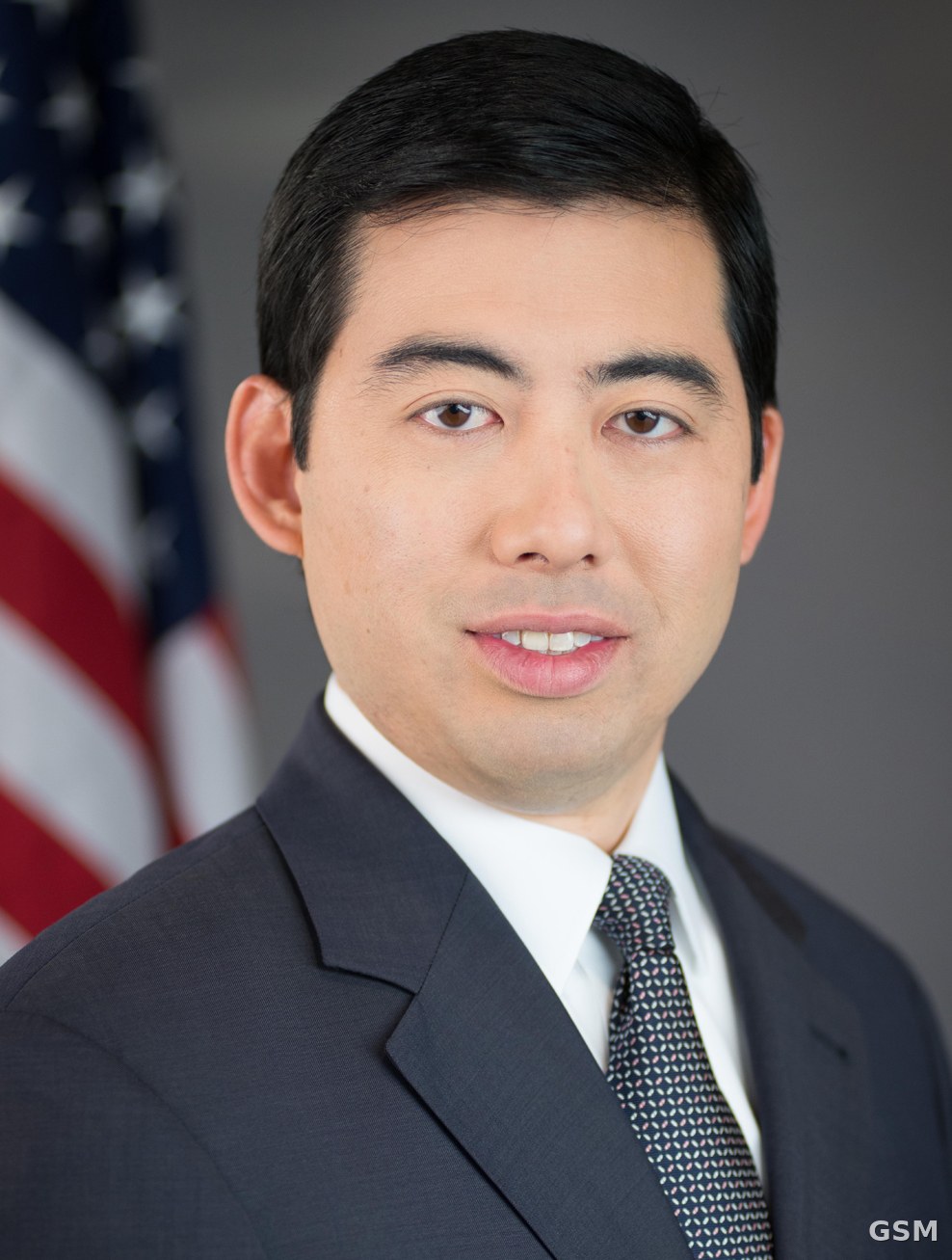
Securities and Exchange Commission (SEC) Commissioner Mark T. Uyeda on November 2 called for updating the Commission's corporate penalty framework, which dates to the 2006 Statement Concerning Financial Penalties, in remarks at the Practicing Law Institute's 58th Annual Institute on Securities Regulation in New York. His central concern: a corporate penalty is paid out of the corporate treasury and ultimately borne by shareholders, yet the investors who benefited from, or were harmed by, a violation years ago may not be the people holding the stock today — leaving innocent, harmed shareholders to effectively pay twice.
The 2006 Statement, adopted unanimously under Chairman Christopher Cox, gave the Commission an analytical framework for corporate civil penalties grounded in what Congress authorized and why, including whether shareholders improperly benefited from the violation. After becoming Acting Chairman in January 2025, Uyeda directed staff to restore the framework, and updates to the Enforcement Manual announced on February 24, 2026 restored both the framework and the practice of Commissioners signing off on corporate-penalty amounts in certain cases.
Restoration alone is not enough, he argued, because markets and the shareholder base have changed. He listed seven developments the framework must now account for: the turnover of the shareholder base over time; the difficulty Fair Funds distributions face in identifying indirect victims who hold shares through mutual funds or ETFs; the intent element of the underlying charge, pointing to the 2023 Charter Communications case, in which a $25 million penalty was imposed over stock-buyback controls; new organizational forms such as SPACs — more than 600 of which went public in 2021 alone, raising over $160 billion — whose later public shareholders had no part in earlier sponsor or target conduct; dual-class stock structures, under which a penalty borne pro rata by economic holders may not fall proportionately on the person with voting control; the whistleblower program created by the Dodd-Frank Act in 2010, whose awards are tied to amounts collected; and the need for clearer application of what counts as a direct and material benefit to the corporation.
The other half of his analysis was individual accountability. Corporations do not act on their own, Uyeda noted: every misstatement is drafted, reviewed and signed by individuals. Congress gave the SEC tools to reach individuals directly, including court-ordered officer-and-director bars, censure, suspension or bars for persons associated with broker-dealers and investment advisers, Rule 102(e) proceedings against accountants and other professionals, and Sarbanes-Oxley Section 304, which requires CEOs and CFOs to reimburse bonuses, incentive compensation and stock-sale profits after a restatement. Rather than defaulting to a corporate penalty borne by innocent shareholders, he said, the Commission should not be reluctant to use those tools where warranted.
"Its principles still point in the right direction," Uyeda said of the 2006 Statement, arguing it should be refined for the next 20 years, with the focus kept on who ultimately pays, whether shareholders benefited, and whether a penalty is needed for deterrence. His remarks were noted as his own views as an individual Commissioner, not necessarily those of the Commission or his fellow Commissioners. Uyeda also leads the agency's initiative overseeing the transition to central clearing of U.S. Treasury securities transactions.
(Source: U.S. Securities and Exchange Commission)
Source: U.S. Securities and Exchange Commission
Published by GSM · USA (original Chinese edition)
Photo: 美国证券交易委员会委员 Mark T. Uyeda 官方肖像(公共领域)