12 More Illinois Counties Back Separation Referendums, Bringing the Total to 45 of 102
Voters in 12 more Illinois counties approved nonbinding separation referendums on Election Day, November 3, backing exploration of leaving Illinois to form a new state. The results bring to 45 the number of counties, out of 102 statewide, that have approved such measures since 2020.
The 12 counties voting yes this round were Coles, Ford, Gallatin, Hamilton, Henderson, Macoupin, McDonough, Monroe, Piatt, Saline, Warren and Washington. Several townships in Adams County also approved separation questions, with support reaching 90 percent in one township; McDonough County was the closest, at 56.7 percent in favor. Counts differ slightly by source: FOX 32's county-by-county review puts the total at 45 counties, while the Illinois Radio Network counts 44 counties plus the Adams County townships, the difference being that Ford County's question was not part of the organized campaign.
Loret Newlin, director of the Illinois Separation movement, said the organizers' goal is to form an entirely new state, not to have downstate counties join Indiana. Indiana has been courting the counties anyway: a law authored by House Speaker Todd Huston creating an Indiana-Illinois Boundary Adjustment Commission was signed by Governor Mike Braun on May 1, 2025. The commission first met in October 2025 with no Illinois members present and has not publicly met since.
The referendums are advisory only and change no boundaries. Creating a new state would require approval from both the Illinois General Assembly and the U.S. Congress; the last state carved out of an existing one was West Virginia, during the Civil War. Organizers say people in seven more counties are already lining up referendum petitions for 2028.
Related: 伊利诺伊州再有11县拟就“脱离伊利诺伊”举行咨询公投已有33县通过类似动议
(Source: FOX 32 Chicago)
Source: FOX 32 Chicago
Published by GSM · USA (original Chinese edition)
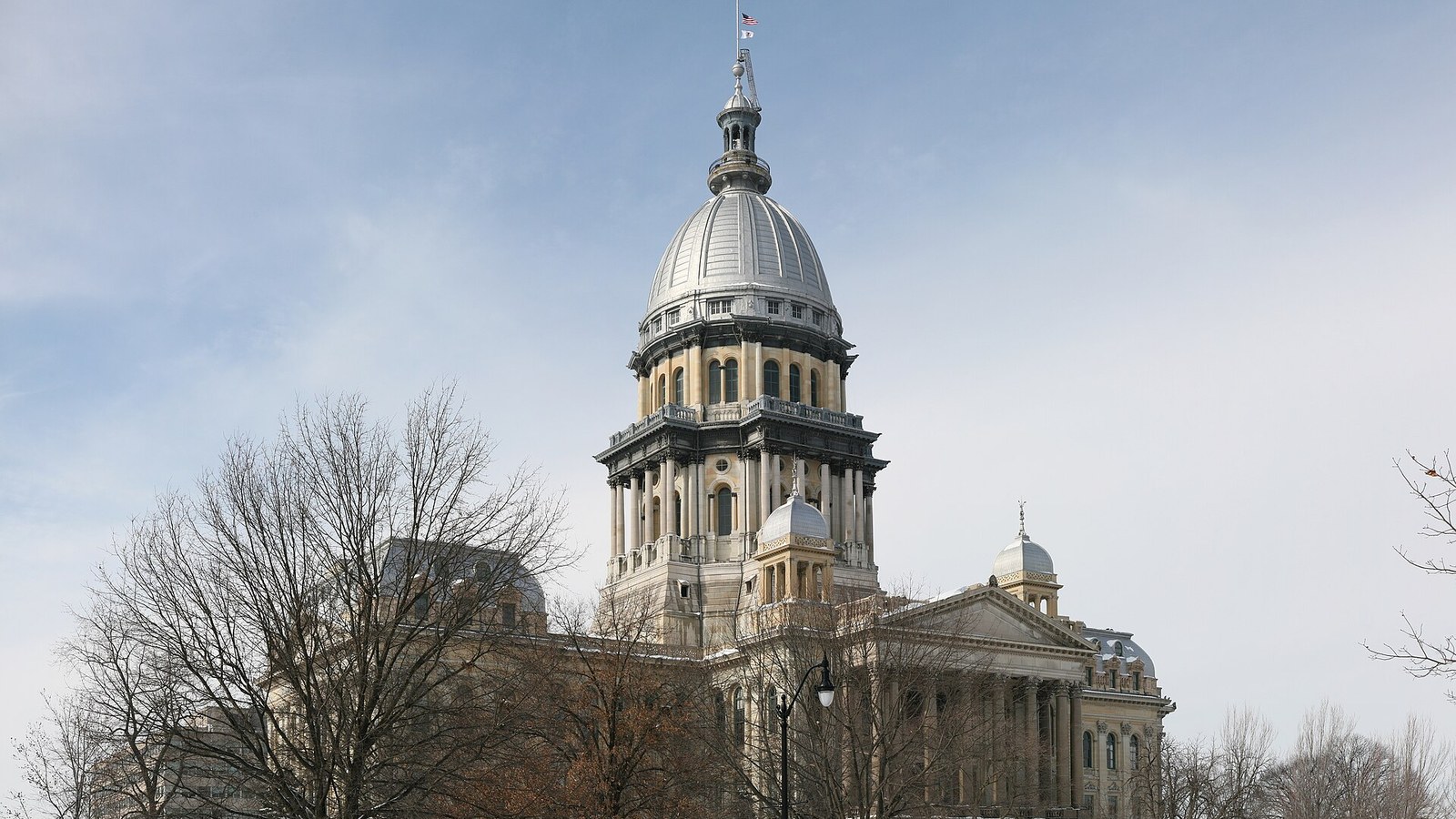
Photo: 图:位于 Springfield 的伊利诺伊州议会大厦(资料图)。照片:CC BY-SA 4.0,经 Wikimedia Commons。 / Photo: The Illinois State Capitol in Springfield (file photo). CC BY-SA 4.0, via Wikimedia Commons.