Meta Built Humanoid Prototype 'Max' With Shanghai's Fourier in Three Months, Report Says
SAN FRANCISCO, November 3 — Meta has built a humanoid robot prototype together with Shanghai-based robotics company Fourier in about three months, according to an October 31 report by The Information. The machine, known internally as Max, is aimed at household chores and everyday tasks. A Meta spokesperson told the outlet that the effort with Fourier is focused on internal research and experimentation and that the company has no plans to sell these units; work on a second version began in September.
Max stands about 1.5 meters tall and weighs about 48 kilograms, and runs on Nvidia's Jetson Thor robotics computing platform, the report said. It has a screen face that can display expressions, chest-mounted speakers and five-fingered hands that can pick up small objects such as bottles and toys. Meta's design requirements reportedly included recognizing a voice from five meters away, interpreting a wave or gesture from three meters, maintaining eye contact, and signaling whether the robot is listening, thinking, speaking or uncertain. The report noted those are design targets, with no published test results from ordinary homes.
To build the prototype, Li-Chen Miller, Meta's vice president of product for robotics, spent almost two months working at Fourier's factory in Shanghai. Max draws on hardware and experience from three generations of Fourier humanoids, with redesigned proportions, head, display and cameras, and was shown to some employees at an internal robotics summit in late August. The second version, Max 2, begun in September, is expected to get a redesigned torso, improved hands, a projector and additional sensors to help it navigate stairs.
Asked about working with a Chinese partner, the Meta spokesperson told The Information that on sourcing components that are not readily available in the United States, Meta faces the same reality as others in the industry, while stressing that the Fourier work is limited to internal research and experimentation with no plans to sell the devices. A person familiar with the initiative said Meta has not set a launch date for any humanoid product. Fourier founder and CEO Gu Jie told Chinese financial outlet Yicai on November 2 that he was not in a position to comment.
According to the report, Meta Chief Technology Officer Andrew Bosworth has internally described humanoid robots as a physical embodiment of Muse, the company's personal AI agent product, with a long-term goal of robots helping with household tasks. Meta's robotics team sits inside Reality Labs and is led by Marc Whitten, formerly CEO of General Motors' Cruise unit; Miller previously ran Meta's smart glasses business, overseeing the Ray-Ban line, before moving to the robotics team in September 2025. The report also said Meta is hiring for robotics roles in Shanghai and Shenzhen, ranging from prototyping to preparing for manufacturing at scale.
The humanoid race is shifting from bodies to brains. A November 2 Reuters industry report said Chinese robot makers, having largely mastered movement, are now competing on the intelligent systems that let machines understand unfamiliar environments and take on new tasks. On November 3, at the 2026 World Internet Conference in Wuzhen, Zhejiang Province, Unitree founder Wang Xingxing told reporters before the opening ceremony that Unitree will focus on cracking 'robot brain' technology and will seek cooperation worldwide in addition to its own research, adding that he is bullish on physical AI, according to Chinese financial outlet Caiwen.
(Source: The Information)
Source: The Information
Published by GSM · USA (original Chinese edition)
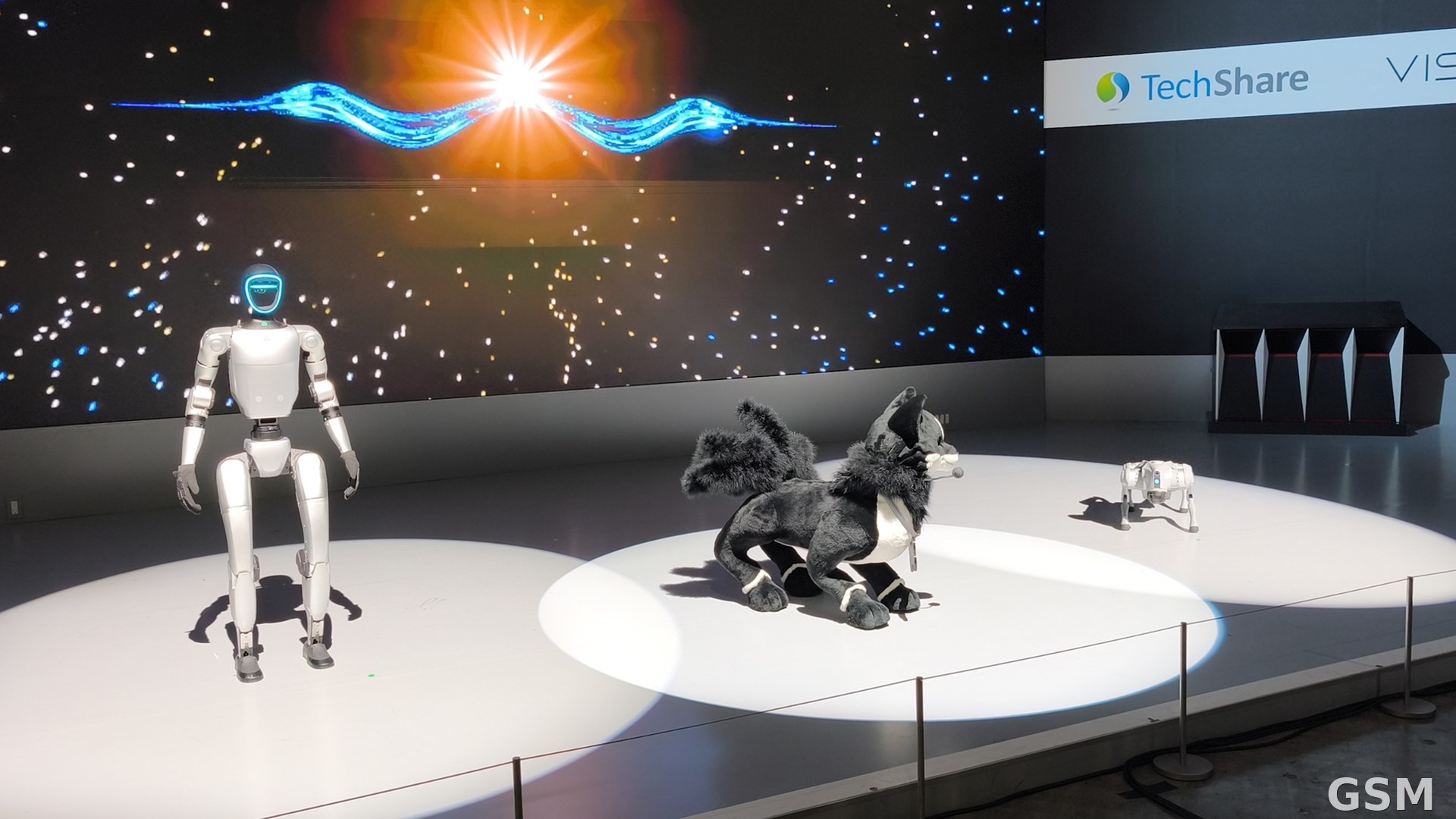
Photo: 图:宇树科技 G1 人形机器人(左)2025 年在东京 Japan Mobility Show 展台上亮相(资料图)。Meta 与傅里叶合作的 Max 原型尚未公开照片。RuinDig/Yuki Uchida 摄,CC BY 4.0,经 Wikimedia Commons 发布。