NASA Selects Three Companies for Ka-Band Satellite Relay Work Worth Up to $1.07 Billion Combined
NASA announced on November 4 that it has selected three companies to develop Ka-band space relay capability concepts compatible with missions currently in space, ensuring service continuity for existing spacecraft without requiring modifications to their onboard systems. The awards carry a combined maximum potential value of about $1.066 billion.
The awardees and their maximum values, inclusive of all future options, are Astranis Space Technologies Corp. at $264.3 million, Global Enterprise Solutions Inc. at $340.4 million, and Viasat Inc. at $460.9 million. The firm-fixed-price contracts were awarded under Appendix E of the Next Space Technologies for Exploration Partnerships-3 (NextSTEP-3) Broad Agency Announcement, and give NASA the option to provide additional funding up to the award limit to advance the work from initial concept development and risk reduction to an in-orbit flight demonstration.
The initial period of performance runs from November 4, 2026 through May 3, 2027, with additional priced options to continue work through 2029. Through this work, NASA aims to acquire end-to-end solutions that include space, ground, launch, operations, and integration elements, as one of many customers in the commercial marketplace.
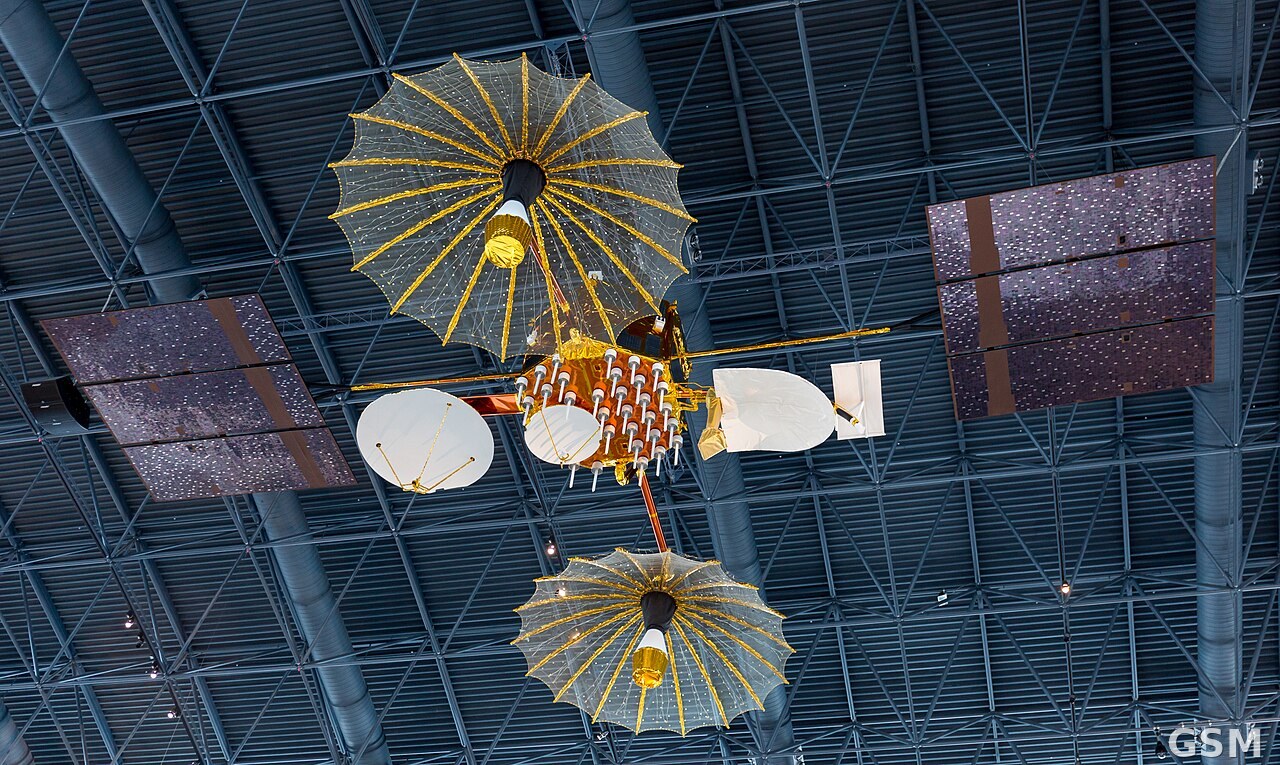
The work is facilitated through the Communications Services Project of NASA's Space Communications and Navigation (SCaN) program, and supports the agency's decision to gradually retire its Tracking and Data Relay Satellite (TDRS) fleet and adopt commercial services for future missions. NASA said Ka-band services are needed to support select in-orbit missions that cannot feasibly modify flight hardware or transition to non-compatible commercial services. (Source: NASA)
Source: NASA
Published by GSM · USA (original Chinese edition)
Photo: 图:跟踪与数据中继卫星(TDRS)模型,摄于国家航空航天博物馆 Udvar-Hazy 中心。Wikimedia Commons,CC0。 / Photo: A Tracking and Data Relay Satellite (TDRS) model at the National Air and Space Museum's Udvar-Hazy Center. Wikimedia Commons, CC0.