Philippines: Weather Bureau Says a Very Strong El Niño Has Developed, With Drought Provinces Expected to Rise to 87 by March
A very strong El Niño has developed in the tropical Pacific and is expected to peak before the end of 2026, raising the risk of prolonged dry spells, drought and warmer-than-normal temperatures across much of the Philippines, the state weather bureau told a House of Representatives Agriculture Committee hearing on November 4. "A very strong El Niño is present in the tropical Pacific," Ana Liza S. Solis, chief of the Philippine Atmospheric, Geophysical and Astronomical Services Administration (PAGASA) Climate Monitoring and Prediction Section, told lawmakers.
Sea surface temperature anomalies in the tropical Pacific averaged about 2.5 degrees Celsius from August to October, exceeding the 2-degree threshold used to classify a very strong El Niño, Solis said, and most climate models predict the event will persist until the first quarter of 2027. As of October 31, five provinces were experiencing meteorological drought, while 11 provinces and highly urbanised cities were under dry-spell conditions and another 10 provinces were experiencing dry conditions. PAGASA expects the number of provinces in meteorological drought to rise to 26 by December, 48 by January, 68 by February and 87 by March 2027, with its November-to-April outlook pointing to below-normal to way-below-normal rainfall across much of the country.
The Department of Agriculture told the same hearing it was coordinating with local governments and farmer groups to identify areas requiring support. Assistant Secretary U-Nichols A. Manalo said agricultural damage from El Niño had reached 8.5 billion pesos as of October 21, with corn accounting for almost 5 billion pesos of the losses, followed by rice, and that the department had provided 11.34 billion pesos in assistance, including indemnification for affected farmers, while seeking additional funds for cloud-seeding operations. PAGASA also projected that one or two tropical cyclones could still enter or cross the Philippine landmass in November and December despite the El Niño, and is set to issue El Niño Advisory No. 6 with updated assessments.
Source: 菲律宾大气地球物理和天文服务管理局
Published by GSM · USA (original Chinese edition)
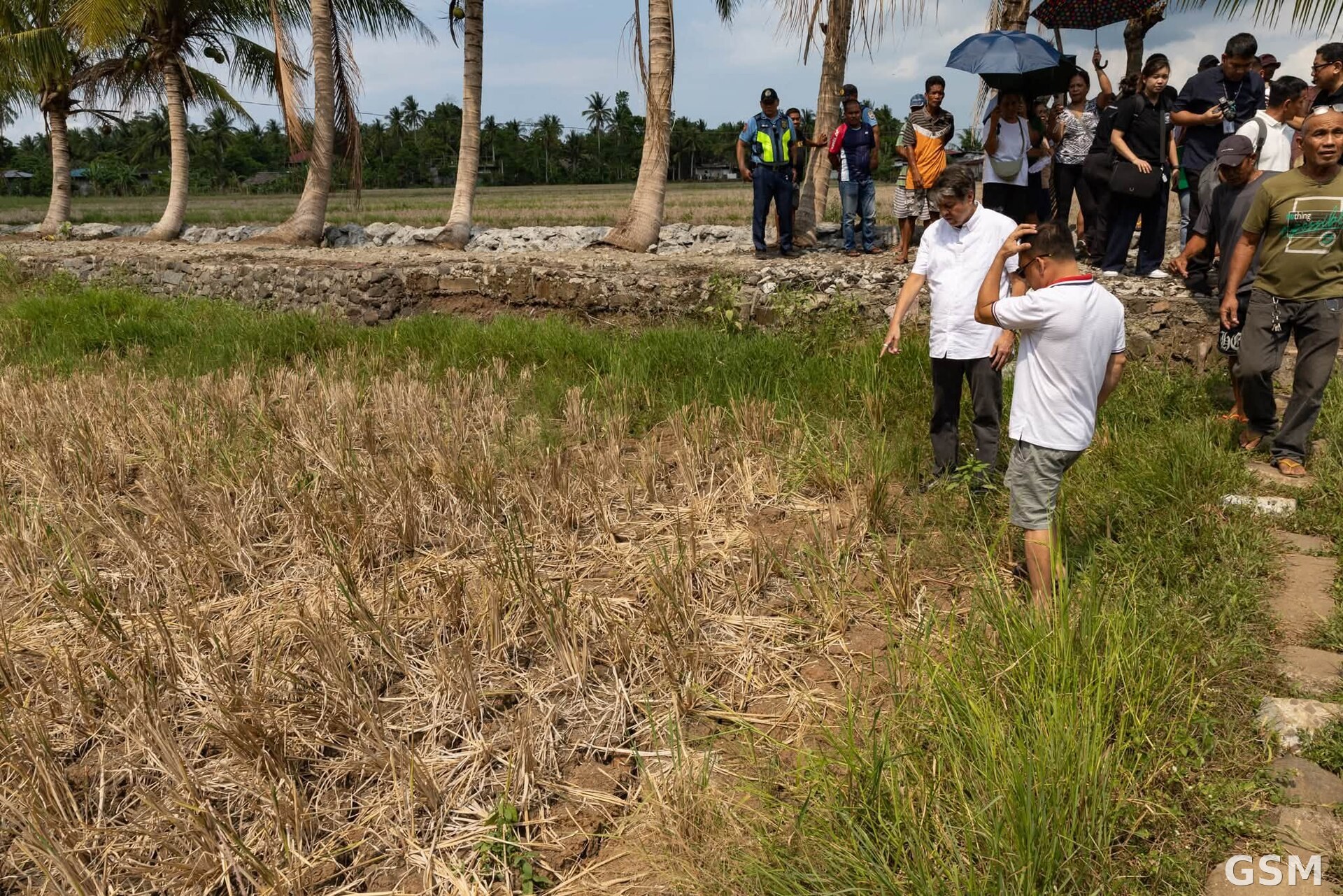
Photo: 照片:菲律宾卡马利格干涸的稻田(资料图),Kiko Pangilinan 办公室 摄,Wikimedia Commons,公共领域 / Photo: Dry rice fields in Camalig, Philippines (file photo), by the Office of Kiko Pangilinan, Wikimedia Commons, public domain