California Offers $6 Million to Stop the Golden Mussel From Spreading Out of the Delta
The California Department of Fish and Wildlife (CDFW) has opened $6 million in grant funding to develop or enhance boating decontamination control sites in the Sacramento-San Joaquin Delta in California, to prevent the invasive golden mussel from spreading out of the Delta. Projects must be on or centrally located to Delta waterways and support the five Delta counties of Yolo, Sacramento, Solano, Contra Costa and San Joaquin.
The funding covers one-time start-up costs. Eligible project types include rapid decontamination systems, boat submersion systems, mobile hot-water watercraft and equipment decontamination units, and stationary decontamination stations. Equipment and supplies, site development and installation, and watercraft inspection training and equipment are also fundable costs.
Eligible applicants include entities that own or operate boating facilities, state and local government agencies, California Native American Tribes, public entities, private entities and nonprofit organizations, as well as individuals and other legal entities. Cost share is not required, but it is encouraged and will benefit project review and selection.
Applications must be submitted through CDFW's WebGrants portal by 4 p.m. on December 15, 2026, and CDFW will hold an online public workshop on November 18, 2026, at 10 a.m. Recipients are expected to be announced in July 2027, and the grant money must be used by June 2029. The funding is state money allocated under the FY 2026-27 Budget Act and will be delivered through advances and reimbursements; qualified nonprofit grantees and federally recognized Tribes may receive advance payments of up to 25 percent of the total award.
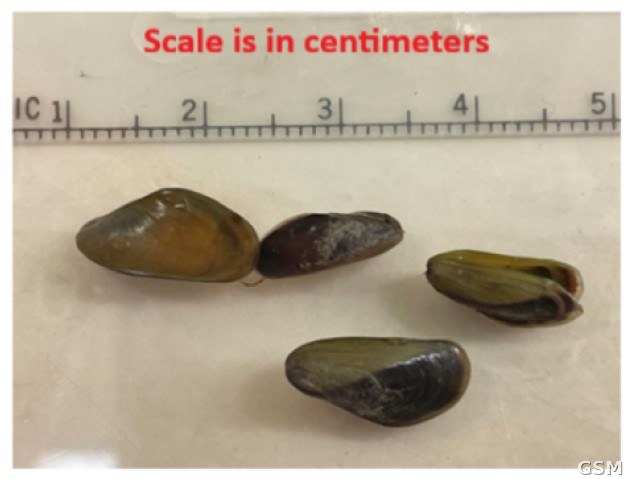
The golden mussel (Limnoperna fortunei) was first detected in North America in October 2024, at a water quality station at Rough and Ready Island near Stockton in San Joaquin County. It is similar in appearance and impacts to quagga and zebra mussels, but can establish in waters with wider temperature and salinity ranges.
According to CDFW, golden mussels compete with native and game fish for food and contribute to harmful, fish-killing algal blooms; they can lead to waterbody closures, mandatory inspections and higher launch and entry fees; and they raise repair and maintenance costs for boats, water infrastructure and hydroelectric facilities while reducing water flow for food production, water delivery to homes and flood control. The most common way the mussels spread is by hitchhiking on watercraft and equipment.
Prospective applicants can contact CDFW's Invasive Species Program at [email protected] for more information.
(Source: California Department of Fish and Wildlife)
Source: California Department of Fish and Wildlife
Published by GSM · USA (original Chinese edition)
Photo: 图:2024年10月在 San Joaquin 县 Stockton 附近 Rough and Ready Island 水质站采集到的金贻贝贝壳。照片:Elizabeth Wells 博士(加州水资源厅),加州鱼类与野生动物厅发布。 / Photo: Golden mussel shells collected in October 2024 at a water quality station at Rough and Ready Island near Stockton in San Joaquin County. Photo: Elizabeth Wells, Ph.D. (California Department of Water Resources), via the California Department of Fish and Wildlife.