Treasury Cuts Off MEXC Global From U.S. Financial System Over $16 Billion in Illicit Transactions
The U.S. Department of the Treasury's Financial Crimes Enforcement Network (FinCEN) issued an order in Washington on November 6, 2026, as part of Operation Economic Outcast, effectively cutting off the cryptocurrency exchange MEXC Global's access to the U.S. financial system. Treasury said the platform has facilitated at least $16 billion in illicit transactions connected to Iranian, North Korean, and Russian sanctions evasion, as well as cybercrime, including by transacting directly with sanctioned actors.
"Financial institutions cannot have it both ways: Either you support the Iranian regime, or you have access to the U.S. financial system," said Secretary of the Treasury Scott Bessent. He said Treasury will continue to sever the Iranian regime's economic lifelines and thwart its attempts to circumvent U.S. sanctions using digital assets. FinCEN's order prevents U.S. financial institutions from processing funds transfers involving MEXC Global.
MEXC Global was founded in 2018. Treasury said that as of September 2026, the platform processed more than $1 billion in daily transactions and maintained approximately $5 billion in reserves, making it one of the top 20 largest convertible virtual currency exchangers in the world, offering trading in more than 50 currencies and access to more than 3,000 different cryptocurrencies and tokenized assets.
Between May 2021 and May 2026, Treasury said, MEXC Global facilitated the movement of at least $16 billion in funds connected to sanctions evasion, cybercrime, and other illicit activity, including nearly $1.5 billion in transactions linked to Russian sanctions evasion and $232 million in direct transactions with U.S.-, EU-, and UK-sanctioned entities. Treasury said the platform was still processing transactions with the sanctioned Russian entity Garantex, and its successor Grinex, as recently as June 2026, more than four years after the Office of Foreign Assets Control (OFAC) designated Garantex in April 2022. It also facilitated at least $26 million in transactions benefitting the Russia-based, OFAC-sanctioned A7 sanctions evasion network and processed almost $200 million in transactions connected to the A7A5 stablecoin.
On Iran and North Korea, Treasury said that in the same period MEXC Global sent or received approximately $1 billion in direct transactions with more than 40 identified Iranian cryptocurrency exchangers, and facilitated approximately $22 million in transactions for the Central Bank of Iran and the Islamic Revolutionary Guard Corps and its Qods Force. The illicit activity also included ransomware and scam payments and Russian and other darknet market activity. Treasury said severe deficiencies in the platform's anti-money laundering controls allowed the activity.
The order, issued pursuant to section 9714(a) of the Combating Russian Money Laundering Act, prohibits U.S. financial institutions from engaging in any transmittal of funds from or to MEXC Global. Violations may result in civil or criminal penalties. The order does not modify existing obligations under the Bank Secrecy Act, including Suspicious Activity Report filing requirements, or sanctions administered by OFAC, and it is effective 30 days after publication in the Federal Register. Treasury also noted that individuals who provide information about sanctions violations to FinCEN's whistleblower incentive program may be eligible for awards if the information leads to a successful enforcement action resulting in monetary penalties exceeding $1,000,000. (Source: U.S. Department of the Treasury)
Source: U.S. Department of the Treasury
Published by GSM · USA (original Chinese edition)
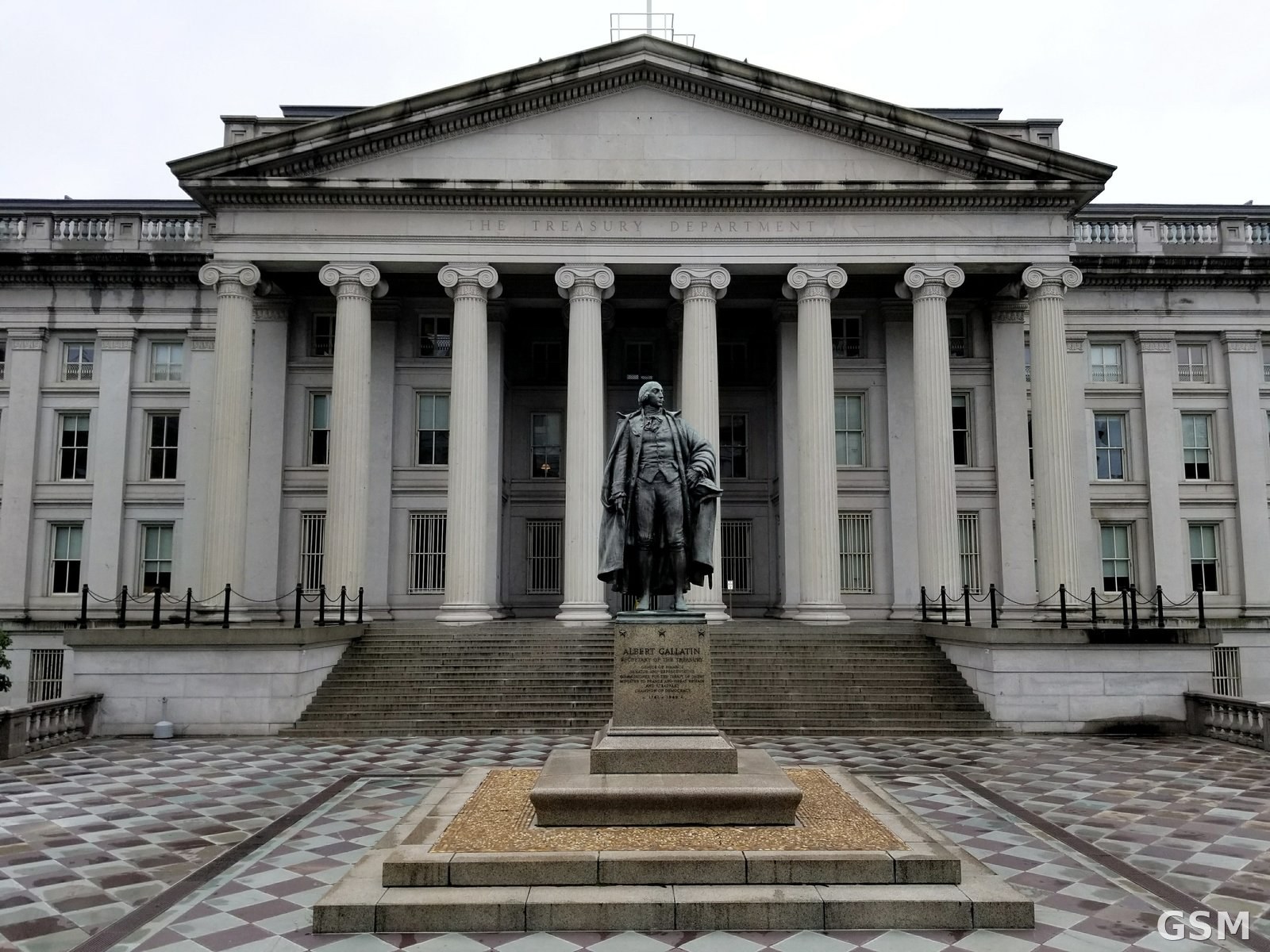
Photo: 图:位于华盛顿的美国财政部大楼与 Albert Gallatin 像(GSM固定图库)。CC BY-SA 4.0,经 Wikimedia Commons。 / Photo: The U.S. Treasury Building and the Albert Gallatin statue in Washington, D.C. (GSM file photo). CC BY-SA 4.0, via Wikimedia Commons.