Investigation: India's Home Minister Waived His Own Government's Procurement Rules as Agencies Bought Cellebrite Phone-Cracking Tools
The Internet Freedom Foundation (IFF), a Delhi-based digital-rights group, published an investigation on November 7 showing that India's Home Minister, Amit Shah, signed off in January on exemptions from the government's own "Make in India" procurement rules, clearing the way for government agencies to buy foreign forensic technology, including phone-extraction products made by the Israeli firm Cellebrite. The IFF investigation is drawn from the government's own procurement records.
Two Home Ministry letters are its core evidence. A letter dated January 7 records a wide-ranging, one-year waiver covering at least 422 foreign forensic items. A letter dated January 20 records that Shah approved on January 17 a proposal for the National Investigation Agency (NIA) to buy Cellebrite's most powerful product, the Premium Tool, on a three-year licence; the contract, worth about 498 million rupees (about $529,947), was awarded to Nextechno Gen Private Limited. From the 422-item exemption list, the IFF identified 118 digital and multimedia forensics items, including Cellebrite's Pathfinder, Inseyets On-Prem Pro and Inseyets Offline.
The buyers go beyond federal agencies. The IFF counted 15 procurement listings naming Cellebrite products across 11 tenders published in India in 2026, with buyers including the NIA, the Serious Fraud Investigation Office, the Department of Military Affairs and the police and forensic departments of Kerala, Karnataka and Himachal Pradesh, including states governed by the opposition Congress party. The Delhi Police has held Cellebrite tools since at least 2020, and the Home Ministry cleared three more for its Crime Branch in March 2025 through the same exemption route. Government tender specifications require such software to bypass passcodes, extract full file systems, use login tokens recovered from seized devices to access more than 100 cloud services, and enter protected spaces such as Samsung Secure Folder, Huawei Private Space and Xiaomi Second Space.
The legal gap the IFF identifies is that India has no statute, rule or published protocol governing when a seized phone may be forcibly unlocked, what may be copied, how long the copy may be kept or who may read it. Existing seizure powers do not address those questions; the decryption power in Section 69 of the IT Act is itself under challenge in a petition the IFF filed in the Supreme Court in 2019, which remains pending. The Supreme Court recognised privacy as a fundamental right in 2017.
The urgency, the IFF says, came from a seizure in October. On October 10, the Delhi Police detained YouTuber Dhruv Rathee ahead of a protest and held his phone and his parents' phones for most of a day. Rathee later said on a podcast that he believes police attempted to copy his iPhone's contents using Cellebrite and that the attempt appeared to fail because his phone ran a newer version of iOS. The IFF notes that his account has not been independently verified and the Delhi Police has not responded publicly. The IFF has filed information requests with the Delhi Police and the Home Ministry seeking licences, access records and extraction logs, and says it has not seen the minister's exemption note itself, which it has also sought.
Cellebrite is an Israeli digital-forensics company whose tools forensic researchers have documented being used against journalists and activists in Serbia, Jordan, Kenya and Russia. The IFF's question is how such tools are entering policing across India through exemption routes while no law governs their use.
(Source: Internet Freedom Foundation)
Source: Internet Freedom Foundation
Published by GSM · USA (original Chinese edition)
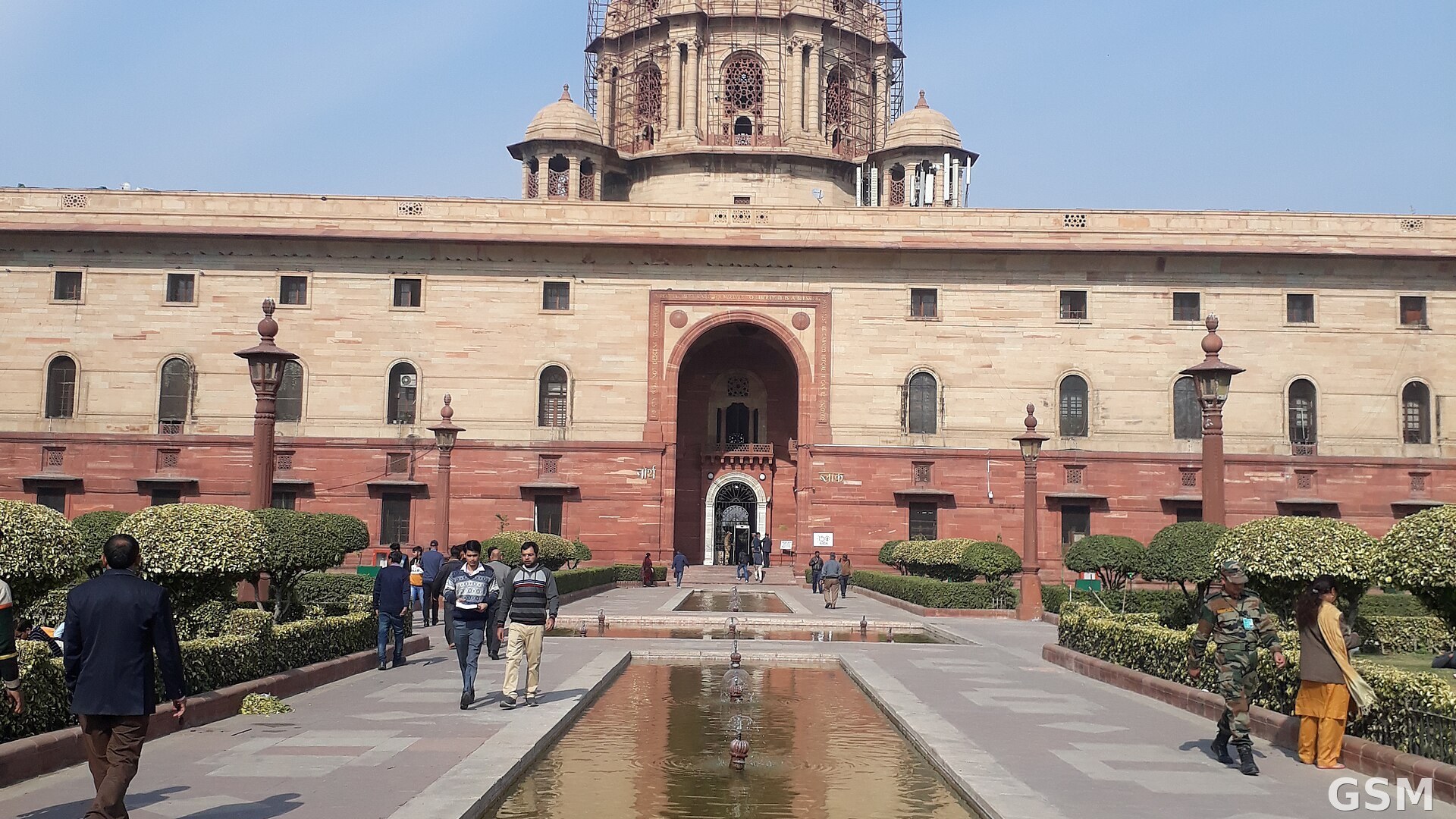
Photo: 图:印度内政部所在的德里北区大楼(North Block)。照片:CC BY-SA 4.0,经 Wikimedia Commons。 / Photo: North Block in New Delhi, home of India's Ministry of Home Affairs. CC BY-SA 4.0, via Wikimedia Commons.