After the CPT Crackdown: How Two Memos Rewrote the Internship Path for International Students
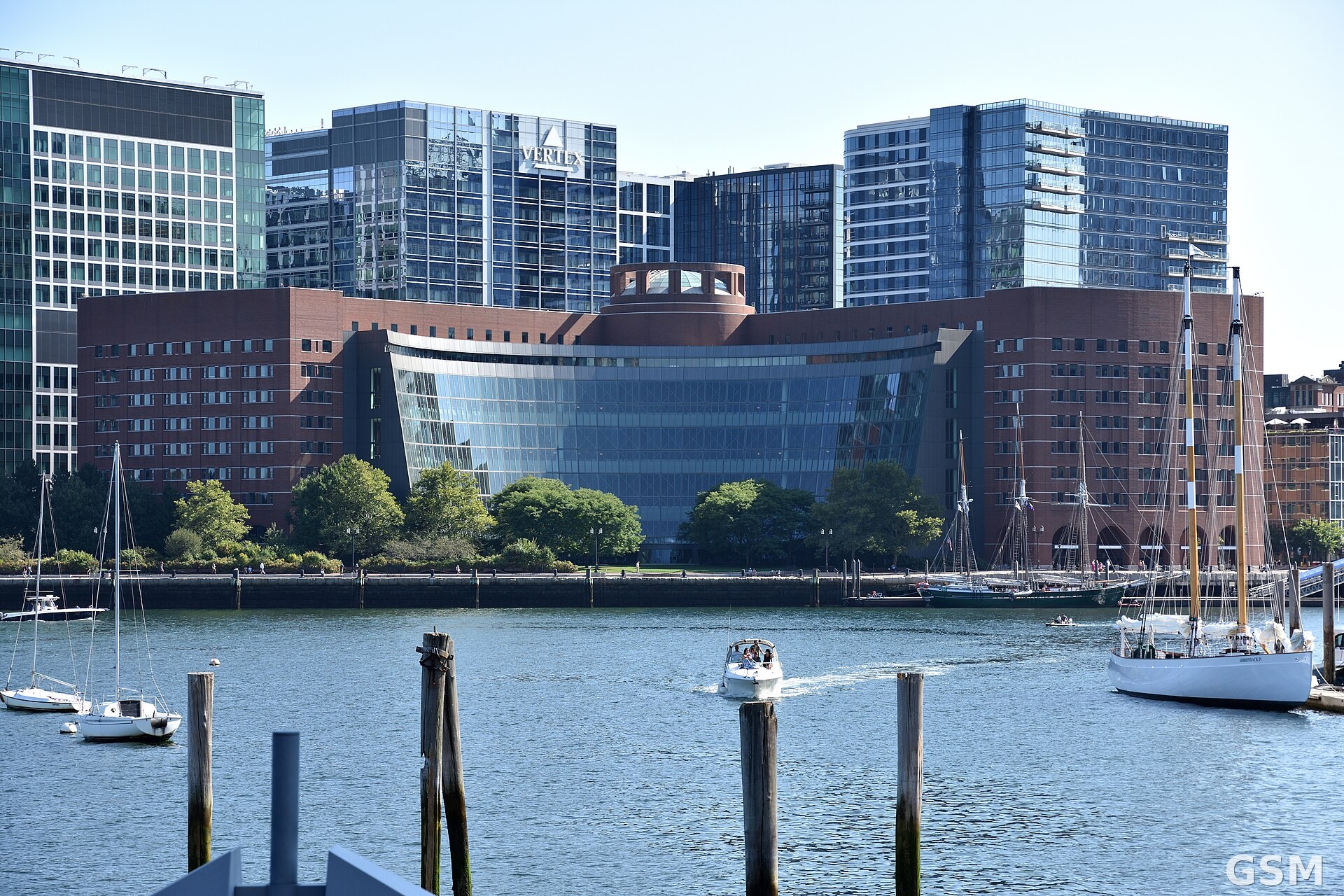
1. A Boston courtroom, an afternoon without an answer
At 3 p.m. on November 6, 2026, in Boston, Judge Julia E. Kobick of the U.S. District Court for the District of Massachusetts presided over a hearing in a lawsuit brought by four higher-education organizations against the Department of Homeland Security. At issue: whether two internal guidance documents narrowing Curricular Practical Training (CPT) eligibility for international students are lawful. The plaintiffs asked the court to stay the two documents and issue a preliminary injunction.
As of this writing (the morning of November 7, Pacific time), the judge has not ruled. The two documents remain in effect, and schools continue to adjudicate CPT under the narrowed standard.
The case is Association of American Universities v. U.S. Department of Homeland Security, No. 1:26-cv-14520, filed October 5, 2026. The plaintiffs are the Association of American Universities (AAU, 71 research universities), NAFSA: Association of International Educators (more than 9,000 members), the Presidents' Alliance on Higher Education and Immigration (nearly 600 institutions across 42 states), and the Association of Independent Colleges and Universities in Massachusetts (AICUM, 55 private institutions in Massachusetts), represented by Jenner & Block. The defendants are the Department of Homeland Security, U.S. Immigration and Customs Enforcement, and the Department of Justice.
2. What the two documents say
On August 12, 2026, the Student and Exchange Visitor Program (SEVP) issued the first Broadcast Message (BCM 2608-01), titled "Reminder of Liability for DSOs Regarding CPT Authorization." SEVP said it had observed a growing number of CPT authorizations that do not meet the requirements, "specifically those not constituting an integral part of an established curriculum." The message states that CPT may be authorized only "if its absence would make the attainment of a degree an impossibility," and that the training must be "a core and essential part of the student's studies, without which, they would be unable to complete their degree."
The message also reminded Designated School Officials (DSOs) that their signature on Form I-20 certifies, under penalty of perjury, that the CPT information is true and accurate, and that noncompliant authorizations could draw action from SEVP and Homeland Security Investigations, including revocation of a school's certification.
On August 24, a second message (BCM 2608-02) followed in question-and-answer form, restating that the rise in noncompliant CPT authorizations is "a matter of great concern," and adding a key standard: "all students" includes American students — if American students in the same program are not required to complete the training, then it is not truly "required" for anyone; the training must be arranged through a cooperative agreement between the school and the employer; and internships taken for elective credit generally do not qualify.
Both messages carry a disclaimer: the message is not "itself a rule or a final action by SEVP." The regulation itself has not changed: the text of 8 C.F.R. § 214.2(f)(10)(i) is unamended.
3. Thirty-five years, two readings
The plaintiffs' complaint states that in August 2026, on the eve of the new academic year, DHS "abruptly changed a position that the federal government had held for more than thirty-five years," without substantive explanation, without notice and comment, and without acknowledging the change, while threatening school officials with criminal liability.
The thirty-five-year practice traces to a 1991 rulemaking. The Immigration and Naturalization Service's proposed rule of June 13, 1991 (56 Fed. Reg. 27,211) defined CPT as training "for which students are awarded academic credits." The final rule of October 29, 1991 (56 Fed. Reg. 55,608) responded to comments by adding non-credit internships required for a degree — in fields such as hotel management, nursing, law, engineering, and teaching, where students routinely complete non-credit internships — in order to "broaden the definition of CPT" to include them. Two paths resulted: the credit path and the non-credit required path. The plaintiffs argue the new guidance grafts requirements that applied only to the second path onto the first.
A 2014 SEVP training document for DSOs put it more plainly: "'integral part of an established curriculum' means an opportunity must be required by the curriculum or, if not required, the student must receive credit for the training." That official prior reading directly conflicts with the 2026 guidance and is one of the plaintiffs' central exhibits.
The complaint also states that for nearly eighty years the federal government has recognized the importance of practical training opportunities for international students: "For nearly eighty years, the federal government has recognized the importance of these opportunities and authorized international students' participation in such programs." That is the plaintiffs' characterization.
4. The two sides in court
The plaintiffs advance four grounds under the Administrative Procedure Act: arbitrary and capricious action (reversing a decades-old interpretation without acknowledging it, explaining it, or considering reliance interests); retroactivity; conflict with the regulation itself; and procedural violation (a substantive legislative rule issued without notice and comment). Filed with their motion for preliminary relief were 15 declarations describing concrete harm: a course at Michigan State University was cancelled after a doctoral student instructor was denied CPT; an employer at the University of Wisconsin lost a student intern at the last moment; some students plan to transfer to institutions abroad. The complaint states that schools were forced to halt CPT authorizations midstream, cancelling internships students had secured months earlier, and that students near graduation have lost the opportunity permanently.
The government's opposition, filed October 28, 2026 (27 pages), advances five defenses: the plaintiffs lack standing (no enforcement action has occurred, and member schools "can continue to approve CPT"); the two messages are not final agency action (they carry the disclaimer that they are not "a rule or a final action by SEVP"); they do not violate the law (CPT must be an "integral part" of the curriculum and provided by "an employer that has a cooperative agreement with the school"); there is no irreparable harm; and the equities and the public interest favor the government (fraud prevention and national security).
The opposition states: "The broadcasts do not constitute final agency action, the broadcasts are not arbitrary and capricious and are in accordance with law and applicable regulations, Plaintiffs have not shown irreparable harm, and the equities and public interest favor Defendants."
The government concedes the two messages apply only prospectively. The plaintiffs' reply, filed November 4, notes that a policy that applies only prospectively is a new policy. The reply also states that the government "never acknowledged, much less discussed" the 15 declarations.
5. The numbers: down, then up — except CPT
SEVP annual data show CPT authorizations falling then rising over seven years: a peak of 151,525 in 2018, a low of 91,352 in 2021, and 130,586 in 2024 — still about 14% below the peak.
The 2024 comparison across the three training categories is more striking: Optional Practical Training employment reached 194,554 (up 21%), STEM OPT reached 95,384 (up 54%), and CPT reached 130,586 (down 0.4%) — the only one of the three to decline. Total F-1 and M-1 student SEVIS records in 2024 stood at 1,582,808.
For Chinese students: total international students in the United States reached 1,177,766 in the 2024/25 academic year, including 265,919 from China (down 4%); 61,981 Chinese students were on OPT, about 23% of the Chinese student total. It must be stated plainly: SEVP does not publish CPT authorizations broken down by nationality, so no figure for Chinese students on CPT can be derived from public sources, and this article does not state one.
Another set of numbers sits on the same tightening chain: the Department of Homeland Security has proposed charging schools $70,000 for a student's first OPT recommendation and $30,000 for each subsequent recommendation; 2,478 schools had students on OPT between 2022 and 2024; and DHS estimates the fees would transfer $8.4 billion to $16.5 billion per year from schools to the federal government. The notice of proposed rulemaking was published in the Federal Register on October 8, 2026 (91 FR 64566), and public comments close November 9, 2026.
SEVP-certified schools numbered 7,234 in 2024, 183 fewer than in 2023; 1,082 certified schools enrolled no international students that year.
6. On campuses, with students
After the guidance issued, schools' responses were posted on their own websites. Harvard University stopped approving CPT in five schools: Harvard College, Harvard Law School, Harvard Medical School, the Graduate School of Design, and the Graduate School of Arts and Sciences. The Massachusetts Institute of Technology paused processing of all new CPT applications received on or after August 24, 2026, and contacted students who had already received CPT for fall 2026 to discuss options. The University of California, Berkeley paused applications for "curricular credit CPT" while continuing to accept internships documented as a graduation requirement, then extended the pause indefinitely "for the foreseeable future." The University of Pennsylvania first paused CPT adjudications, then resumed accepting applications meeting the "integral and required" standard. Boston University, Wellesley College, and Georgetown University also paused or tightened approvals.
Among students: Leander Hirsch, an international student at UC Berkeley, told NBC Bay Area he hoped to be able to take an internship. The plaintiffs' declarations add that twelve months of full-time CPT costs a student eligibility for post-graduation OPT, and that pre-completion OPT is not a realistic substitute: it requires approval from both the school and the government, a process that is lengthy and unpredictable, and it consumes part of the twelve months of post-graduation OPT.
7. Do not mistake this case for the other one
A second lawsuit involving international students in the same court at the same time is easily confused with this one and must be distinguished: Presidents' Alliance v. DHS, No. 1:26-cv-13799, before Judge Saylor, challenges the Department of Homeland Security's final rule ending the "Duration of Status" system in favor of fixed admission periods. On September 14, 2026, Judge Saylor issued a nationwide order postponing that rule's effective date. DHS has appealed.
The September 14 preliminary injunction belongs to that case, not the CPT case. The two cases share some plaintiffs and the same court, but their docket numbers, subjects, and judges differ.
8. Close: awaiting a ruling
Back in the Boston courtroom: the hearing has been held, and no ruling has issued. Judge Kobick's decision will determine whether the two messages are stayed or remain in effect; the losing side may seek review in the First Circuit.
Two dates are also worth noting: public comments on the OPT fee proposal close November 9, 2026, and the Department of Homeland Security's appellate brief in the fixed-duration case is due the same day.
Source: U.S. Department of Homeland Security and court filings
Published by GSM · USA (original Chinese edition)
Photo: 图:位于波士顿的 John Joseph Moakley 联邦法院大楼。Wikimedia Commons,CC BY 4.0。 / Photo: The John Joseph Moakley United States Courthouse in Boston. Wikimedia Commons, CC BY 4.0.