U.S. Public School Enrollment Keeps Falling: A Decade of Change Behind the Empty Classrooms
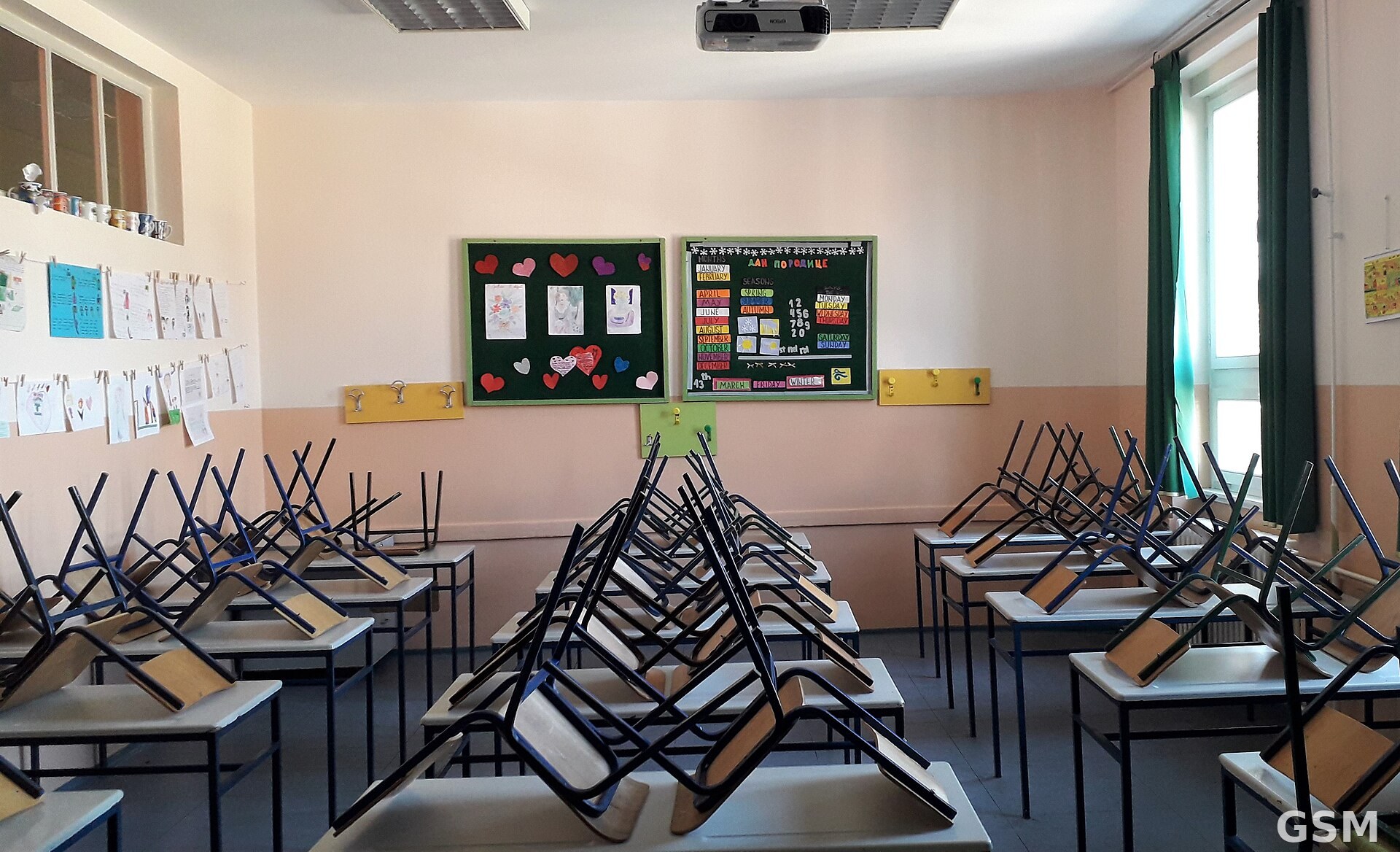
In Chicago's South Side, Frederick Douglass Academy High School was built for 1,008 students. Today it has 27 students and 28 full-time staff members. The classrooms are still there. The lessons go on. The hallways are empty. This is not one school's story. It is one frame of a decade-long change in American public schools: fewer students, emptier buildings.
I. The big picture: the peak is past
Federal data from the National Center for Education Statistics (NCES) show U.S. public elementary and secondary enrollment peaked at 50.8 million in fall 2019, then fell every year after, reaching 49.4 million in fall 2024 — down more than 1.4 million in six years. NCES projects a further 5% decline from 2022 to 2031, to 46.9 million; measured from 2019 to 2031, the cumulative decline over the decade is about 7%.
Fewer students, more spending. From 2019 to 2024, enrollment fell by about 1.4 million while total public school spending rose 34%, and per-pupil spending climbed from about $13,187 to $17,644. Nearly $190 billion in federal pandemic relief (ESSER) passed by Congress in 2020–2021 has been spent and expired, leaving districts facing a funding cliff and fewer students at the same time. A 2026 RAND survey of school districts nationwide found 54% of district officials worried about coming budget gaps. Achievement has not recovered either: in 2024, only 60% of fourth graders read at or above the basic level, and 67% of eighth graders.
A 2025 Brookings analysis offers two scenarios: by 2035, national enrollment falls by 1.8 million (-4%) in the best case and 3.8 million (-9%) in the worst. These are projection scenarios, not settled facts.
II. The map: the decline is uneven
The decline is far from even. From 2019 to 2024, enrollment fell in 40 states, from 0.3% in North Carolina to 8.1% in West Virginia; 16 states fell by at least 5%. California lost the most students, 350,000 (-6%). By fall 2024, 31 states had fewer students than in 2015. NCES projects that only nine states will gain enrollment from 2022 to 2031 — Alabama, Florida, Idaho, Montana, North Dakota, South Carolina, South Dakota, Tennessee and Utah. By region, the Northeast falls 9.1%, the West 9.7%, the Midwest 5.0% and the South 1.8%.
The steepest drops are in big cities. Nine of the ten largest districts have lost enrollment since the pandemic. The Los Angeles Unified School District is down 44% from its 2004 peak, having lost more than 300,000 students over 20 years, including 74,000 from 2019 to 2024. New York City's traditional public schools fell from more than 1,002,000 students in 2019–20 to 845,500 in fall 2024; the Manhattan Institute projects 765,000 by 2030. Chicago Public Schools are down 22% cumulatively since 2011–12; the district itself projects 326,200 students by 2028, a slight rise from 322,800 in 2024. Houston's independent school district lost 8,300 students in the most recent school year, far above officials' expectations.
Texas is the sharpest contrast. One of the fastest-growing states in the country, it recorded its first non-pandemic enrollment drop in nearly 40 years: down 76,613 students (-1.4%), with 60% of the loss in elementary grades and Hispanic students accounting for 81% of it. State education commissioner Mike Morath said publicly: "We cannot tell you exactly why."
It is the lower grades that are falling. From 2019 to 2024, kindergarten enrollment alone fell by 237,000 (more than 6%); elementary grades lost about 940,000; middle school lost nearly 700,000, with sixth grade falling the most (-7%); high school, by contrast, grew slightly, by 2%. By race and ethnicity, white enrollment fell by more than 2.4 million (-10%), Black enrollment by about 280,000 (-4%), while Hispanic enrollment rose by about 790,000 (+6%) and Asian enrollment by about 120,000 (+4%) — but Hispanic and Asian growth has slowed from 8%–9% over the previous five years, no longer enough to offset the losses among white and Black students.
III. The cause chain: fewer children, more choices
The first cause is births. The U.S. fertility rate fell from 2.1 children per woman in 2007 — replacement level — to just under 1.6 in 2024, the lowest in American history. The population under 18 has been shrinking since 2010, down about 2.1 million by 2025. Thomas Dee, a Stanford professor of education economics, said about half of the post-pandemic enrollment loss can be attributed to demographics. He told NPR it is the first time in nearly a century — since the Depression era — that birth rates and immigration have been low at the same time.
The second cause is homeschooling. The National Center for Education Statistics' household survey found 3.4% of K-12 students homeschooled in 2022–23, up from 2.8% before the pandemic. The Washington Post's analysis of 18 states with comparable data found homeschool enrollment up 51% over six school years, while private schools grew only 7%. Johns Hopkins University's Homeschool Hub reports average homeschool growth of 4.9% in 2024–25, nearly three times the pre-pandemic pace of about 2%.
The third cause is charter schools and school choice. Charter enrollment rose from 2.7 million in fall 2014 to 3.4 million in 2019 and 3.7 million in 2022, reaching nearly 4 million in 2024–25 — 8.0% of public school students. Over five years charters grew by more than 515,000 students (+15%) while traditional districts lost nearly 2 million (-4%). As of 2026, 17 states have enacted or are rolling out programs that let public funds pay private school tuition for all students in the state.
The fourth cause is migration. High housing costs and taxes have pushed families out of cities and high-cost states; urban districts lost about 760,000 students (-5%) after the pandemic, while rural, suburban and town districts fell by less than 1% to 3%. Colorado recorded its first net out-migration in history in 2025, with about 12,000 more people leaving than arriving.
The fifth cause is immigration policy. A Migration Policy Institute study estimated that as many as 1.9 million people left the United States in the first 18 months of the second Trump term — an estimate that includes voluntary departures and deportations, not school-age children alone. Newcomer enrollment fell sharply with it: Miami-Dade County enrolled about 2,550 newly arrived students in the most recent school year, down from more than 20,000 two years earlier; Denver's public schools enrolled 400 newcomers in summer 2025, down from 1,500 the previous summer; Houston closed its Las Américas newcomer school after enrollment fell from 111 to 21 students. Kelly Gonez, a Los Angeles Unified board member, said: "Many families went into hiding immediately. We projected a 2% enrollment decline, and it doubled." That was the district's own projection after immigration enforcement actions, not a national forecast. A 2026 Cato Institute analysis estimated legal immigration down 81% from December 2024 and illegal immigration down 71%.
IV. The consequences: closures, layoffs, thinner curriculums
Schools are closing. West Virginia, down 13% from its 2015 enrollment level from 2019 to 2024, closed 53 of its more than 600 schools. Louisiana has closed nearly 100 schools since 2020. Philadelphia approved closing 17 schools after a 12% enrollment drop. California's Inglewood Unified closed five schools in 2025. The chain reaction is written in district budgets: students must be reassigned to neighboring schools, and teachers, custodians and cafeteria workers often lose their jobs; in rural areas the school is often the community's center, and closing a town's only school can mean the nearest option is an hour's drive away.
Funding follows the student. In most states, public school funding is tied directly to enrollment: losing students means losing per-pupil state aid — typically about 45% of a district's budget — while fixed costs for administration, buildings, water and electricity stay the same. Twenty-four districts in California's Monterey County face a combined $107.4 million deficit, and Pajaro Valley Unified cut 160 full-time positions. Colorado's Poudre district cut 200 employees a year earlier; its superintendent put it plainly: "Fewer students, fewer staff." In Louisiana, Grant Parish lost about $1.2 million in state funding after losing 146 students in two years. Closing a school does not necessarily save money: one Colorado case showed a closure saving only about one cent of every dollar.
Curriculums are thinning too. Schools with sharply falling enrollment cannot sustain multiple AP courses, foreign languages or sports teams; one Los Angeles school was left with two electives — weightlifting and a Bible club — before closing in 2024.
V. The Chinese American angle: the school-district housing math
For Chinese American families, these numbers land on a specific question: how much to pay for a good school district. A Redfin report dated September 2, 2026, found the median home in a highly rated school zone (GreatSchools scores 8–10) sold for $580,000, 35% more than the $430,000 median for a typical U.S. home — a $150,000 premium. Philadelphia's premium was the highest, at 93.5%; Anaheim's was the smallest, at 6% — 69.7% of that metro area's schools are highly rated, the highest share in the country, and when good schools are not scarce, the premium shrinks. A middle-income family buying in a highly rated zone must spend 54.5% of its income on housing, against 40.4% for a typical purchase; only 13% of listings in highly rated zones are affordable to middle-income families, against 27.6% overall.
The districts where Chinese families concentrate show the same arithmetic in concrete numbers (figures below from the U.S. Census Bureau American Community Survey 2022, Niche rankings and U.S. News 2025; home prices from Redfin/Zillow market data). The San Gabriel Valley is home to more than 300,000 Chinese and Taiwanese residents; in Arcadia, Asians make up 58.7% of the population, the median home costs about $1.8 million, and Arcadia Unified ranks No. 1 in Los Angeles County and No. 4 in California (Niche, A+), with 69% of students proficient in math and 75% in reading. In the Bay Area, Asians make up 70.2% of Cupertino's population, and the median home there cost about $2.9 million in December 2025; Monta Vista High School is 79.5% Asian and ranked No. 129 in the nation. Irvine Unified ranks No. 1 in Orange County, with a median home price of about $1.44 million to $1.6 million. Walnut Valley Unified, where Asian students make up 69%, has a 71% math proficiency rate — against a state average of 34% — and a 97% graduation rate.
Asian enrollment is still growing, but more slowly: up about 120,000 (+4%) from 2019 to 2024, below its pre-pandemic pace. The University of Southern California enrolled about 5,760 Chinese students in fall 2025, the most of any California university and about half of all its international students.
Falling enrollment is changing the variables in that arithmetic: the price premium is still there, but the number of students underpinning it is shrinking. Good school districts are still expensive; only the certainty of what "school district" means in the purchase is less than it was.
VI. Close
Back to that Chicago high school. Frederick Douglass Academy was built for 1,008 students; today it has 27 students and 28 full-time staff members. Chicago Public Schools project 326,200 students by 2028, a slight rise from 2024. NCES projects U.S. public school enrollment of 46.9 million by 2031. The 237,000 students missing from kindergarten will move up through the grades, year by year.
Source: 全国教育统计中心等机构数据
Published by GSM · USA (original Chinese edition)
Photo: 图:一间空教室。Wikimedia Commons,CC BY-SA 4.0。 / Photo: An empty classroom. Wikimedia Commons, CC BY-SA 4.0.