College Tuition and Student Debt: The Ever-Pricier Degree
1. In Indiana, a university that froze its tuition
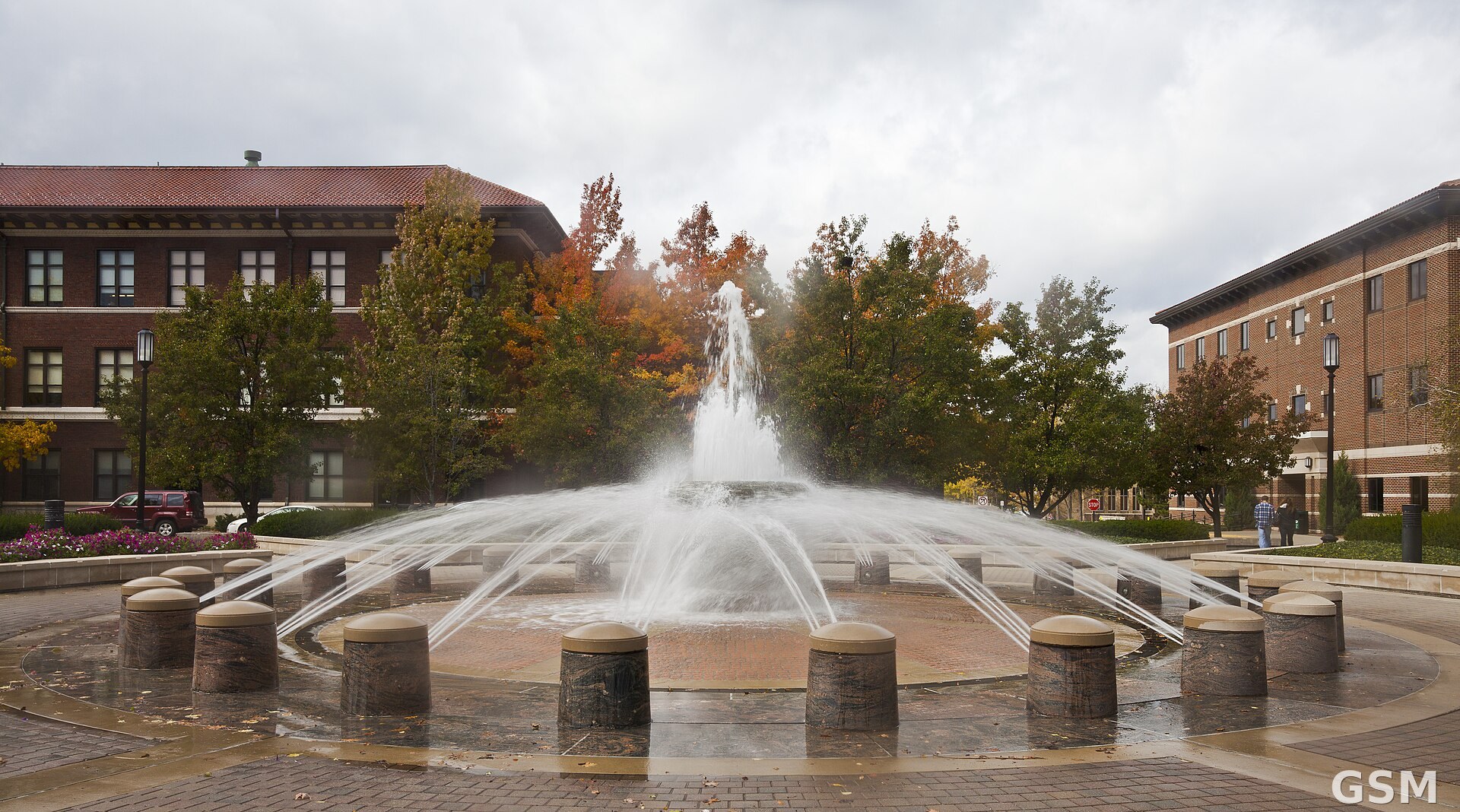
In 2013, in West Lafayette, Indiana, Purdue University announced it was freezing tuition at 2012 levels: $9,992 a year for in-state students, $28,794 for out-of-state students, ending 37 consecutive years of increases.
On April 4, 2025, Purdue's board of trustees approved a 14th consecutive freeze, through the 2026-27 academic year. Over thirteen years, the freeze has saved student families more than $1 billion; annual student borrowing has fallen 32%; 60% of students graduate debt-free.
Purdue is the exception. In the same College Board annual report, sticker prices across American higher education keep rising — but beyond the sticker price, another set of numbers is moving in the opposite direction.
2. The sticker: one bill for 2025-26
The College Board's *Trends in College Pricing and Student Aid 2025* (published November 2025) gives 2025-26 averages: public four-year in-state tuition and fees $11,950, up 2.9% from the prior year; out-of-state tuition $31,880, up 3.4%; private nonprofit four-year $45,000, up 4.0%; public two-year (in-district) $4,150, up 2.7%.
Room and board is a separate bill: $13,900 a year at public four-year schools, $15,920 at private schools. At public four-year schools, room and board now exceeds tuition itself. Adding books, transportation, and other expenses, the full annual cost of attendance is $30,990 in-state at a public four-year school, $50,920 out-of-state, and $65,470 at a private school; over four years, that is $261,880 at a private school and $203,680 at an out-of-state public school.
The spread between states is nearly threefold: public four-year in-state tuition runs from $6,360 in Florida, the cheapest, to $18,090 in Vermont, the most expensive. In states where Chinese families concentrate: California $9,990 (community college just $1,440, the cheapest in the nation), New York $9,730, Texas $9,440, New Jersey $14,580, Massachusetts $14,290. Community college tuition ranges from $1,440 in California to $8,900 in Vermont.
3. The paradox: sticker up, net price down
Beyond the sticker price is the net price — what students actually pay after grants. In 2025-26, average net tuition for first-time, full-time students is about $2,300 at public four-year schools in-state, about $16,910 at private nonprofits, and about $0 at community colleges (grants have fully covered community college tuition since 2009-10).
The most telling comparison in this feature covers the past decade. From 2015-16 to 2025-26, public four-year in-state sticker prices rose 27% in nominal terms but fell 7% after inflation; real net tuition fell from $4,400 to $2,300, a 48% decline. Private four-year sticker prices rose 39% nominally and 2% in real terms, while real net tuition fell from its 2006-07 peak of $19,810 to $16,910. Net total cost (including room and board) fell 12% at public schools and 8% at private schools over the decade.
The thirty-year view is different: adjusted for inflation, public four-year in-state tuition rose from $5,940 in 1995-96 to $11,950 in 2025-26, a real increase of 101%; private tuition rose from $25,820 to $45,000, up 74% in real terms. Public tuition grew fastest in real terms in the 2000s, private tuition in the 1980s; since 1980, published tuition has roughly tripled in real terms.
Grants are moving at both ends. The average tuition discount rate at private nonprofit institutions reached a record 56.3% in 2024-25, with 89% of private-school students receiving institutional aid. At the other end, the maximum federal Pell Grant is $7,395 in 2025-26, unchanged since 2024-25; in 2024-25, the maximum Pell Grant covered only 27% of the average total cost at a public four-year school, compared with more than three-quarters in 1975-76.
4. The debt: $1.86 trillion, 42.3 million people
Federal Reserve G.19 consumer credit data show total U.S. student loan balances at $1,861.8 billion — $1.86 trillion — at the end of the second quarter of 2026, up $55.6 billion from a year earlier and above $1.85 trillion for the first time. In 2015 the total was $1.02 trillion, an increase of about 80% in ten years.
Federal loans dominate: about $1.72 trillion, roughly 91% of the total; private loans about $138.8 billion. About 42.3 million people hold federal student loans, with an average federal balance of about $40,800 and a median of about $20,000 to $25,000.
Delinquency is rising. The New York Fed's *Quarterly Report on Household Debt and Credit* shows the 90-plus-day delinquency rate at 10.6% in the second quarter of 2026, up from 10.3% the prior quarter, measured by balance. The New York Fed cautions that recent delinquency figures are distorted by the resumption of reporting on previously defaulted debts after the repayment pause ended.
Debt is layered by degree. Average federal loan balances for bachelor's degree graduates are about $28,244 to $29,550; MBA $66,740; Master of Arts $80,540; Juris Doctor $140,870; professional doctorate $178,800; Doctor of Medicine an average of $199,220 (median $223,130 for the class of 2025, per the Association of American Medical Colleges). Under the standard repayment plan, average monthly payments are $336 for bachelor's holders and $842 for master's holders.
Graduate borrowers are only about 25% of all borrowers but hold about 50% of the nation's student debt — a secondary aggregation whose original source could not be verified.
Federal loan interest rates reset each July 1 based on the May auction yield of the 10-year Treasury note and are fixed once borrowed. For 2026-27: undergraduate Direct Loans 6.52%, graduate Direct Unsubsidized Loans 8.07%, PLUS Loans 9.07%.
5. The policy: the rise and fall of SAVE, and a new law
In August 2022, the Biden administration announced one-time cancellation of up to $20,000 for Pell recipients and $10,000 for other borrowers, at an estimated cost of about $430 billion. On June 30, 2023, the Supreme Court struck the plan down 6-3 (*Biden v. Nebraska*, 600 U.S. 477), holding that the HEROES Act did not authorize it.
Through existing channels, the Biden administration approved about $188 billion in relief for about 5 million borrowers (sources range from $183.6 billion to $188.8 billion, and from 5 million to 5.3 million borrowers). The breakdown includes $78.5 billion through Public Service Loan Forgiveness (PSLF), $34.5 billion through borrower defense, and $56.5 billion through income-driven repayment.
The SAVE plan — Saving on a Valuable Education, an income-driven repayment plan — launched in August 2023: monthly payments of 5% of discretionary income for undergraduate borrowers, $0 for about 1 million low-income borrowers, and unpaid interest not added to principal. About 8 million borrowers had enrolled by early 2024. In June 2024, the U.S. District Court for the Eastern District of Missouri issued a preliminary injunction, which the Eighth Circuit affirmed and broadened; from August 2024, all SAVE borrowers entered a general forbearance. Interest on SAVE accounts resumed on August 1, 2025.
On July 4, 2025, the One Big Beautiful Bill Act (Public Law 119-21) was signed into law, with student loan provisions effective July 1, 2026: Graduate PLUS Loans end for new borrowers, with up to a three-year transition for students already enrolled; general graduate borrowing is capped at $20,500 a year and $100,000 over a lifetime; professional degrees (11 statutory categories including law and medicine) are capped at $50,000 a year and $200,000 over a lifetime; Parent PLUS Loans are capped at $20,000 a year and $65,000 over a lifetime per dependent student; and the lifetime federal loan cap is $257,500. Loans first disbursed on or after July 1, 2026, offer only two repayment options: the Repayment Assistance Plan (RAP, monthly payments of 1% to 10% of adjusted gross income, forgiveness after 30 years) and the graduated standard repayment plan; SAVE, PAYE, and ICR are phased out before July 1, 2028.
Litigation continues. On October 30, 2026, the American Federation of Teachers filed a class action, *Weingarten v. McMahon* (U.S. District Court for the District of Columbia), alleging the Department of Education unlawfully obstructed Public Service Loan Forgiveness, including stalled PSLF buybacks and unexplained reductions in qualifying payment counts. About 88,000 borrowers were still awaiting buyback decisions as of spring; the AFT says the number now exceeds 90,000.
6. The Chinese angle: out-of-state tuition and ten schools
International students pay out-of-state tuition at every public university: an average of $31,880 in 2025-26, with an average total annual budget of $50,920; the private nonprofit total annual budget is $65,470. A four-year out-of-state public degree costs more than $200,000 at the average total budget, before aid.
In 2024/25, international students in the United States totaled 1,177,766, up 5%, or 6% of total U.S. higher education enrollment; India led with 363,019, and China followed with 265,919, down 4%. Chinese students on OPT numbered 61,981, about 23% of Chinese students in the United States.
Financial aid follows different rules for international students. Federal Pell Grants and federal student loans are for U.S. citizens and eligible noncitizens; F-1 visa holders generally do not qualify for federal aid, and costs are met mainly through family funds, institutional aid, and merit scholarships.
Only about 10 U.S. universities are both need-blind in admission for international students and meet 100% of demonstrated financial need: Harvard, MIT, Yale, Princeton, Amherst, Dartmouth, Bowdoin, Brown, Notre Dame, and Washington and Lee (list checked against each university's website in October 2026; MIT describes itself as one of only 9 such schools, a difference of counting date and list criteria). Most U.S. universities are need-aware for international students, and applying for aid can lower admission chances.
No survey or ethnic breakdown of university costs borne specifically by Chinese families was found in this research; this article does not invent one.
7. The 2+2 path: money saved, degrees missed
Community college averages $4,150 a year, against $11,950 in-state at a public four-year school, $31,880 out-of-state, and $45,000 at a private school. Four years at a public university in-state costs about $47,800 in tuition; two years at a community college plus two at a public university costs about $32,200, saving about $15,600 in tuition alone; counting room and board saved by living at home, total savings can reach $20,000 to $40,000.
Transfer guarantees are written into state agreements: California's Associate Degree for Transfer guarantees admission to a participating California State University campus; Florida's 2+2 agreement guarantees admission to the State University System of Florida for students completing an Associate of Arts degree with a GPA of 2.0 or higher; more than 30 states now offer tuition-free community college programs.
But the funnel is real. National Student Clearinghouse Research Center data from 2024 show only about 33% of community college students transfer to a four-year institution within six years; of those who transfer, only 49.7% complete a bachelor's degree within six years; in total, only about 16% of entering community college students earn a bachelor's degree within six years. Transfer students lose an average of 13 credits.
8. Close: back to West Lafayette
Back to Purdue. The freeze carries caveats: it covers base tuition only, and popular programs such as engineering, computer science, and business charge differential fees (in-state engineering students pay an additional $2,050 a year); from fall 2026, differential fees for nonresident and international students in engineering and business rise by $1,000 per semester.
One university can hold tuition at its 2012 level. One university's bill can be $65,470 a year. Between the two lies the gap between sticker and net price, the discount of institutional aid, $1.86 trillion in loans, the SAVE plan phasing out before July 1, 2028, and the graduate borrowing caps that take effect July 1, 2026.
Source: College Board and Federal Reserve data
Published by GSM · USA (original Chinese edition)
Photo: 图:印第安纳州西拉法叶的普渡大学校园。Wikimedia Commons,CC BY-SA 3.0。 / Photo: The Purdue University campus in West Lafayette, Indiana. Wikimedia Commons, CC BY-SA 3.0.