The U.S. Employment-Based Green Card Backlog: The Long Wait
1. One table, two lines
Around the middle of each month, the U.S. Department of State's Visa Office publishes a Visa Bulletin. It contains two charts: Chart A decides when a green card can be approved, and Chart B decides when an adjustment-of-status application may be filed. For applicants in line, those two charts are the whole news.
The November 2026 Bulletin carries a striking contrast in the EB-5 investor category: the three reserved visa classes — rural areas, high-unemployment areas, and infrastructure projects — are Current for all countries, meaning no backlog; while in the unreserved class, the final action date for applicants born in China stands at December 1, 2016. Same category, same chart, two lines about ten years apart.
This is not unique to EB-5. In the same Bulletin, the final action dates for applicants born in China are August 1, 2023 for EB-1, October 1, 2021 for EB-2, and January 22, 2022 for EB-3. For the rest of the world (except the listed countries), EB-1 is Current, EB-2 is April 1, 2025, and EB-3 is June 15, 2024.
2. 140,000 a year, 7 percent per country
The roots of the backlog are written in the Immigration and Nationality Act. The worldwide annual employment-based (EB) quota is at least 140,000, plus unused family-based numbers from the prior fiscal year. In fiscal year 2026, the EB quota is 186,317, including 46,317 unused family-based numbers from fiscal year 2025.
No single country may receive more than 7 percent of the combined family-based and employment-based quotas in a year. In fiscal year 2026, that cap is 25,620. Translated to the employment-based side, a country's starting share in the EB categories is roughly 9,800 visas a year. Nationality is determined by place of birth, not current citizenship.
The quota is divided among five categories: EB-1, EB-2, and EB-3 each receive 28.6 percent of the worldwide EB quota, and EB-4 and EB-5 each receive 7.1 percent. EB-1 and EB-2 each receive about 40,040 visas a year (on a 140,000 base).
The cap is not an absolute ceiling. The law provides that when a category has numbers unused by other countries in a quarter, those numbers may be allocated to applicants in line without regard to the per-country limit. The line moves because of this spillover mechanism.
A priority date is generally the date a labor certification was filed or an I-140 petition was filed. An applicant's priority date must be earlier than the Chart A final action date for a visa number to be available; Chart B only determines when an application may be filed, and filing is not approval. In November 2026, employment-based applicants must use Chart B to file Form I-485.
3. Six years and nine months in seven years
The history of the EB-2 backlog for China can be drawn as a line of October Bulletin final action dates: January 1, 2015 in October 2019; July 1, 2018 in October 2021; June 8, 2019 in October 2023; October 1, 2021 in October 2026. Over seven years, Chart A moved from January 1, 2015 to October 1, 2021 — about six years and nine months.
The line did not move at a steady pace. Fiscal years 2021 and 2022 were spillover years: the pandemic left large numbers of family-based visas unused, lifting the EB quota to 262,288 in fiscal year 2021 and 281,507 in fiscal year 2022, roughly double the usual level. India-born EB-2 applicants used 59,431 visas in fiscal year 2022, compared with 2,599 in fiscal year 2020 and 4,301 in fiscal year 2023. The dates advanced in large steps in 2021 and 2022, then retrogressed after 2023.
A new fiscal year does not guarantee forward movement. In the September 2019 Bulletin, EB-2 for China had reached January 1, 2017; when fiscal year 2020 opened in October 2019, it fell back to January 1, 2015 — a retrogression of about two years, a common fluctuation when the fiscal-year quota resets.
At present, EB-3 for China runs ahead of EB-2 for China: in November 2026, EB-3 Chart A for China is January 22, 2022, about four months ahead of EB-2 for China, and Chart B is April 1, 2024, about fifteen months ahead. Which of the two lines leads has flipped back and forth over time.
4. How long is the line
"How long is the line" has three different official and think-tank measures, and the numbers differ because they count different things.
The first measure is USCIS's count of approved petitions awaiting a visa number: principal applicants whose petitions are approved and who are waiting for a number. As of June 2026, the total was 856,662 (principal applicants only, excluding spouses and children), including 491,773 from India, or 57.4 percent. In EB-2, the total was 391,296, of which 356,360 were from India (91.1 percent) and 34,936 from China (8.9 percent). In the same line, the number of India-born applicants is about ten times the number of China-born applicants.
The second measure is USCIS's I-485 pending inventory: applicants already in the United States who have filed for adjustment of status and are waiting for a date. In the January 2026 report, pending EB-1, EB-2, and EB-3 I-485 applications totaled 164,522, including 16,255 from China (9.9 percent) and 66,691 from India (40.5 percent).
The third measure is the State Department's National Visa Center waiting list: applicants going through consular processing abroad. As of November 1, 2023, the employment-based waiting list totaled 260,660 people, up 55.0 percent from a year earlier.
The National Foundation for American Policy, using December 2025 data, estimates the EB-1, EB-2, and EB-3 backlog including family members at 1,264,495 people, including 996,599 from India (79 percent).
5. What the backlog does to people
For Chinese students, the backlog is a chain: OPT, H-1B, green card. In the 2024/25 academic year, international students in the United States totaled 1,177,766, including 265,919 from China, down 4 percent from the prior year; 61,981 Chinese students were on OPT, about 23 percent of the Chinese student total.
The H-1B annual cap is 85,000, and H-1B status generally lasts no more than six years. The American Competitiveness in the 21st Century Act (AC21) provides extensions beyond that: one year at a time once a labor certification or I-140 has been pending for 365 days, and three years at a time once an I-140 is approved but no visa number is available because of the per-country backlog.
Children of applicants in line face the age-out problem. Under the Child Status Protection Act, a child's CSPA age is the actual age on the day a visa becomes available, minus the days the petition was pending; a child under 21 who acts within one year of a visa becoming available can keep child status. On February 14, 2023, USCIS changed its reading so that a visa was considered "available" on the Chart B (Dates for Filing) date; a policy alert on August 8, 2025, effective August 15, 2025, reverted to Chart A only, and requires the I-140 to be approved. I-485 applications filed between February 14, 2023 and August 14, 2025 are still adjudicated under the prior reading.
Two other developments arrived in the same period. A presidential proclamation of September 19, 2025 imposed a $100,000 fee on certain new H-1B beneficiaries outside the United States; on June 8, 2026, the U.S. District Court for the District of Massachusetts vacated the guidance implementing the fee, and on July 24, 2026, the First Circuit denied the government's request for a stay. As of September to October 2026, the fee was not being collected. On October 8, 2026, the Department of Labor suspended new and pending labor certification applications involving eight technology companies, on the basis of suspected recruitment fraud or willful misrepresentation. Labor certification is the first step of an EB-2 or EB-3 green card.
6. A current date does not mean an interview
On August 24–25, 2026, the State Department instructed U.S. embassies and consulates worldwide to pause or reschedule immigrant visa interviews while consular officers underwent public-charge training. As of early November 2026, most posts had not resumed interviews, and the State Department had announced no uniform restart date; posts resume one by one as training and certification are completed. A current date does not mean an interview — for applicants going through consular processing abroad, the interview pause delays visa issuance.
A separate matter has already ended. The pause on immigrant visas for 75 countries, announced January 14, 2026 and effective January 21, 2026, was ruled unlawful and vacated by the U.S. District Court for the Southern District of New York on August 21, 2026; on August 28, the State Department confirmed to the court that it would no longer enforce it. More than 43,000 refusals made solely because of the pause will be re-adjudicated in chronological order; the government has appealed to the Second Circuit.
7. Close: the next bulletin
On the legislative side, the EAGLE Act, which would eliminate the per-country cap on employment-based green cards, was reintroduced in the House of Representatives in the 119th Congress in 2026 and now sits in the Judiciary Committee, with a low probability of passage. Its predecessor, the S.386 Fairness for High-Skilled Immigrants Act, was introduced in 2019 and died when the 116th Congress expired in January 2021, never becoming law.
Back to the chart. The December 2026 Visa Bulletin is expected in mid-November. Whether Chart A and Chart B move for China-born EB-1, EB-2, and EB-3 applicants, and whether the EB-5 reserved categories remain Current, will all be in that bulletin.
Source: U.S. Department of State Visa Bulletin and USCIS data
Published by GSM · USA (original Chinese edition)
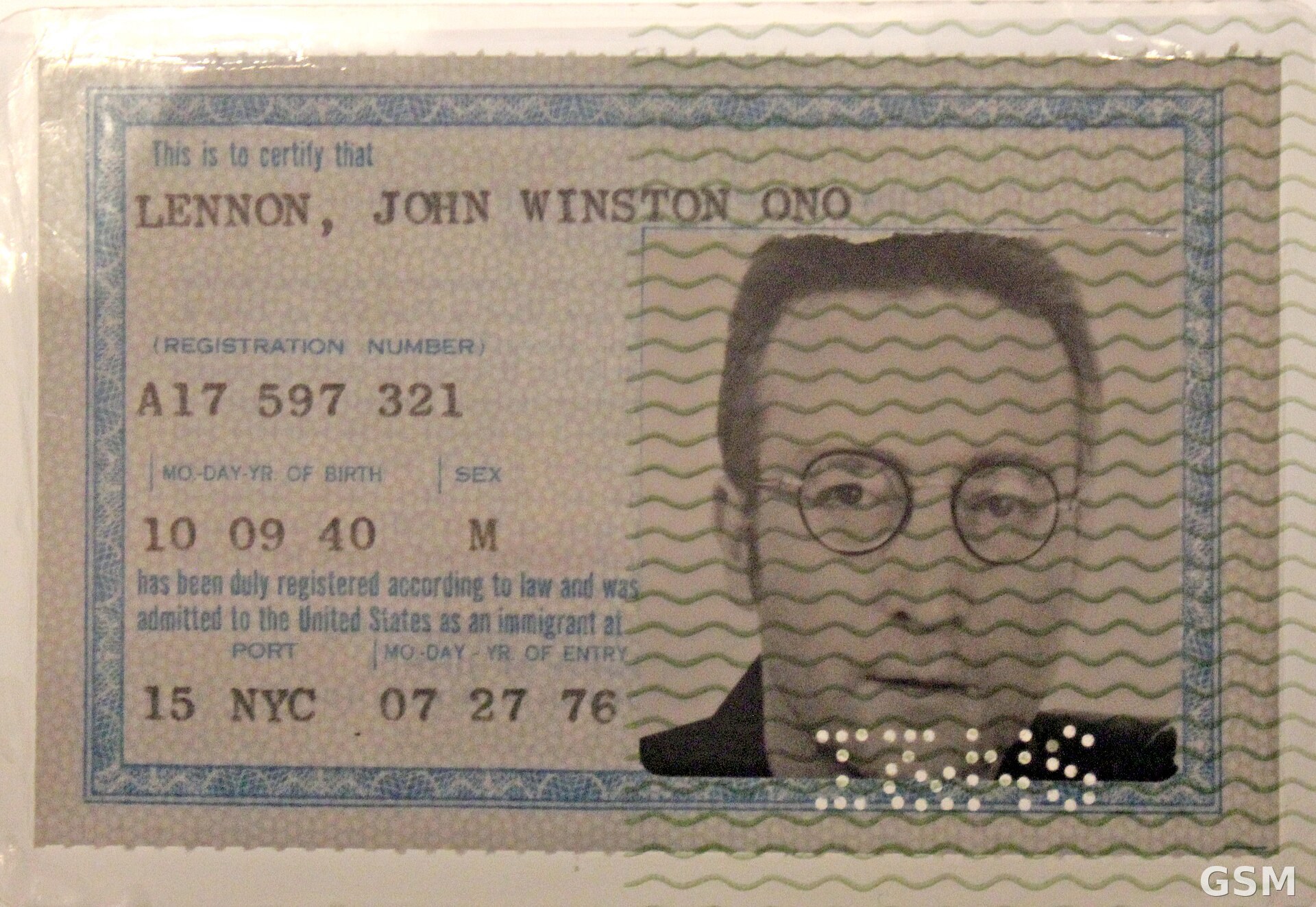
Photo: 图:美国永久居民卡(绿卡)实物。Wikimedia Commons,公共领域。 / Photo: A U.S. permanent resident card (green card). Wikimedia Commons, public domain.