Philippine Foreign Ministry Rebukes Officials Over China Remarks, Saying Statements Must Align With the President's Foreign Policy
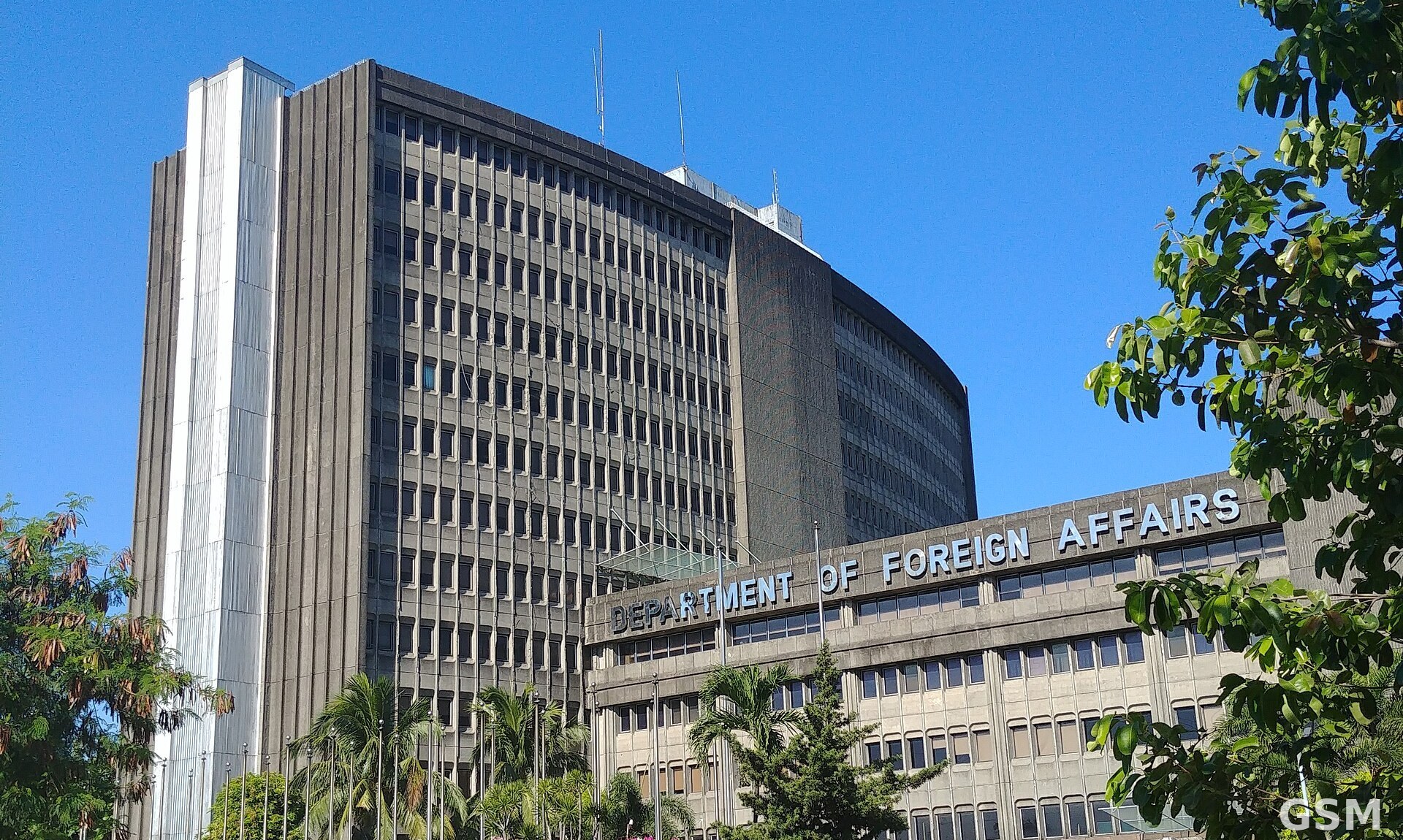
The Philippine Department of Foreign Affairs issued a rare public statement on Sunday, November 8, rebuking other Philippine government agencies and officials over their remarks about China and saying those remarks can weaken the country's diplomatic efforts and must align with the foreign policy of President Ferdinand Marcos Jr. The statement came as the Philippines prepares to host an ASEAN summit in Manila next week, and days after Foreign Secretary Ma. Theresa Lazaro spoke by phone with Chinese Foreign Minister Wang Yi.
"Under the Constitution, the President is the chief architect of Philippine foreign policy," the statement said, adding that all government agencies, civilian or military, are expected to align with the President's policy directions. "Individual officials, agencies or sectors do not independently determine the direction of our international relations. Whatever personal convictions public officials may hold, their public platforms carry institutional responsibilities. They may not pursue preferred approaches toward China, or any other international partner, without regard for the consequences on the government's overall policy."
The department said the statement followed Lazaro's phone call with Wang Yi, part of a "deliberate effort" to preserve bilateral relations before, during and after the upcoming ASEAN and APEC meetings. The ASEAN Summit will be held in Metro Manila from November 16 to 18, while the APEC Economic Leaders' Meeting will take place in Shenzhen, China, on November 18 and 19.
The statement called recent declarations by several Philippine officials about China's words and actions in the West Philippine Sea "regrettable," saying they had "incorrectly merged documentary evidence, public rhetoric and official diplomatic messaging," thereby undermining the government's diplomatic approach and complicating the work of its diplomats. It said Philippine efforts to document and publicize incidents in the West Philippine Sea have "established facts, countered disinformation and built international awareness," but added: "Yet transparency cannot substitute for statecraft. Releasing footage or shaping an online narrative does not, by itself, act as a physical deterrent at sea or a legal strategy."
China claims almost the whole of the South China Sea, including the West Philippine Sea, the part within the Philippines' exclusive economic zone, and has declined to recognize the 2016 arbitral ruling. The statement also said remarks by the Chinese Embassy in Manila, which has accused Philippine officials and institutions of being "anti-China" and Philippine journalists of "creating hype," likewise weaken efforts to preserve bilateral relations. The embassy has clashed in particular with Defense Secretary Gilberto Teodoro Jr. and Philippine Coast Guard spokesperson for West Philippine Sea matters Jay Tarriela, and some Philippine legislators have sought the recall of Chinese Ambassador Jing Quan.
(Source: Department of Foreign Affairs of the Philippines)
Source: Department of Foreign Affairs of the Philippines
Published by GSM · USA (original Chinese edition)
Photo: 图:位于 Pasay 市 Roxas Boulevard 的菲律宾外交部大楼。Lawrence Ruiz 摄,CC BY-SA 4.0,经 Wikimedia Commons。 / Photo: The Department of Foreign Affairs building on Roxas Boulevard, Pasay. By Lawrence Ruiz, CC BY-SA 4.0, via Wikimedia Commons.