
RACE-CARS Trial: Across 60 North Carolina Counties and 22,459 Out-of-Hospital Cardiac Arrests, Intervention Left Survival With Good Brain Function at 9% Versus 9.4%
CHICAGO, Cook County, Illinois — Results of the RACE-CARS trial, presented on November 8 at the American Heart Association's Scientific Sessions 2026 in Chicago, showed that a comprehensive emergency medical services (EMS) and community-based cardiac arrest educational intervention in North Carolina did not significantly improve survival to hospital discharge with good brain function for adults who experienced out-of-hospital cardiac arrest outside of a hospital. The trial was published simultaneously as a full manuscript in the New England Journal of Medicine.
According to the American Heart Association's release, the five-year trial, conducted from July 1, 2021, through June 30, 2026, cluster-randomized 60 counties across North Carolina, representing a population of more than 8.5 million people in urban and rural communities, and included 22,459 adults aged 18 and older who experienced out-of-hospital cardiac arrest — 11,615 in intervention counties and 10,844 in counties continuing existing practices — using the Cardiac Arrest Registry to Enhance Survival (CARES). About 9% of patients in the intervention communities survived to leave the hospital with favorable brain function, compared with 9.4% in the non-intervention communities, a difference that was not statistically significant, and the programme did not improve overall rates of bystander CPR or defibrillation. Bystander CPR was slightly higher in intervention communities, at 44.8% versus 42.3%, and during the last year of the study, patients in programme communities had 33% higher odds of receiving bystander CPR.
Study author Carolina Malta Hansen, M.D., Ph.D., a cardiologist and clinical research associate professor at Herlev and Gentofte Hospital and Copenhagen EMS in Denmark, described RACE-CARS as an ambitious effort to improve cardiac arrest outcomes across entire communities, including rural areas where emergency care often relies on volunteer first responders. Investigators including Christopher B. Granger, M.D., of Duke University said the trial network established by the study will continue the work, and the team will follow the North Carolina population for at least another year. This report presents only the trial data and the investigators' statements and does not constitute medical advice for any individual.
(Source: American Heart Association)
Source: American Heart Association
Published by GSM · USA (original Chinese edition)
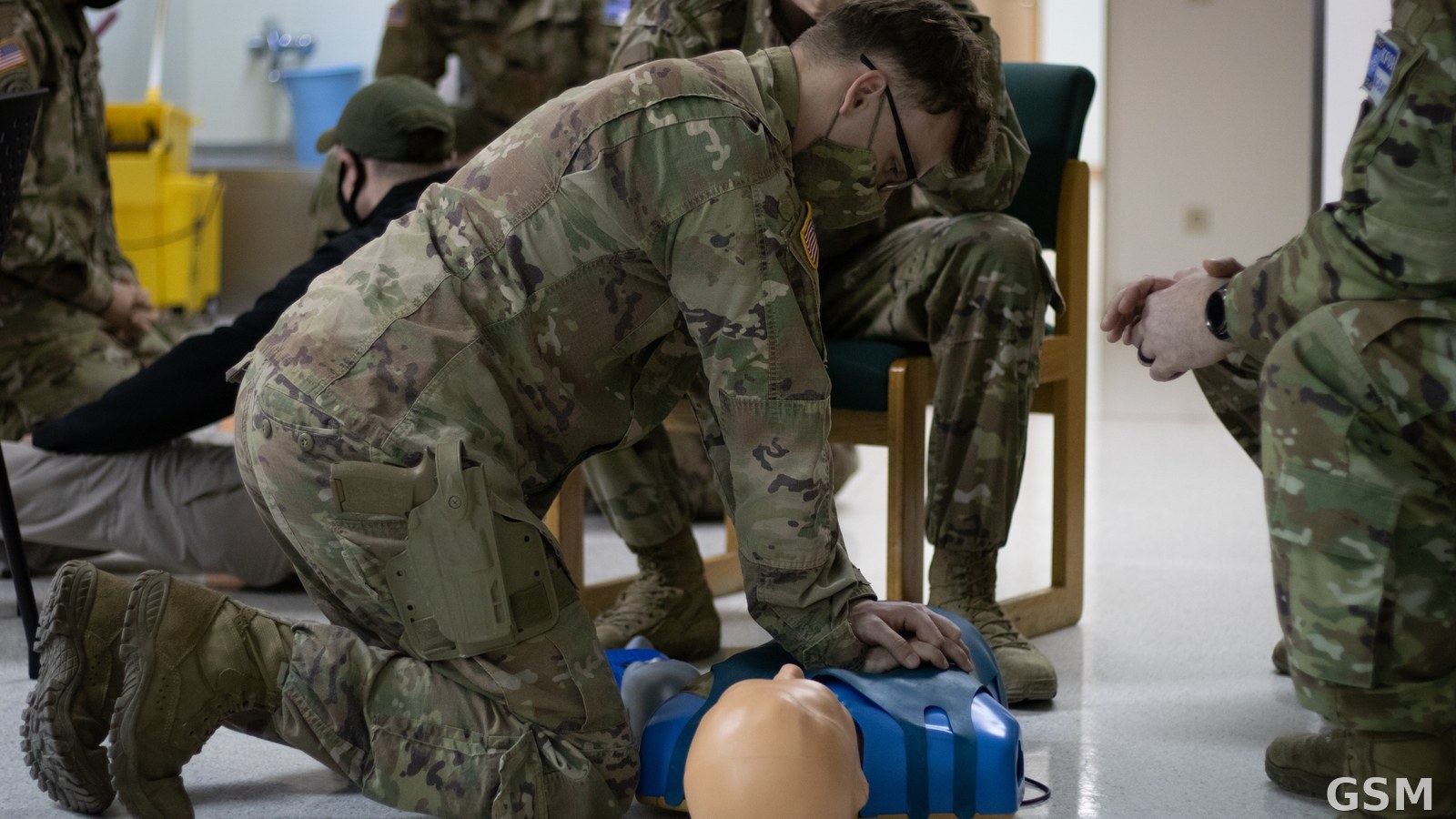
Photo: 图:心肺复苏训练中对模型人做胸外按压(资料图)。美国军方照片,公共领域,经 Wikimedia Commons。 / Photo: Chest compressions on a training manikin during CPR training (file photo). U.S. military photo, public domain, via Wikimedia Commons.
 Lp(a)HORIZON Trial: Pelacarsen Lowered Lipoprotein(a) by an Average of 78%, With Major Cardiovascular Events at 12.3% Versus 12.1%2026-11-08
 Yoga-CaRe Heart Failure Trial in Chicago, Illinois: 3,492 Patients Gained 8.1 Quality-of-Life Points and 25.5 Metres on the Six-Minute Walk at Three Months, With No Significant Difference in Death, Hospitalization or Stroke at 21.0% Versus 22.8%2026-11-08