NHTSA Winter Driving Guidance: Tire Tread of at Least 2/32 of an Inch, Pressure Checked After Three Hours at Rest, Fuel Tank Kept Close to Full
WASHINGTON, District of Columbia — As winter weather approaches, the National Highway Traffic Safety Administration (NHTSA) collects its vehicle preparation and driving guidance on its winter driving tips page. According to NHTSA, as the outside temperature drops, so does tire inflation pressure; each tire should be filled to the vehicle manufacturer's recommended pressure, found in the owner's manual and on a label on the driver's side door frame — not the maximum pressure listed on the tire itself. Tires are best checked when cold, meaning they have not been driven on for at least three hours. Tread depth should be at least 2/32 of an inch on all tires, and the penny test can be used to determine when replacement is needed; NHTSA also advises considering snow tires and reviewing treadwear, traction and temperature grades under the Uniform Tire Quality Grading System (UTQGS) on its tires page.
On batteries, NHTSA states that battery power drops in cold weather while gasoline and diesel engines take more power to start, and that electric and hybrid-electric vehicles' driving range can be reduced, so a mechanic should check the battery, charging system and belts before winter. For car seats, the agency notes that heavy winter coats can interfere with proper harness fit for a child in a car seat, and points parents to its inspection station locator for a free inspection station or virtual inspection options.
For driving and emergencies, NHTSA advises drivers to familiarize themselves with their vehicle's safety technologies and how they perform in wintry conditions — with antilock brakes, for example, by applying firm, continuous pressure to the brake pedal — to stock the vehicle with items including a shovel, ice scraper, jumper cables, a flashlight and warning devices, to keep the gas tank close to full whenever possible and, for electric and hybrid vehicles, to keep the battery charged and reduce drain, and to consider thicker or rubbery floor mats for slushy conditions. The full guidance is on the agency's winter driving tips page at nhtsa.gov/winter-driving-tips.
(Source: National Highway Traffic Safety Administration)
Source: National Highway Traffic Safety Administration
Published by GSM · USA (original Chinese edition)
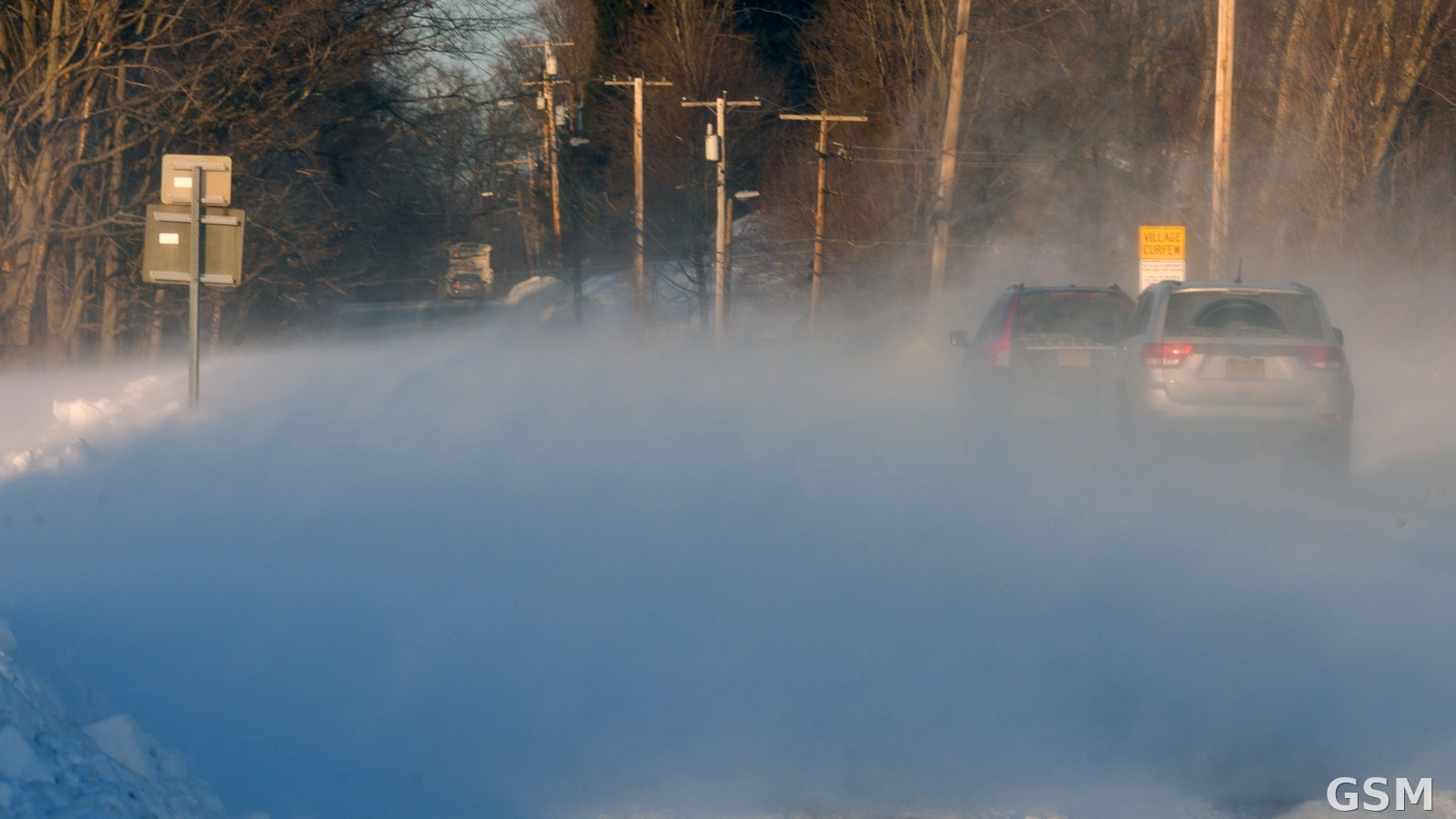
Photo: 图:车辆在风雪中行驶(资料图)。Daniel Case 摄,CC BY-SA 3.0,经 Wikimedia Commons。 / Photo: Cars driving through blowing snow (file photo). Photo by Daniel Case, CC BY-SA 3.0, via Wikimedia Commons.