Ohio Breeder in Hancock County Surrenders More Than 1,100 Chinchillas: About 800 Had Been Hidden in a Second Building for Years; 951 Removed for Care
The U.S. Department of Justice announced on November 3 that the owner of a chinchilla breeding facility in Jenera, Hancock County, Ohio, has surrendered the more than 300 chinchillas remaining at the facility under a consent decree endorsed by the federal court on November 2. The company had earlier voluntarily surrendered roughly 800 more under a modified temporary restraining order, bringing the total to more than 1,100 animals. The business, R & R Chinchilla Inc., has bred chinchillas for over 40 years; its president is James F. Ritterspach. Chinchillas are small animals with dense, soft fur, weighing one to two pounds, and are categorized as exotic pets.
According to the Justice Department, citing records of the USDA's Animal and Plant Health Inspection Service (APHIS), inspectors conducted 18 inspections of the facility since September 2022 and documented 59 Animal Welfare Act violations within the past four years. The complaint alleged that Ritterspach falsely represented to inspectors that he had between 300 and 450 animals, while for years concealing about 800 additional animals in a separate building to avoid inspection. On August 5, inspectors gained access to that building and found hundreds of animals in dire conditions: animals whose eyes were so swollen and oozing with discharge that they could not open them; fecal material covering the entire floor of hundreds of enclosures; ammonia levels so high that inspectors coughed to the point of having to leave the building; open packets of rat poison kept right next to occupied enclosures; a metal collar embedded in one animal's neck; and multiple dead animals. Inspectors said the building was in worse condition than any facility they had ever inspected.
"Animal breeders and caretakers that are federally licensed have an obligation to comply with basic standards Congress established to provide clean water, adequate food and housing, and sufficient veterinary care to their animals," said Adam Gustafson, Principal Deputy Assistant Attorney General of the Justice Department's Energy and Natural Resources Division. Bernadette Juarez, Deputy Administrator of APHIS's Animal Care program, said: "Over multiple inspections, APHIS inspectors documented deeply troubling conditions at this facility, including animals with untreated medical conditions, excessive fecal accumulation, and the concealment of approximately 800 additional chinchillas in a second structure that had been withheld from inspection for years."
Under the decrees, Ritterspach agreed to permanently cease any further Animal Welfare Act-regulated activity, and USDA permanently revoked his license. At the Justice Department's request, Humane World for Animals helped remove the animals: 642 over two days beginning October 13, and the final 309 on November 3 — 951 in total — taken to an undisclosed location for treatment and exams. The organization said veterinary exams found many animals suffering from severely matted fur, inflamed skin, overgrown teeth, scabs, sores and urine scalding, and that some were missing limbs, toes or ears. (Source: U.S. Department of Justice)
Source: U.S. Department of Justice
Published by GSM · USA (original Chinese edition)
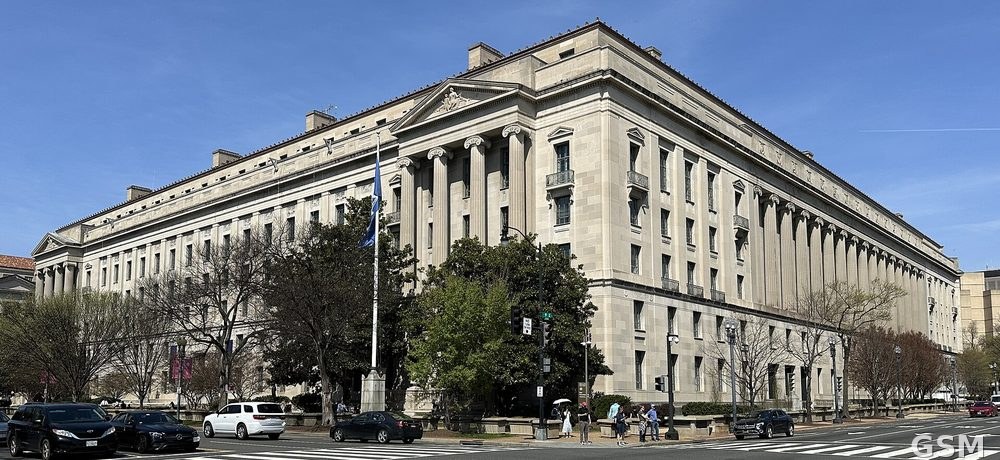
Photo: 图:美国司法部总部大楼。美国司法部图片。 / Photo: U.S. Department of Justice headquarters. Image from the U.S. Department of Justice.