Johnson & Johnson Phase 1 results: pasritamig plus JNJ-9401 posts 73% PSA response rate in advanced prostate cancer
Johnson & Johnson (NYSE: JNJ) announced on November 8 in New Brunswick, New Jersey, promising first-in-human Phase 1 results for the investigational combination of pasritamig and JNJ-9401 in advanced prostate cancer. At the recommended regimen, 73 percent (11 of 15 patients) with metastatic castration-resistant prostate cancer (mCRPC) achieved reductions of at least 50 percent in prostate-specific antigen (PSA), a marker used to monitor prostate cancer activity, including 47 percent (7 of 15 patients) who achieved reductions of at least 90 percent, and four patients achieved undetectable PSA levels. The results were presented in a late-breaking oral session at the Society for Immunotherapy of Cancer (SITC) 2026 Annual Meeting (Abstract #1175).
The combination is the first dual-tumor-antigen-targeted bispecific antibody regimen clinically evaluated in prostate cancer. Pasritamig targets kallikrein-related peptidase 2 (KLK2) and provides a first signal directing T cells toward prostate cancer cells, while JNJ-9401 targets prostate-specific membrane antigen (PSMA) and provides a second, costimulatory signal designed to strengthen and sustain T-cell activity. The recommended regimen is given every six weeks: pasritamig 300 mg intravenously, following two initial weekly step-up doses, combined with JNJ-9401 200 mg subcutaneously, a schedule the company says has potential for outpatient administration.
The ongoing, open-label, multicenter Phase 1 study (NCT06095089) is evaluating the combination in patients with mCRPC who have received at least one prior systemic therapy; as of June 15, 2026, 144 patients had enrolled. Patients at the recommended regimen were heavily pretreated, with a median of four prior lines of systemic therapy (range, two to six). On safety, no Grade 3 or higher treatment-related adverse events were reported at the recommended regimen, and there were no dose-limiting toxicities or treatment-related events leading to discontinuation or death. Cytokine release syndrome was observed in three patients (20 percent); all cases were Grade 1, presenting as temporary fever, none required tocilizumab, and no cases of immune effector cell-associated neurotoxicity syndrome (ICANS) were reported. All seven patients who achieved PSA reductions of at least 90 percent remained on treatment for more than six months without disease progression.
"Prostate cancer has long been difficult to treat with immunotherapy, which makes the activity we're seeing particularly interesting," said Laura Graham, M.D., Assistant Professor of Medicine-Medical Oncology at the University of Colorado School of Medicine, who presented the study. "By combining two complementary approaches to T-cell activation, we are exploring a new way to engage the immune system against this disease. The depth of PSA reductions observed in this study, including responses sustained for six months or longer, provides encouraging early evidence for the pasritamig-JNJ-9401 combination that warrants further investigation in a larger Phase 3 study."
"This novel dual-antigen-targeted bispecific regimen combines pasritamig, a foundational component of our prostate cancer pipeline, with JNJ-9401, highlighting the potential of complementary mechanisms working together," said Yusri Elsayed, M.D., M.H.Sc., Ph.D., Global Therapeutic Area Head, Oncology, at Johnson & Johnson. "With this combination now in Phase 3 development, we are building on the early promise of this approach as we work to bring new treatment options to patients with advanced disease."
The combination is being evaluated in the ongoing Phase 3 KLK2-comPAS study (NCT07164443), which is investigating whether adding JNJ-9401 to pasritamig can improve outcomes for patients with mCRPC. Johnson & Johnson noted that the findings are preliminary and based on a small number of patients at the recommended regimen, and that further evaluation is needed to determine the clinical benefit and safety of the combination in a larger population; both medicines are investigational and have not been approved. (Source: Johnson & Johnson)
Source: Johnson & Johnson
Published by GSM · USA (original Chinese edition)
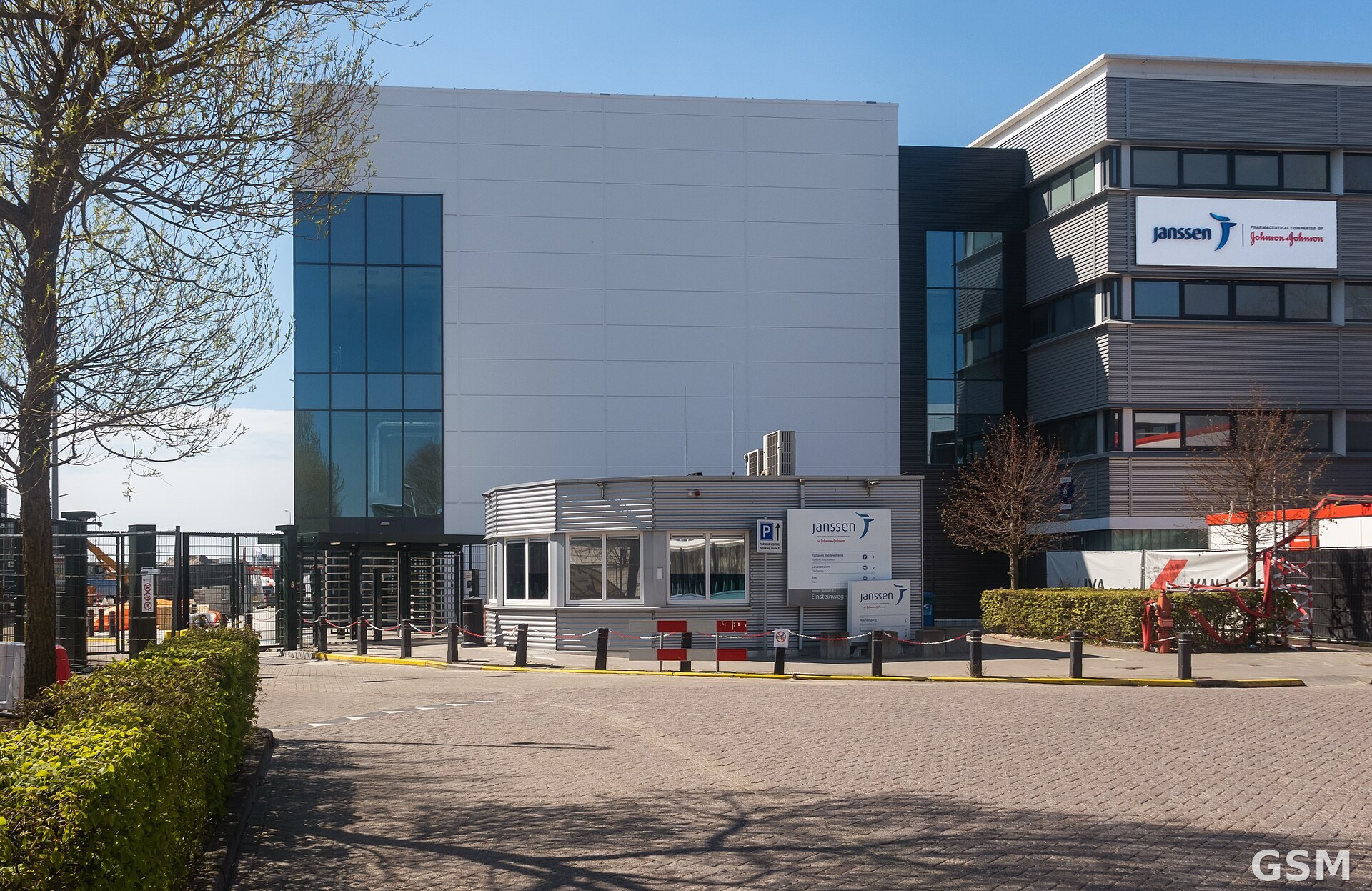
Photo: 图:强生公司旗下杨森(Janssen)位于荷兰 Leiden 的办公楼,楼体带 Janssen 与 Johnson & Johnson 标识。Michielverbeek 摄,CC BY-SA 4.0,经 Wikimedia Commons。 / Photo: The Janssen building in Leiden, the Netherlands, a pharmaceutical company of Johnson & Johnson. Photo by Michielverbeek, CC BY-SA 4.0, via Wikimedia Commons.