Ninth Circuit Splits on California Climate Disclosure Laws: Scope 1 and 2 Reporting Proceeds, Scope 3 and SB 261 Likely Unconstitutional
SAN FRANCISCO — A divided three-judge panel of the U.S. Court of Appeals for the Ninth Circuit ruled on November 9 on California's two climate disclosure laws: reporting of Scope 1 and Scope 2 greenhouse gas emissions under SB 253 for companies with annual revenues over $1 billion proceeds as scheduled, with the first filing deadline still November 10, while SB 253's Scope 3 value-chain disclosure requirement and SB 261's climate-related financial risk reports were held likely unconstitutional under the First Amendment, with the case remanded to the federal district court in Los Angeles.
The case, Chamber of Commerce v. Sanchez, No. 25-5327, was brought in January 2024 by the U.S. Chamber of Commerce, the American Farm Bureau Federation and other business groups, which argued the laws compel speech on a contentious subject. SB 253, the Climate Corporate Data Accountability Act, covers an estimated 1,971 companies doing business in California with revenues above $1 billion and requires annual emissions reporting: Scope 1 covers a company's own direct emissions, Scope 2 emissions from purchased energy, and Scope 3 emissions across its value chain. SB 261 covers an estimated 2,675 companies with revenues above $500 million and requires biennial climate-related financial risk reports. Governor Gavin Newsom signed both laws in 2023, making California the first state to impose such requirements.
The panel held that Scope 1 and Scope 2 disclosures compel factual information about a company's own operations tied to capital transactions, amounting to commercial speech, and that the state is likely to prevail under intermediate scrutiny, so the November 10, 2026 deadline for 2025 data stands. Scope 3, by contrast, is too loosely tied to a company's own operations to qualify as commercial speech and likely fails strict scrutiny, and SB 261 compels subjective, forward-looking judgments on a politically fraught subject. The panel reversed the district court's denial of a preliminary injunction on those parts and remanded for a determination of whether Scope 3 is severable from the rest of SB 253. Judge Bennett concurred in part and dissented in part, arguing both laws should be enjoined in full.
The ruling is a preliminary-injunction decision, not a final judgment on the merits. The parties have 14 days to seek rehearing or rehearing en banc and may petition the U.S. Supreme Court. The California Air Resources Board (CARB) administers the SB 253 reporting program; GSM reported in October that the rules took effect on October 12 with the first emissions reports due November 10.
(Source: U.S. Court of Appeals for the Ninth Circuit)
Source: U.S. Court of Appeals for the Ninth Circuit
Published by GSM · USA (original Chinese edition)
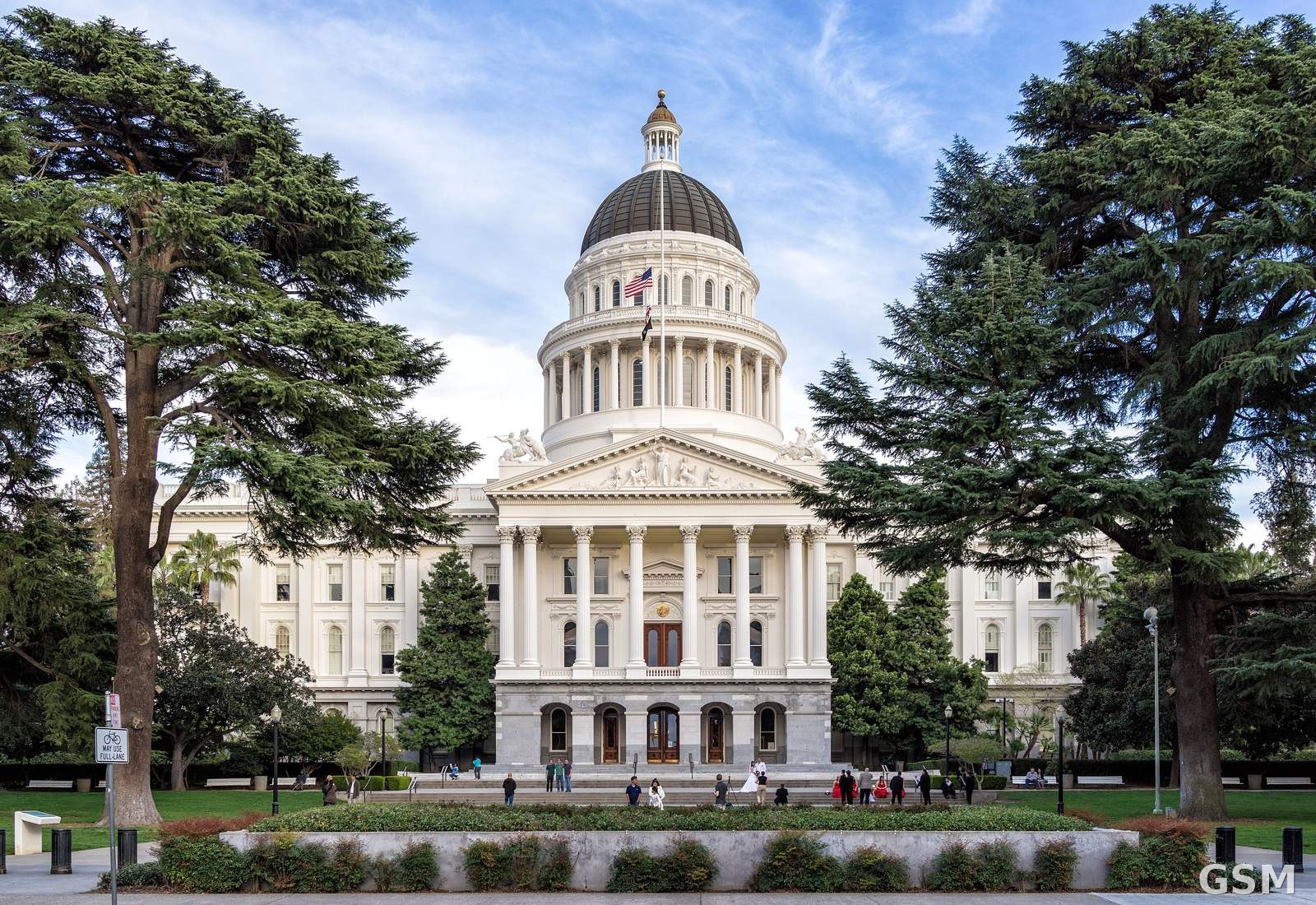
Photo: 图:加州议会大厦(GSM加州固定图库)。 / Photo: California State Capitol (GSM California asset library).