
University of Florida in Gainesville, Florida Wins $1.8 Million NIH Award for a Rice-Sized, Battery-Free Neural Stimulator Powered by the Body: Injectable Devic
GAINESVILLE, Florida — The University of Florida announced on November 6 that the National Institutes of Health (NIH) has awarded $1.8 million to a UF engineering team developing a wireless, battery-less, injectable and minimally invasive neural stimulator powered by the patient's body. The R01 grant was presented in September.
According to the university, the device is about the size of a grain of rice and as thick as a piece of paper, and is designed to treat painful and debilitating nerve disorders more efficiently and effectively than existing, bulky neural stimulators with external power sources. Baibhab Chatterjee, PhD, the Nelms Rising Star Endowed Professor in the Department of Electrical & Computer Engineering (ECE) and the project's principal investigator, said the body is conductive, particularly at lower frequencies, and that the team is using these conductive properties to produce signals for power, sending wireless data signals or power signals through the body. Adam Khalifa, PhD, an ECE assistant professor and the department's Dean Wayne Chen Faculty Fellow, said the long-term vision is to make electrical stimulation therapies smaller, less invasive and easier to deploy throughout the body. Shriya Srinivasan, PhD, director of the BIONICs Lab at Harvard University, is also on the team.
The university states that the research evolved after NIH awarded Khalifa a $1.5 million grant in 2024 to develop minimally invasive implants, and that the new grant expands the research into peripheral nerves, which connect the brain and spinal cord to the rest of the body, including skin, muscles and internal organs. Chatterjee said the team plans preclinical studies in rodent models and subsequent translational efforts toward precise nerve targeting and stimulation without major surgery, for conditions such as chronic pain, paralysis and autonomic dysfunction. These are the team's stated research goals; the device has not entered human testing.
来源链接:佛罗里达大学发布(news.ufl.edu): https://news.ufl.edu/2026/11/neural-device/
—-
Source: University of Florida
Published by GSM · USA (original Chinese edition)
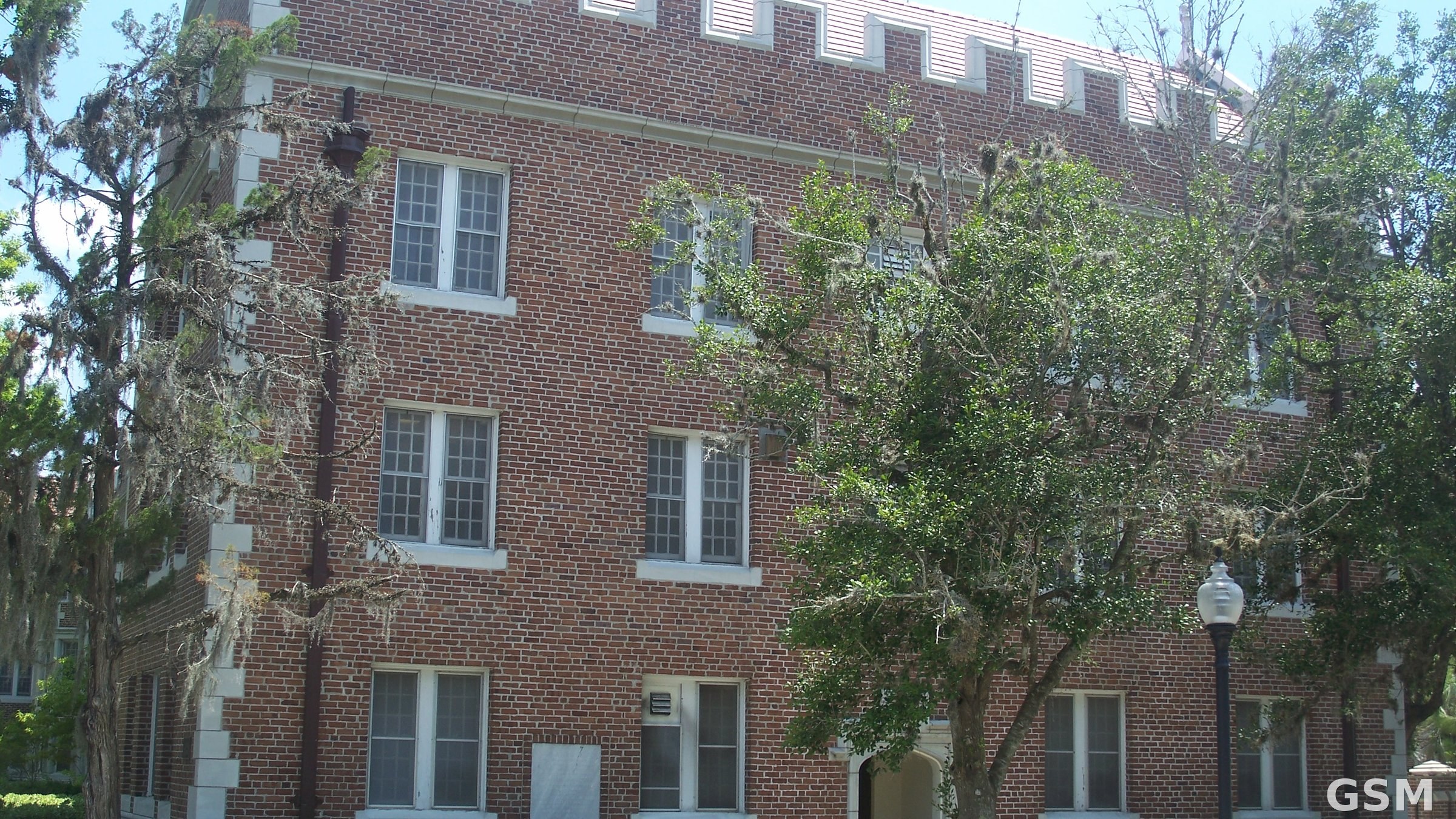
Photo: 佛罗里达大学校园(资料图)。(Wikimedia Commons/CC BY-SA 4.0)|The University of Florida campus (file photo). (Wikimedia Commons / CC BY-SA 4.0)
 San Bernardino County Behavioral Health Plan Update Adds 98 Supportive Housing Units and About $22.6 Million More for Housing Interventions2026-11-09
 Waisman Center at UW–Madison in Madison, Wisconsin Receives a Five-Year NIH Grant to Study Synapse Development in Down Syndrome: Focus on the CBLN2 Gene, Built2026-11-09