Older Adults Can Get Hypothermia Indoors: Keep the Heat at Least 68 Degrees, and 95 Degrees Body Temperature Is an Emergency
As winter approaches, older adults need to understand the risks of hypothermia, the National Institute on Aging (NIA) says. Older adults can lose body heat quickly, and changes in the body with aging can make it harder to recognize a drop in body temperature, so a dangerous chill can develop before the person knows what is happening, indoors or outdoors, even after relatively short exposure to cold.
Older adults are especially vulnerable because the body's response to cold can be diminished by chronic medical conditions and by some medicines, including over-the-counter cold remedies. For an older person, a body temperature of 95 degrees Fahrenheit or lower can cause heart rhythm disturbances, kidney problems, liver damage, or worse.
Warning signs include slowed or slurred speech, sleepiness or confusion, shivering or stiffness in the arms and legs, poor control over body movements, slow reactions and a weak pulse. If someone shows these signs, NIA says to call 9-1-1 right away and try to move the person to a warmer place.
Prevention starts at home: set the thermostat to at least 68 to 70 degrees Fahrenheit, because even mildly cool homes at 60 to 65 degrees can lead to hypothermia in older adults. Wear long underwear, socks and slippers at home, use a blanket over legs and shoulders, and consider a hat or cap indoors. Outside, wear a hat, scarf and gloves or mittens with several loose layers, let others know you will be outdoors, and carry a fully charged cellphone. Households that struggle with heating costs can ask a local or state social services agency about help with home heating and cooling costs. (Source: National Institute on Aging)
Source: National Institute on Aging
Published by GSM · USA (original Chinese edition)
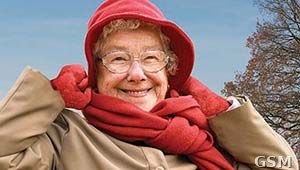
Photo: 图:一位穿冬装的年长女性。国家老龄研究所图片。 / Photo: An older woman dressed for winter. Image from the National Institute on Aging.