Fed Vice Chair Bowman: Core PCE Inflation Likely Rose to 3.3% in October, Bringing Inflation Down Remains the Priority
NEW YORK — Federal Reserve Vice Chair for Supervision Michelle W. Bowman said in a speech at the Council on Foreign Relations on November 10 that the day's consumer price index suggests 12-month core PCE inflation likely moved up further to 3.3 percent in October, that inflation pressures have persisted longer than she had hoped and have shown recent signs of broadening, and that bringing inflation down remains a priority.
Bowman said U.S. economic growth has gained momentum this year: real GDP rose 2.4 percent in the first half and likely increased at a pace of more than 3 percent in the third quarter, well above last year's 2 percent pace, supported by robust investment demand and solid consumer spending. She noted that interest-rate-sensitive sectors such as residential investment have declined, and that the recent rise in mortgage rates appears to be dragging home construction and sales down further.
On the labor market, Bowman said conditions appear to have stabilized and improved since last year: the unemployment rate edged down to 4.1 percent in October, close to her estimate of its natural rate, and job gains have averaged about 80,000 per month through October, broadening across industries beyond health care and social assistance. Hiring and layoffs are both low, she said, and wage growth has slowed, with the wages and salaries component of the employment cost index up 3.1 percent over 12 months in September, the same pace as average hourly earnings in October.
Progress on lowering inflation has stalled over the past two years or so, Bowman said. Of above-target core PCE inflation over the 12 months ending in September, tariffs, energy, and super intelligence (SI)-related price pressures each accounted for roughly one-fourth, with the remaining one-fourth likely reflecting persistent effects from earlier inflationary shocks. As those shocks wane or unwind, she forecast core PCE inflation to move closer to 2 percent next year.
Energy markets are one of the key risks she identified. The Middle East conflict disrupted oil flows through the Strait of Hormuz, and Brent crude moved up to and above $110 per barrel in the second half of October before dropping sharply last week on optimism that a U.S.-Iran agreement could be reached. The U.S. Strategic Petroleum Reserve, she said, has fallen to a bit less than 50 days of crude oil imports, the lowest level since the early 1980s.
Bowman also focused on the SI buildout, saying data center investment growth resembles the 1990s tech boom. SI-related debt is on track to exceed $800 billion this year, while other obligations such as long-term leases and contract commitments are estimated at more than three times the amount of debt. About 25 percent of businesses and roughly 10 percent of workers report using SI every day, she said; if revenues fall short of rising costs, a sharp correction in equity prices could slow both economic activity and inflation.
On monetary policy, Bowman said she supported holding the federal funds rate target range at 3-3/4 to 4 percent at the October FOMC meeting. Before the December meeting, the FOMC will receive the October PCE inflation report and the November employment report. She said she is seeing signs that inflation pressures are persisting while labor market conditions appear to be firming, indicating there is still work to do to bring inflation closer to 2 percent, and stressed that monetary policy is not on a preset course.
Source: Federal Reserve Board
Published by GSM · USA (original Chinese edition)
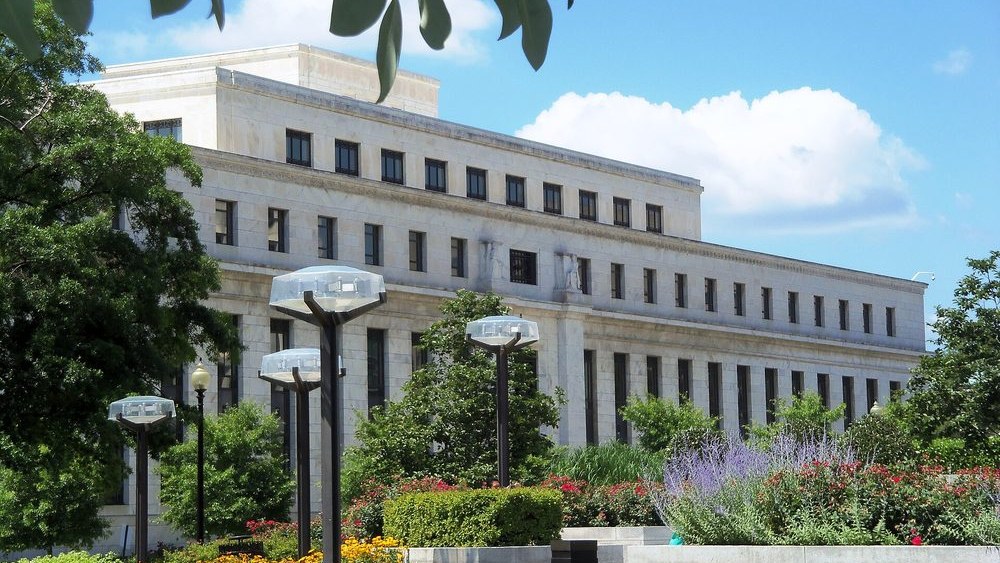
Photo: 图:位于华盛顿的美联储总部大楼(GSM 固定图库)。 / Photo: Federal Reserve Board headquarters in Washington, D.C. (GSM asset library).