Federal Court Denies Bid to Halt Hermosa Critical Minerals Project in Arizona
The U.S. Department of Justice announced on November 10 that the U.S. District Court for the District of Arizona last week denied a motion for a preliminary injunction seeking to halt construction of the Hermosa Critical Minerals Project in southeastern Arizona. The project, which can now proceed, will establish a domestic source of manganese and substantially increase domestic production of zinc.
Manganese and zinc are essential to the steel used in military vehicles and naval vessels, and battery-grade manganese is also essential to the advanced lithium-ion batteries that power unmanned aerial vehicles, radios, and other defense equipment. The United States relies entirely on imports of manganese and almost entirely on imports of zinc, with China providing about 95 percent of global refining capacity for manganese used in advanced batteries, according to the Justice Department.
"Manganese is indispensable to our national defense, and the United States cannot afford to remain dependent on foreign supply chains," said Principal Deputy Assistant Attorney General Adam Gustafson of the Justice Department's Energy and Natural Resources Division (ENRD). "This ruling allows work to proceed on the only domestic project positioned to produce battery-grade manganese. The Department will continue to defend agency action to restart domestic production of critical minerals."
After roughly three years of environmental review, the U.S. Forest Service approved the Hermosa project in July 2026. The project expands existing mining operations on private land onto the Coronado National Forest. The approval followed formal consultation with the U.S. Fish and Wildlife Service under the Endangered Species Act and imposes more than 400 binding design features, mitigation measures, and other conditions to minimize environmental impacts. To accelerate manganese and zinc production and refining, the Department of War has awarded the project $20 million under the Defense Production Act and the Department of Energy awarded $166.2 million.
In late October, two environmental groups challenged the agencies' decisions and asked the court to halt the project while the case proceeds. The court denied the motion because the plaintiffs had not shown they were likely to succeed on their claims and had not made the required showing of likely irreparable harm. The court also recognized "a substantial public interest in domestic critical-mineral supply" and noted that "the national security interests are relevant and substantial." As a result of the ruling, the approved work on the project can proceed while the court considers the merits of the case on an expedited schedule. (Source: U.S. Department of Justice)
Source: U.S. Department of Justice
Published by GSM · USA (original Chinese edition)
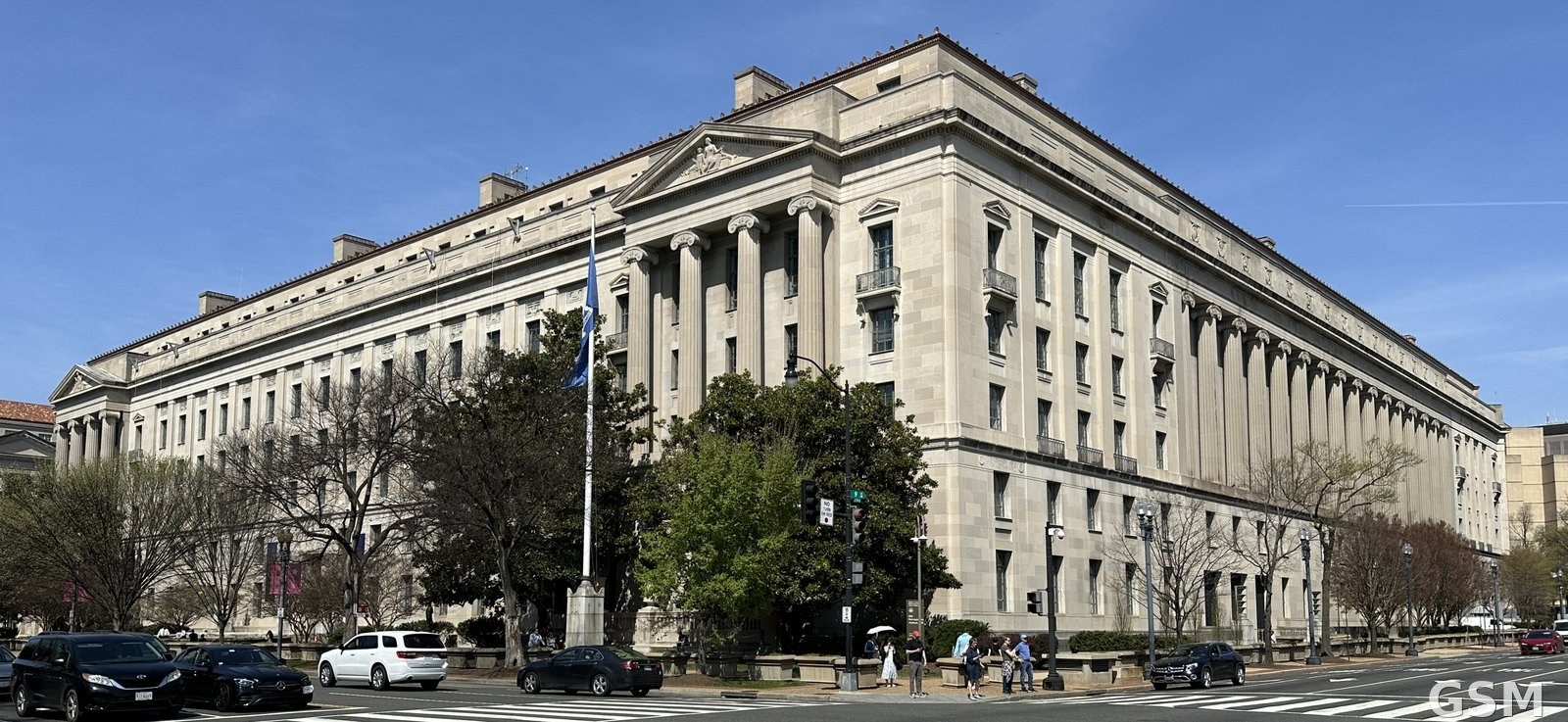
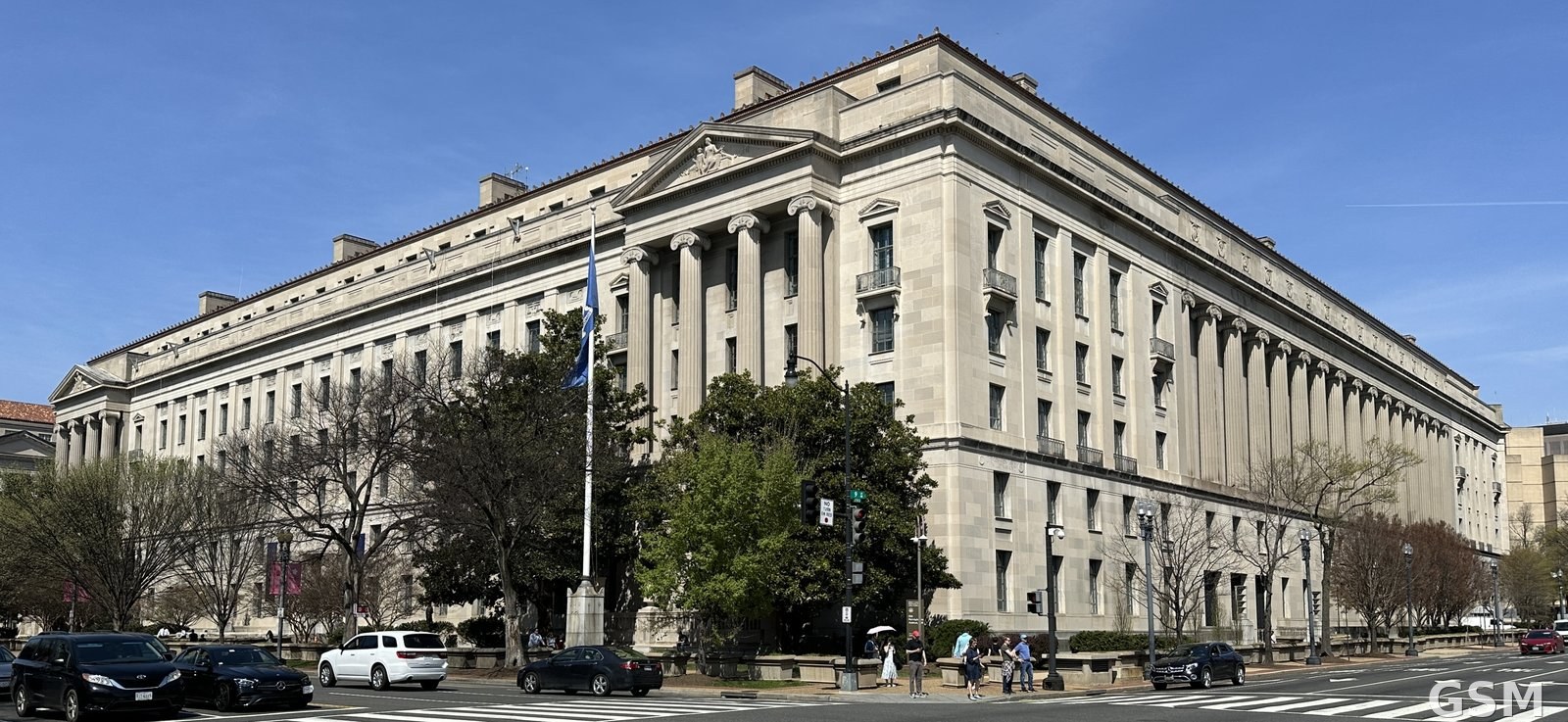
Photo: 图:美国司法部总部大楼。照片:美国司法部,公共领域。 / Photo: U.S. Department of Justice headquarters building. Photo by the U.S. Department of Justice, public domain.