
WashU Medicine Alzheimer Study Renewed With 32 Million Dollars From the NIH Over Five Years: Funding Runs Through 2031, and a Mobile Clinic Will Help Enroll 300 New Participants
St. Louis, Missouri — The Healthy Aging and Senile Dementia program at WashU Medicine has been renewed with an award of 32 million dollars over five years from the National Institute on Aging, part of the National Institutes of Health, the medical school announced on November 10. The renewed funding will support the study through 2031, which will be its 45th year. The program is one of the longest running longitudinal studies of Alzheimer disease and has enrolled more than 1,877 people since its inception.
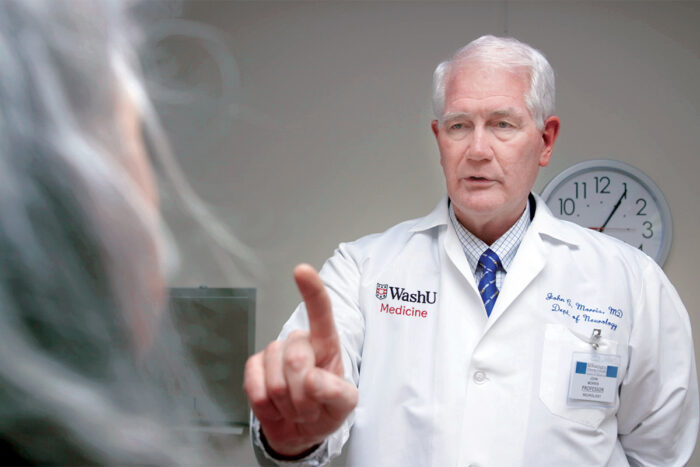
The program was started in the 1970s by neurologist Leonard Berg, and its initial funding enabled the establishment of the Alzheimer Disease Research Center at WashU Medicine in 1985 as one of the first 10 such centers in the United States. John C. Morris, MD, the Harvey A. and Dorismae Hacker Friedman Distinguished Professor of Neurology, has led the program since 1998. Forty years ago, we could not confirm Alzheimer until after death, Morris said. Because people have volunteered to come to us year after year and across multiple generations, we have learned the disease starts silently in the brain long before memory fails. Our goal now is to stop the disease process before it causes brain cells to die, and to do that for all groups of people.
With the renewed funding, the team aims to expand a pilot study that enrolled about 40 participants in north St. Louis to include 300 people with varied education, income levels and health histories, the school said. A mobile clinic will go into neighborhoods to collect data, blood and other tissue samples from volunteers, who will have the opportunity to be connected to health services if they need them. Since 1998, the center has raised the proportion of Black study participants from 3 percent to 17 percent. The program will also examine whether some biomarkers of Alzheimer may vary between Black and white participants.
Second, researchers plan to track how patients in non research clinical care settings who are receiving newly available Alzheimer treatments are responding to them, to gain insight into the real world impact of therapies shown to slow progression in some people, outside the controlled realm of clinical trials. The school said the renewed program will focus more on prevention and on enrolling a wider range of participants.
(Source: Washington University School of Medicine)
Source: Washington University School of Medicine
Published by GSM · USA (original Chinese edition)
Photo: 图:华盛顿大学医学院神经学教授 John Morris。照片:华盛顿大学医学院。 / Photo: John Morris, professor of neurology at Washington University School of Medicine. Washington University School of Medicine.
 CDC Updates Measles Data on November 6: 5,182 Confirmed Cases in 2026 as of November 5, With 43 New Outbreaks and 96 Percent of Cases Outbreak Associated2026-11-10
 Bechtel Medical Wound VOX Receives FDA 510(k) Clearance: The First Cleared System Combining Negative Pressure and Topical Oxygen Therapy, With a Limited Release in December2026-11-10