Every Baby Needs Protection From Severe RSV: A Vaccine at 32 to 36 Weeks of Pregnancy, or a Long-Acting Antibody After Birth
Respiratory syncytial virus (RSV) is most dangerous to young infants, and the Centers for Disease Control and Prevention (CDC) says every baby should be protected from severe RSV by one of two immunization options: a maternal RSV vaccine given during pregnancy, or an RSV antibody given to the baby. Most babies do not need both, and the autumn and winter timing in CDC's schedule is written for parents deciding right now.
The pregnancy option is Pfizer's Abrysvo vaccine, given during weeks 32 through 36 of pregnancy, in September through January in most of the United States. It takes about 2 weeks for protection to develop and pass to the baby, and the protection lasts for approximately the baby's first 6 months, the period of highest risk. People who already received a maternal RSV vaccine in a previous pregnancy are not currently advised by CDC to take another dose; their babies should receive the antibody after birth instead.
The antibody option uses one of two long-acting antibodies, nirsevimab or clesrovimab, for babies younger than 8 months whose mothers did not receive the maternal vaccine. The antibody provides immediate protection that lasts at least 5 months. Timing depends on the birth month: babies born during October through March should get the dose within 1 week after birth, and babies born earlier in the year should get it shortly before the RSV season, which typically peaks between December and January.
A small group of children aged 8 to 19 months at increased risk should also receive nirsevimab shortly before their second RSV season: children born prematurely who have chronic lung disease, children with severe immunocompromise, children with severe cystic fibrosis, and American Indian and Alaska Native children. On cost, nirsevimab is covered by the federal Vaccines for Children program for eligible children, and most private insurance and Medicaid and CHIP coverage includes the RSV immunizations. (Source: Centers for Disease Control and Prevention)
Source: Centers for Disease Control and Prevention
Published by GSM · USA (original Chinese edition)
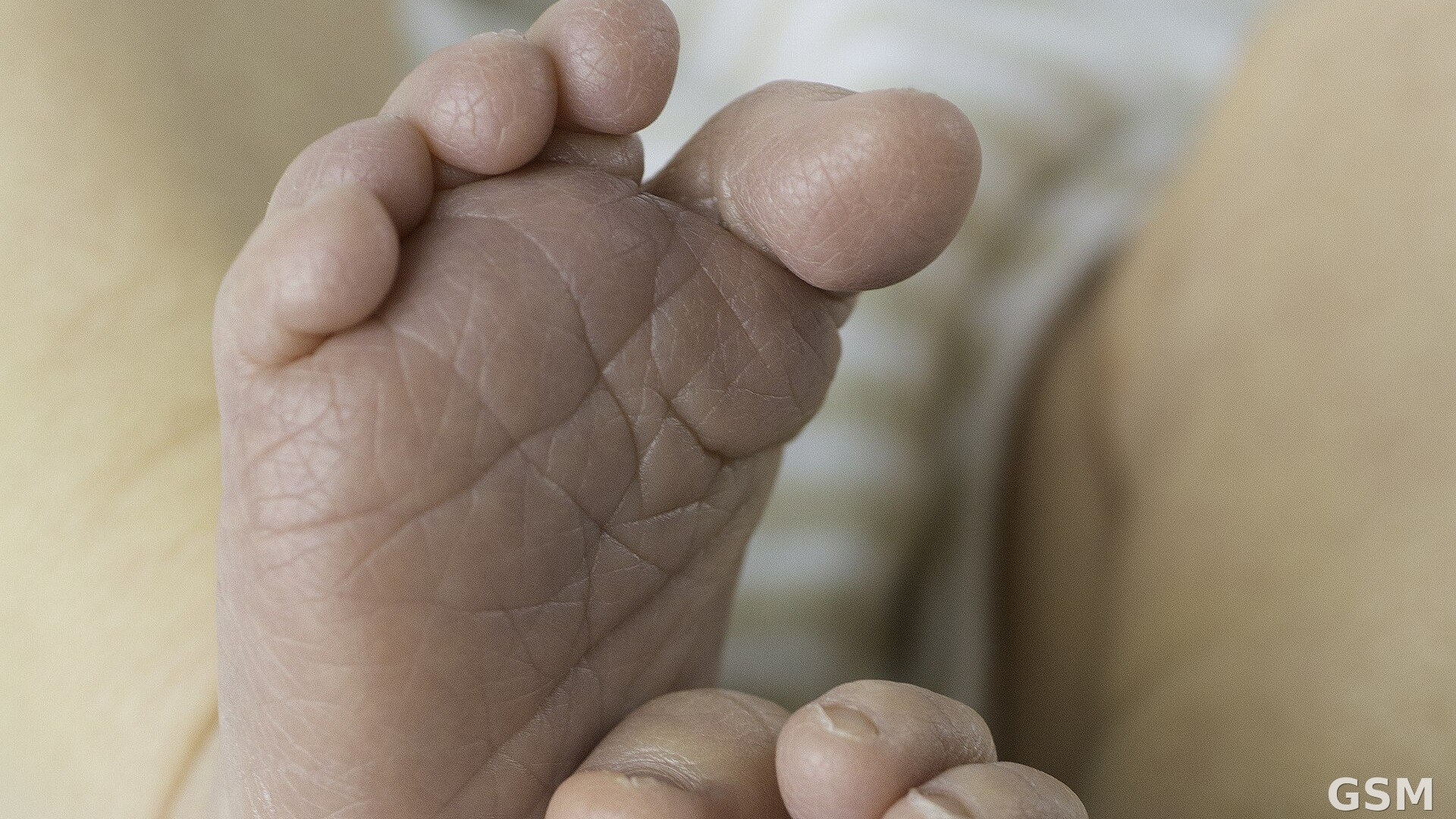
Photo: 图:新生儿的小脚。疾控中心建议,每个宝宝在第一个 RSV 季节前都要有防护。Wikimedia Commons 图片(公共领域,Evan-Amos 摄)。 / Photo: The feet of a newborn baby. CDC recommends that every baby be protected before the first RSV season. Image via Wikimedia Commons (public domain, by Evan-Amos).