Community College Is a Real Starting Point for F-1 Students: SEVP-Certified Schools Only, an I-20 After Admission, and 12 Credit Hours a Term
The Department of Homeland Security's Study in the States guide states plainly that postsecondary options for F-1 international students include community colleges as well as undergraduate and graduate programs. Starting at a community college and moving up is a path inside the rules, not a detour around them.
The first step is choosing the right school. Only schools certified by the Student and Exchange Visitor Program (SEVP) can accept international students, and the guide directs students to verify certification with the official School Search tool, searchable by school name, location, education or visa type. The State Department's EducationUSA network, with more than 400 advising centers worldwide, can also explain program types and financial aid.
Once a student is accepted, the school's designated school official (DSO) issues the Form I-20, the core document of the whole process. The student then pays the I-901 SEVIS fee, applies for an F-1 visa at a U.S. embassy or consulate, and may enter the United States up to 30 days before the program start date on the I-20, carrying the I-20, visa, passport, acceptance letter and evidence of financial support in hand luggage for the port of entry.
After arrival, status rests on a full course of study. F-1 undergraduate students at a college or university must take at least 12 credit hours per term, and students who are struggling should talk to their DSO about a reduced course load or a program extension before dropping classes. Spouses and children may accompany the student, but they need their own Form I-20 and must follow the dependent rules. (Source: U.S. Department of Homeland Security)
Source: U.S. Department of Homeland Security
Published by GSM · USA (original Chinese edition)
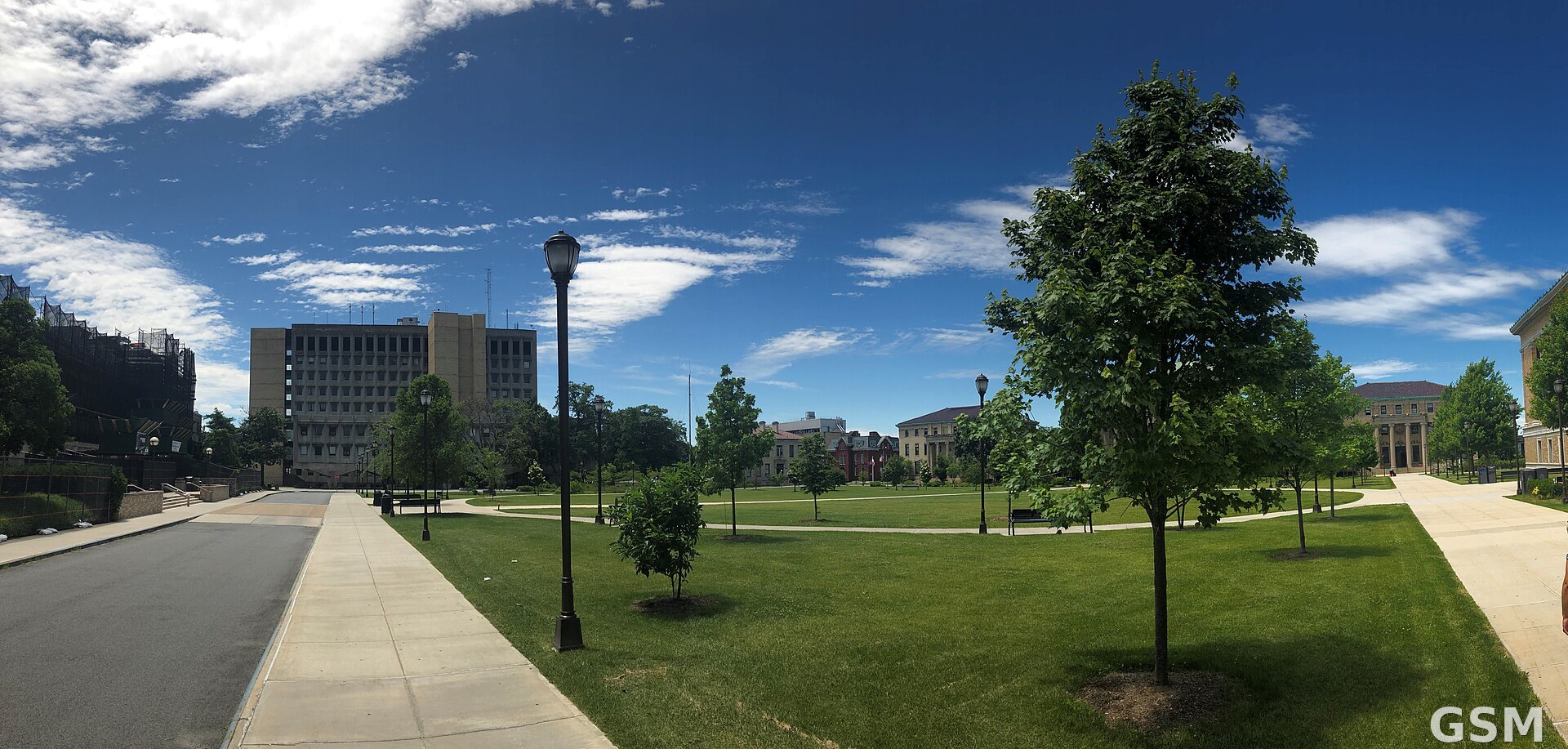
Photo: 图:一所美国高校的校园草坪与教学楼(资料图)。社区大学是国土安全部 Study in the States 指南列明的 F-1 高等教育选项之一。Wikimedia Commons 图片。 / Photo: A campus lawn and academic buildings at a U.S. college (file photo). Community colleges are among the F-1 postsecondary options listed in the Department of Homeland Security's Study in the States guide. Image via Wikimedia Commons.