[Video] NASA's Chandra Finds the Hidden Companion Behind a Giant Star's 113-Day Outbursts
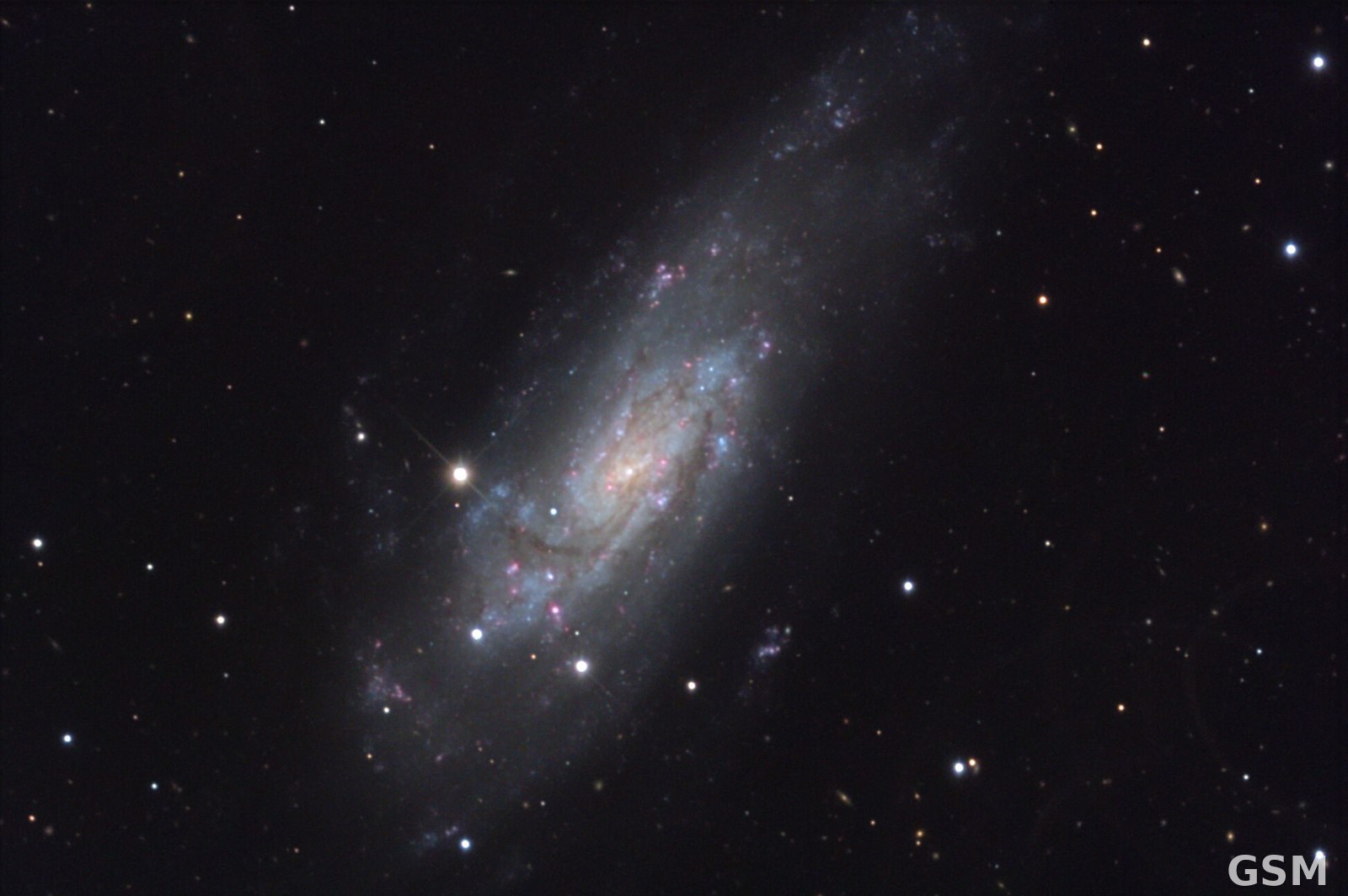
NASA announced on November 9 that its Chandra X-ray Observatory has found what triggers the repeated outbursts of a giant, unstable star. The star, AT 2016blu, sits in the spiral galaxy NGC 4559, about 30 million light-years from Earth, and it has a previously hidden companion: a stellar-mass black hole or a neutron star that pulls material off the giant star every 113 days, setting off each eruption. The Chandra program's official channel released a narrated tour video with the findings.
AT 2016blu is a luminous blue variable, a hot, massive star known for dramatic swings in brightness, with a mass at least 33 times that of the Sun. Its outbursts rival the light output of a supernova, yet the star survives and erupts again, earning it the label "supernova impostor." Between 2012 and 2026, optical telescopes recorded at least 27 bursts, spaced about 113 days apart.
The team, led by Mojgan Aghakhanloo of the University of Virginia, used optical monitoring to predict an eruption, then triggered Chandra observations in March 2026 through the observatory's Target of Opportunity program. Chandra found the system at least 100 times brighter in X-rays than in archival Chandra data from 2001 and 2002, before the known eruptions began.
It is the first X-ray detection of one of this class of erupting stars, and the first time such a star has been found with a black hole or neutron star companion. AT 2016blu is bright enough to qualify as a candidate ultra-luminous X-ray source, a rare class of objects thought to contain neutron stars in some cases and black holes in others.
In the team's picture, the companion travels an oval-shaped orbit and, at each closest approach 113 days apart, gravitationally strips material from the giant star. The captured gas orbits at near light speed and heats up until it shines brightly in X-rays, producing the repeating cycle astronomers have watched for over a decade.
Optical data came from the Katzman Automatic Imaging Telescope, Las Cumbres Observatory and the American Association of Variable Star Observers, with more than 30 amateur astronomers contributing. The paper appears in The Astrophysical Journal. NASA's Marshall Space Flight Center manages the Chandra program, and the Smithsonian Astrophysical Observatory's Chandra X-ray Center controls science and flight operations.
(Source: NASA)
Source: NASA
Published by GSM · USA (original Chinese edition)
Photo: 图:螺旋星系NGC 4559,恒星AT 2016blu即位于该星系之中。Wikimedia Commons 图片(CC BY 4.0,美国国家光学天文台NOAO资料图)。 / Photo: The spiral galaxy NGC 4559, host galaxy of the star AT 2016blu. Image via Wikimedia Commons (CC BY 4.0, NOAO).