USDA Proposes Tightening SNAP Automatic Eligibility, Estimates 6.3 Million Would Lose Benefits
The Food and Nutrition Administration (FNA) of the U.S. Department of Agriculture (USDA) published a proposed rule in the Federal Register on November 10 in Washington that would limit categorical eligibility for the Supplemental Nutrition Assistance Program (SNAP) to households that actually receive assistance under Temporary Assistance for Needy Families (TANF). In its own impact analysis, the department estimates that in fiscal year 2029, the first year the rule is expected to reach its full effects, about 3.2 million households containing 6.3 million people would no longer receive SNAP benefits. Written comments are due by December 10, 2026.
Under current regulations, states can use non-cash benefits or services funded by TANF to make households automatically eligible for SNAP without a separate check against the federal income and resource limits, and many states use that route to set a gross income limit as high as 200 percent of the federal poverty guidelines. USDA said that as of December 2025, 46 of the 53 state agencies administering SNAP had adopted this broad-based categorical eligibility, and 41 states do not currently assess resource information as part of the SNAP eligibility determination. The proposal would limit qualifying TANF benefits to "assistance" as defined at 45 CFR 260.31, meaning cash, payments, vouchers and other benefits designed to meet a family's ongoing basic needs.
USDA estimates that the households that would lose benefits represent 16.9 percent of participating SNAP households and 17.6 percent of SNAP participants, because their income or resources exceed the federal statutory limits. The department also estimates the rule would reduce federal SNAP benefit spending by about $44.649 billion over the five years from fiscal year 2027 through fiscal year 2031.
The proposal would also affect other nutrition programs where SNAP participation confers eligibility. USDA estimates about 1.78 million children would no longer be categorically eligible for free school meals, although about 97 percent of them would still qualify for free or reduced-price meals based on household income through a different process; about 93,000 children would move from free to reduced-price meals and about 28,000 would pay full price. The department also invited comments on whether alternative approaches could achieve the same policy goals. The rule is a proposal only and does not change anyone's benefits now. Deputy Secretary Stephen A. Vaden signed the rule, filed under docket FNA-2026-0661.
USDA published a second SNAP proposed rule in the same day's Federal Register, codifying the One Big Beautiful Bill Act of 2025 changes to the three-month time limit for able-bodied adults without dependents. Under that proposal, the time limit applies to participants aged 18 through 64 who do not meet an exception, including being physically or mentally unfit for employment, responsible for a child under 14, pregnant, or an Indian, Urban Indian or California Indian. Area waivers would in principle be limited to areas with unemployment rates over 10 percent, or at least 1.5 times the national average in Alaska and Hawaii, removing the former lack-of-sufficient-jobs standard, while waiver requests would face stronger data requirements and the SNAP definition of a homeless individual would be revised. That rule is filed under docket FNA-2025-0368, with comments also due December 10.
(Source: U.S. Department of Agriculture)
Source: U.S. Department of Agriculture
Published by GSM · USA (original Chinese edition)
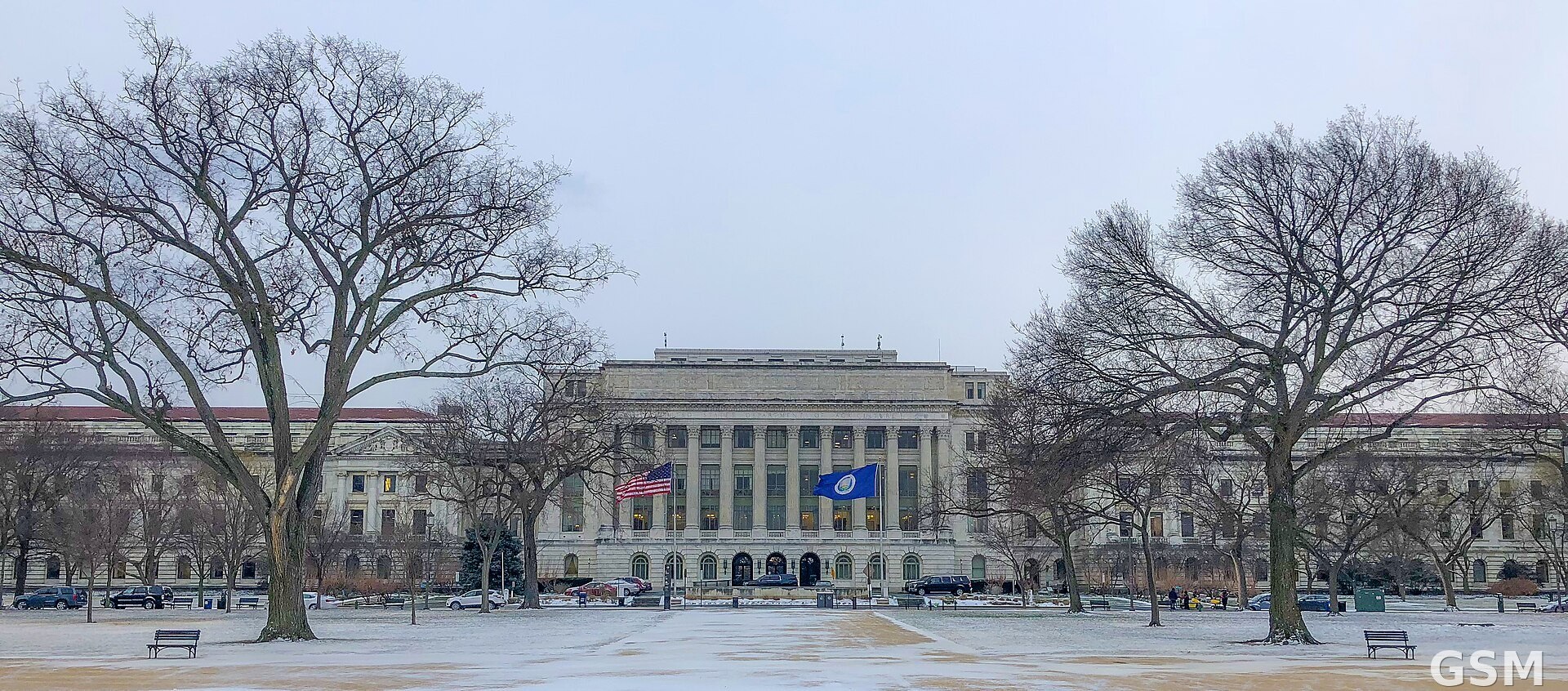
Photo: 图:位于华盛顿的美国农业部总部 Jamie L. Whitten 大楼(美国农业部官方照片,公共领域,经 Wikimedia Commons)。 / Photo: The Jamie L. Whitten Building, headquarters of the U.S. Department of Agriculture in Washington (USDA official photo, public domain, via Wikimedia Commons).