Madagascar's Central Bank Holds Policy Rate at 12.50%: Sees 3.5% Growth in 2026, Inflation at 9.3% by Year-End
Madagascar's central bank, Banky Foiben'i Madagasikara, decided at its Monetary Committee meeting on November 3 to keep its policy rate at 12.50 percent for another three months from November 4. In its monetary policy report released the same day, the bank forecast economic growth of 3.5 percent for 2026, with inflation rising to 9.3 percent in December.
On the rate itself, the bank had raised it from 12.00 to 12.50 percent in August. Holding now means borrowing costs stay restrictive: the bank wants inflation steered back toward its 5 percent medium-term target before any easing.
Prices tell the harder story. Central bank figures show annual inflation climbing from 6.8 percent in March to 8.6 percent in September, projected to reach 9.3 percent in December and to slow only from the second quarter of 2027. Food and energy are the main drivers, and household purchasing power remains under pressure, the chief reason the bank will not loosen policy.
Activity looks brighter. The report says momentum returned in the third quarter, with its intra-annual activity indicator up 6.1 percent year on year against just 0.5 percent in the second quarter, and tourism, exports and services seen as encouraging. Madagascar received 209,398 visitors between January and August 2026, up 13.7 percent on the same period a year earlier. Cash crop exports such as vanilla, cloves and pepper, and mineral exports including cobalt and titanium, were named as growth drivers.
The risks are stated plainly. The trade deficit widened to 1.92 billion US dollars in the first nine months of 2026, from 1.51 billion a year earlier, with imports up 13 percent and exports up only 3 percent, leaving the ariary under pressure against the dollar. Foreign exchange reserves stood at about 3.6 billion dollars at the end of September.
For Chinese businesses and residents in Madagascar, the report's practical message is concentrated: financing costs will not fall for three months, prices will keep rising for a while, and export and tourism related business has a genuine recovery signal. The next rate decision falls in three months, when whether inflation has peaked will be the key question.
(Source: Central Bank of Madagascar)
Source: Central Bank of Madagascar
Published by GSM · USA (original Chinese edition)
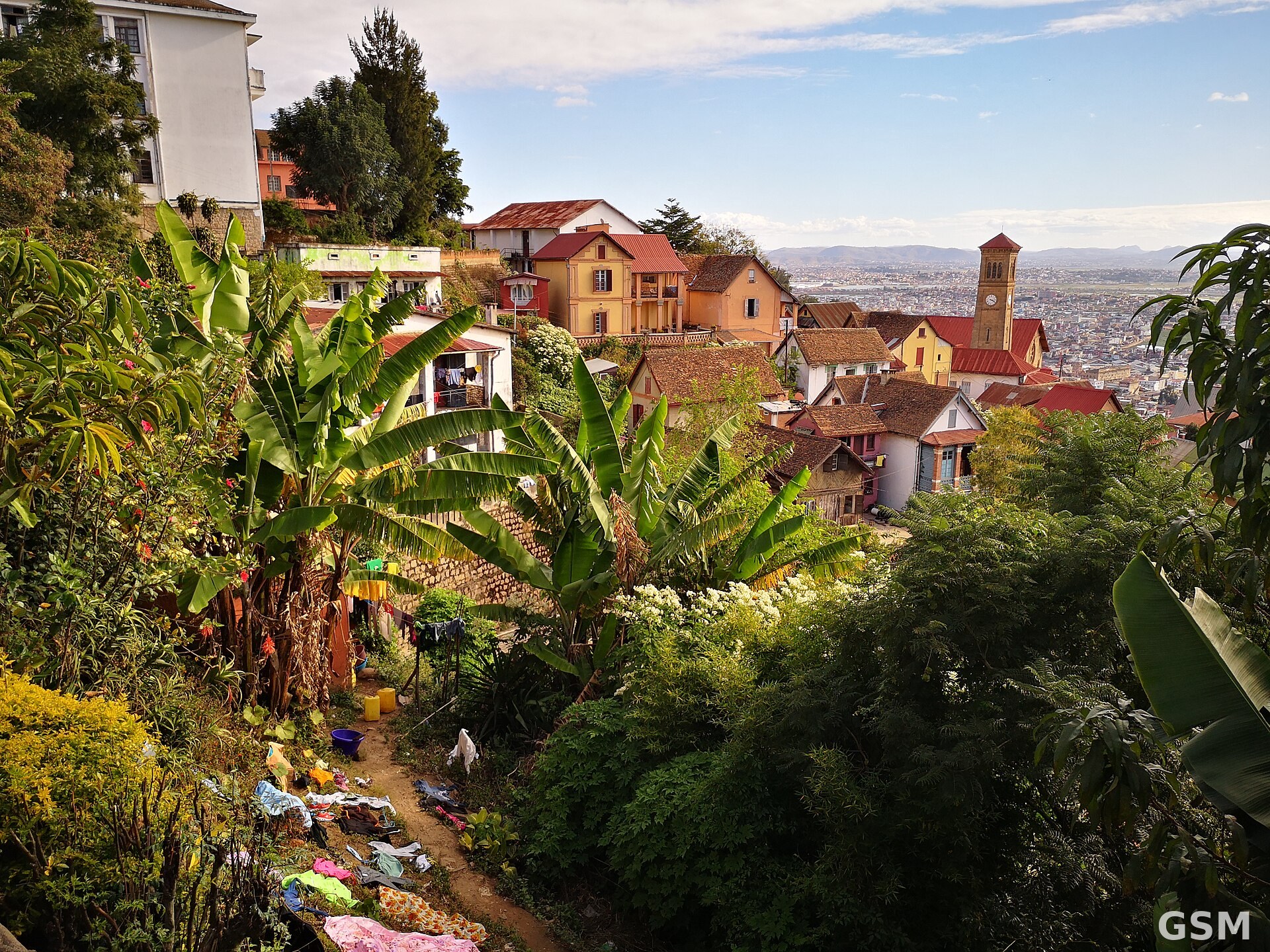
Photo: 图:马达加斯加首都塔那那利佛王宫山丘一带。照片:Ozanna,CC BY-SA 4.0,经维基共享资源。 / Photo: Antananarivo, capital of Madagascar, by the Queen's Palace hill. Photo by Ozanna, CC BY-SA 4.0, via Wikimedia Commons