Zeolitic Imidazolate Frameworks Catalyse Hydrothermal Carbon Dioxide Reduction with a Top Yield of 28 Percent: Scientific Reports Finds Carbonized Co:Mn-ZIF-4 Best at 250 Degrees Celsius for 3 Hours
Iran — Scientific Reports published a study of zeolitic imidazolate frameworks on November 11, 2026, by Elnaz Pourbagherian, Abbas Mehrdad and Narmin Noorani, evaluating the frameworks as catalysts for the reduction of carbon dioxide under hydrothermal conditions.
The team synthesized Co:Mn-ZIF-4 and carbonized Co:Mn-ZIF-4 at various cobalt to manganese ratios by a simple one-step chemical method, characterized the materials with X-ray diffraction, BET, thermogravimetric, energy-dispersive X-ray and Raman analyses, and investigated their catalytic activity for carbon dioxide reduction under hydrothermal conditions.
The results show that Co:Mn-ZIF-4 and carbonized Co:Mn-ZIF-4 had catalytic activity for reducing carbon dioxide to formic acid and acetic acid, with Mn-ZIF-4 and carbonized Co:Mn-ZIF-4 at a 2 to 2 ratio showing the best catalytic activity relative to the other catalysts tested.
Experiments at various reaction temperatures found 250 degrees Celsius to be the optimum temperature, and experiments at various reaction times found 3 hours at 250 degrees Celsius to be the optimum duration. The maximum reaction yield for hydrothermal carbon dioxide reduction was 28 percent, obtained with carbonized Co:Mn-ZIF-4 at a 2 to 2 ratio at 250 degrees Celsius for 3 hours. All figures in this report follow the abstract of the paper.
Published by GSM · USA (original Chinese edition)
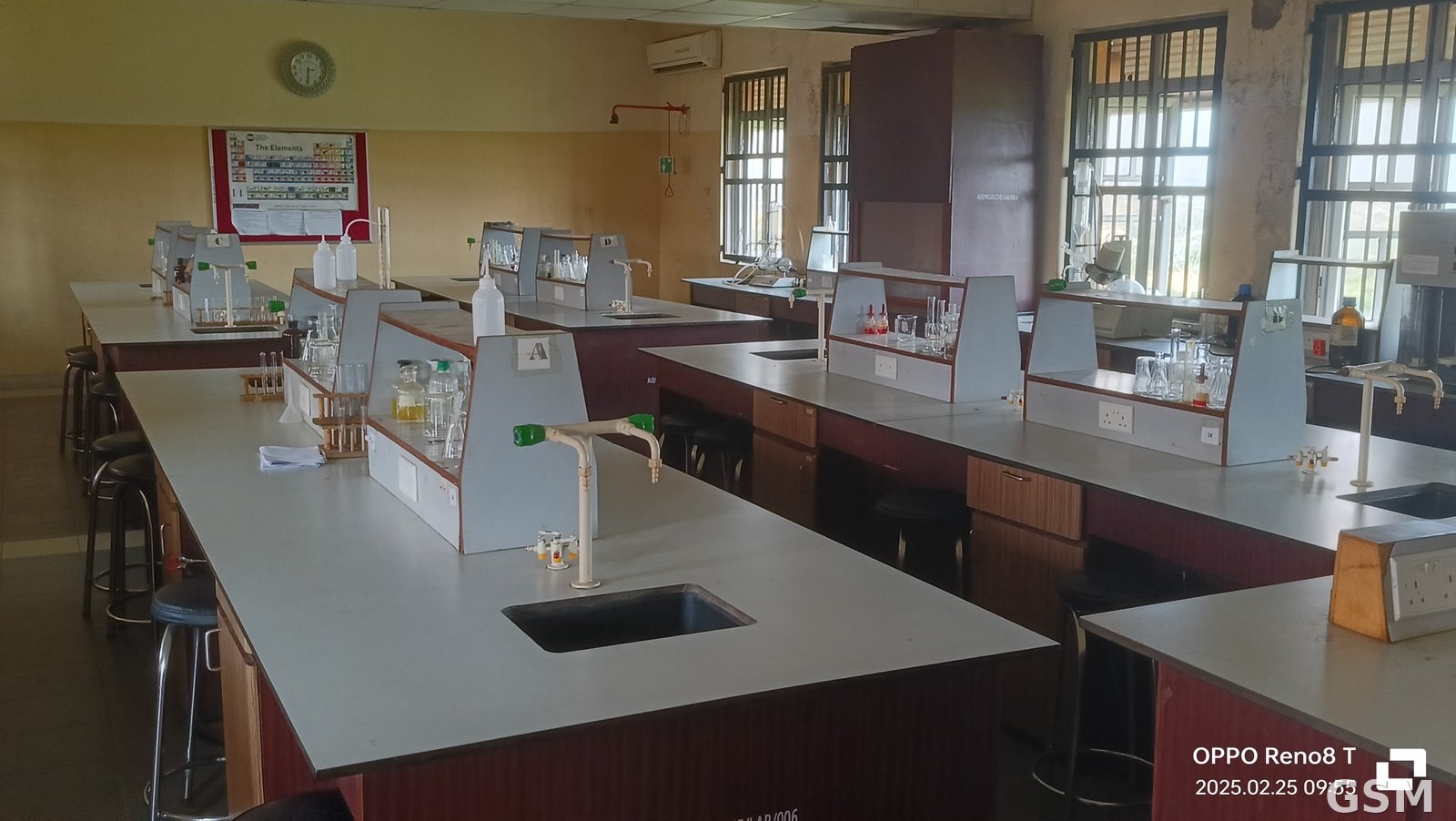
Photo: 图:图中是一间化学实验室的内部。图中是化学实验室的实物照片,为催化研究题材通用配图,非本研究实验室。Addjimedu,CC0,经Wikimedia Commons。 / Photo: file photo. Addjimedu, CC0, via Wikimedia Commons.