Archaeologists Uncover a Temple of About 2,000 Years Ago at Hedegård, Denmark: Roughly 49 by 53 Feet, Built Between 50 BC and AD 50, With a 6-Foot Clay Platform at Its Center
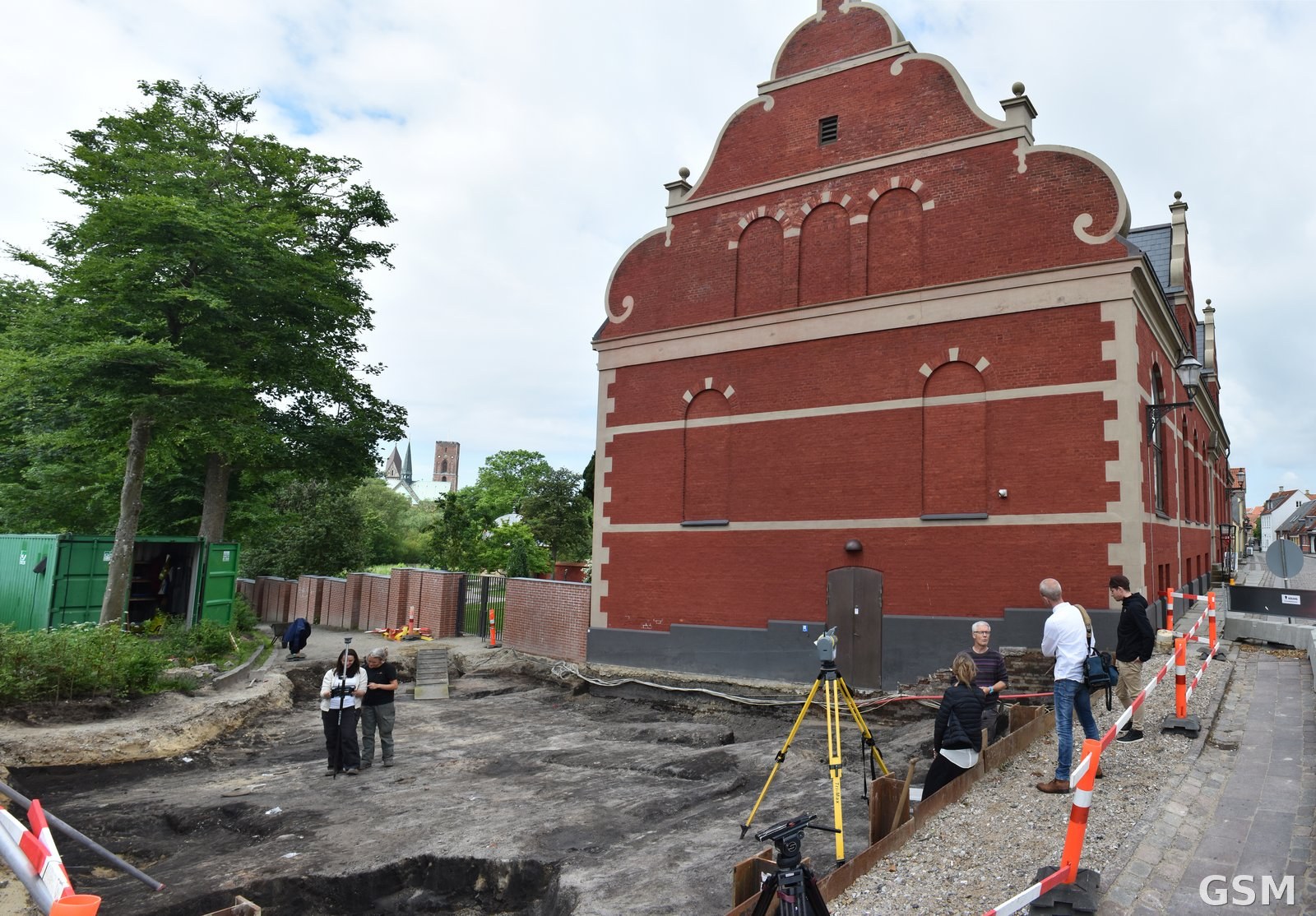
The Museum of Central Jutland has unveiled the discovery of a temple of about 2,000 years ago at Hedegård in Denmark. The latest excavation began last August. Hedegård, located near Ejstrupholm north of the Skjern River, has been identified by the museum as Denmark's largest settlement from the time around the birth of Christ.
Working with researchers from Museum Horsens and Moesgaard Museum, archaeologists found evidence of a vast fortified settlement that once served as a regional power center during the Iron Age. The settlement has yielded luxury goods, weapons from Celtic tribes, and prestige items from Roman workshops, and the evidence shows it flourished in the period leading up to the birth of Christ.
The temple measured roughly 49 by 53 feet and had once burned down. Beneath the burn layer, excavators found traces of two temple phases. At the exact center was a 6 by 6 foot raised clay platform. In the younger phase, an ornamented hearth was built there, partially covering the earlier hearth, and the younger temple was shifted about 30 inches north compared with the older one but was otherwise nearly identical. Plaster fragments suggest the walls were once painted white.
The museum said preliminary results suggest the temple functioned in the decades around the birth of Christ, appearing as a tall, almost square, tower-like building with an outer colonnade, with the hearth dominating the interior. The temple was carefully cleared before being deliberately burned, leaving few finds, but two exceptional glass beads were discovered, likely produced in the Middle East or Egypt.
Archaeology curator Martin Winther Olesen identified the temple as a pagan structure built between 50 BC and AD 50, noting that Christianity did not reach Scandinavia until almost 1,000 years later and that Hedegård had extensive foreign relations, including knowledge of Celtic and Roman architectural traditions. He said the site is strategically located on the most important road up through Jutland, with militarization in its weapons and fortification, a political elite, monumental construction, crafts and trade, and a center for the practice of the cult. Evidence suggests Hedegård was in use for only three generations before it disappeared.
Source: Danish archaeological team
Published by GSM · USA (original Chinese edition)
Photo: 图:图中是丹麦里伯一处古建筑遗址的考古发掘现场,为丹麦考古发掘的通用画面,非海泽高遗址现场。Thomas Dahlstrøm Nielsen,CC BY-SA 4.0,经Wikimedia Commons。 / Photo: file photo. Thomas Dahlstrøm Nielsen, CC BY-SA 4.0, via Wikimedia Commons.