IoT Sensor Fusion Monitors Lake Tana Water Quality: In 192 Observations, the Unscented Kalman Fusion Cut Chlorophyll-a Variance by 93.72 Percent, Scientific Reports Finds
Scientific Reports published a study by Haileyesus Amssaya, Fisseha Mekuria and Tesfa Tegegne on November 11, 2026, presenting an IoT-based multi-sensor data fusion framework for freshwater ecosystem monitoring, with Lake Tana in Ethiopia as the case study. The paper states that the rapid proliferation of invasive aquatic weeds in freshwater ecosystems necessitates robust long-term monitoring and efficient data acquisition techniques.
The framework enables real-time acquisition of key aquatic parameters such as pH, total nitrogen, total phosphorus and chlorophyll-a. The team used sensor fusion algorithms including weighted, Kalman, extended Kalman, unscented Kalman, Bayesian and particle filter methods to enhance the precision of the collected data. The experimental dataset consisted of 192 sensor observations collected over three months using multiple sensors deployed in Lake Tana.
Experimental results demonstrated that the unscented Kalman sensor fusion significantly enhanced measurement accuracy and stability, achieving improvements over the no-fusion approach in reducing variance of 81.46 percent for total phosphorus, 84.10 percent for total nitrogen and 93.72 percent for chlorophyll-a. The weighted and particle filters achieved a 96.24 percent improvement for pH.
The paper states that no funding was received for the research. It was received on May 30, 2026, accepted on November 9, 2026 and published on November 11, 2026. All figures follow the abstract of the paper.
Source: Scientific
Published by GSM · USA (original Chinese edition)
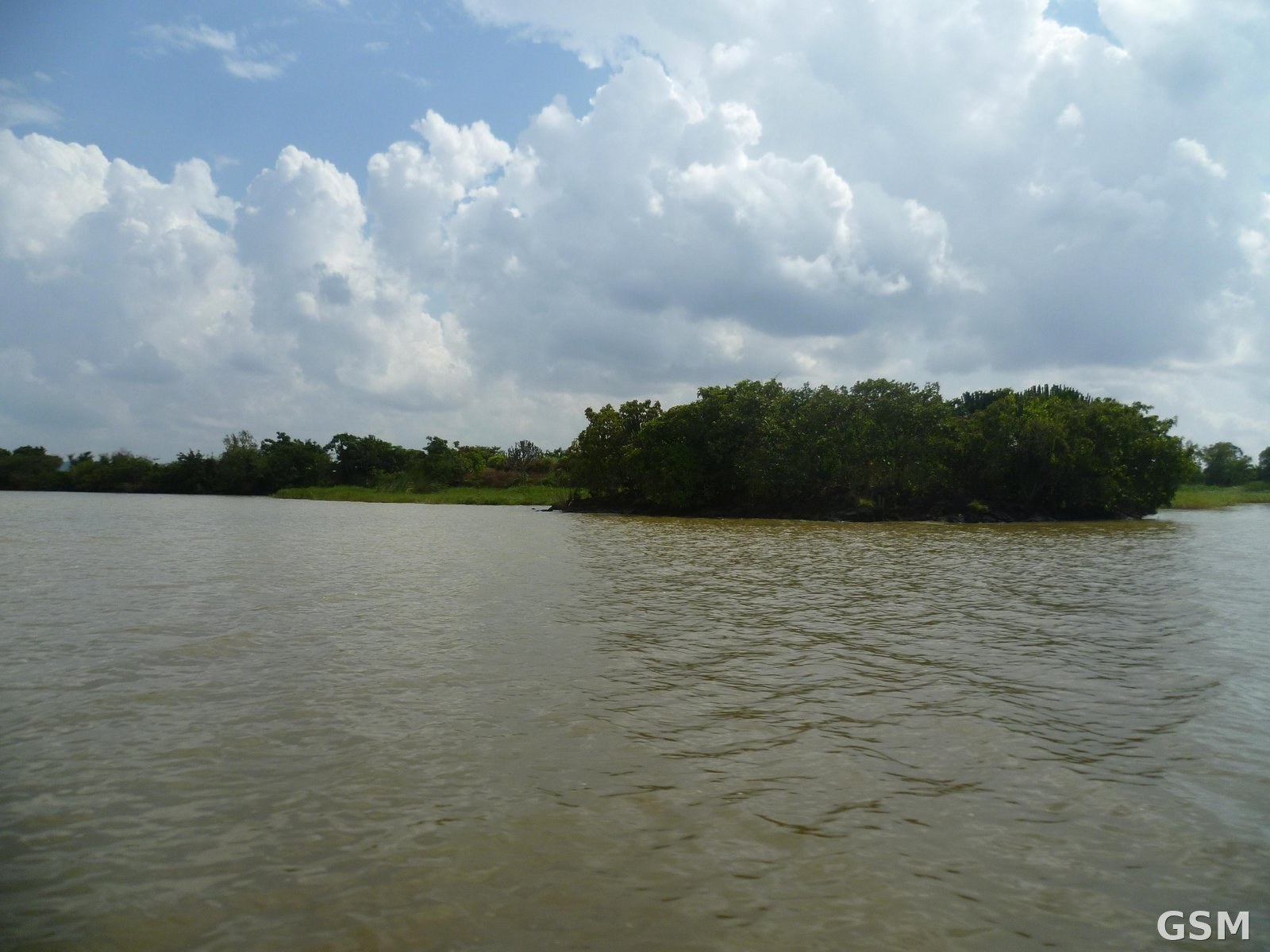
Photo: 图:图中是埃塞俄比亚塔纳湖的湖面与岸线。图中是塔纳湖本尊的实物照片,本研究案例湖泊即该湖。Radosław Botev,CC BY 3.0 pl,经Wikimedia Commons。 / Photo: file photo. Radosław Botev, CC BY 3.0 pl, via Wikimedia Commons.