Sweet Corn Extract Mineralizes Carbon Dioxide into Nanoscaled Hydrozincite: Single-Phase Crystals at Ambient Conditions with an Average Crystallite Size of 38.5 Nanometers and Diffuse Reflectance over 95 Percent, in Scientific Reports
A study published in Scientific Reports on November 11, 2026 demonstrated for the first time the bio-inspired mineralization of carbon dioxide to single-phase hydrozincite, Zn5(CO3)2(OH)6, using aqueous extracts of sweet corn, Zea mays saccharata. The extract served as a successful chelating and capping agent. The authors are Masibi and colleagues.
Under ambient circumstances, at room temperature and atmospheric pressure, the method produced single-phase crystalline hydrozincite with an average crystallite size of 38.5 nanometers. The authors state that, by including carbonate, the process provides a possible route for carbon dioxide capture.
Characterization by ultraviolet-visible diffuse reflectance, photoluminescence, Fourier-transform infrared spectroscopy, X-ray diffraction and scanning electron microscopy with energy-dispersive spectroscopy showed that the bio-engineered nanoscaled hydrozincite is a highly reflective material, with diffuse reflectance over 95 percent, and an effective blue luminescence with maximum emission at about 457.3 nanometers.
Electrochemical properties were investigated in 1 molar sodium hydroxide electrolyte using cyclic voltammetry and electrochemical impedance spectroscopy. The acknowledgments record funding from the National Research Foundation of South Africa under grant number PSTD240202203521. The paper carries DOI 10.1038/s41598-026-79911-2. All details follow the abstract of the Scientific Reports paper.
Source: Scientific
Published by GSM · USA (original Chinese edition)
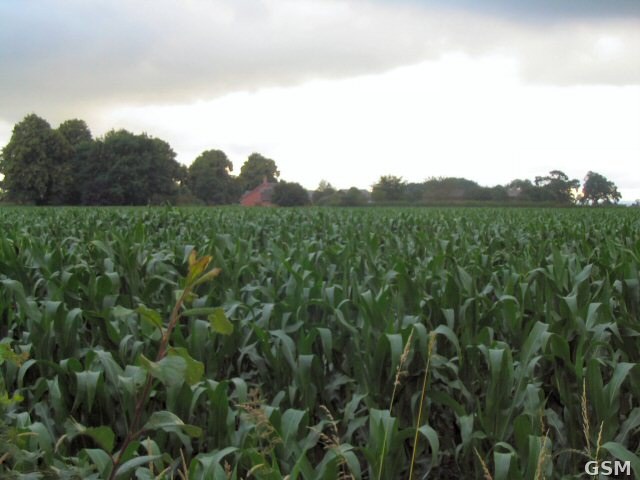
Photo: 图:一片甜玉米田,图中是甜玉米作物的实物照片,为甜玉米提取物研究题材通用配图,非研究样品。照片:David C Brown 摄,CC BY-SA 2.0,经 Wikimedia Commons。