
Sugar-Free Gum Can Kill a Dog: FDA Says Xylitol Can Drop a Dog's Blood Sugar Within 10 to 60 Minutes
The U.S. Food and Drug Administration's Center for Veterinary Medicine warns that ordinary sugar-free chewing gum, a minor calorie saving for people, can be deadly for dogs. The dangerous ingredient is xylitol, a sugar alcohol sweetener that also appears on labels as birch sugar or wood sugar. FDA says many of the dog poisonings reported to it in recent years involved chewing gum, and the most recent report it cites involved sugar-free "skinny" ice cream.
Xylitol hides in more products than most owners expect: sugar-free gum, mints and sugar-free candy, baked goods, cough syrup, children's and adult chewable vitamins, mouthwash, toothpaste, some peanut and nut butters, over-the-counter medicines, dietary supplements and sugar-free desserts. Bulk xylitol bought for home baking, and the cakes, muffins and pies made with it, can also end up in a dog's mouth.
The difference between people and dogs is insulin. In people, xylitol does not stimulate the pancreas to release insulin. In dogs it is absorbed into the bloodstream more quickly and can trigger a potent release of insulin, so blood sugar can fall rapidly and profoundly within 10 to 60 minutes of eating it, and untreated hypoglycemia can quickly be life-threatening. Signs start with vomiting, followed by decreased activity, weakness, staggering, incoordination, collapse and seizures. In some cases serious effects do not appear for up to 12 to 24 hours, so a dog that looks fine may still need to be hospitalized for monitoring. FDA notes that cats appear to be spared the worst of it, but ferrets have developed low blood sugar and seizures after eating xylitol products and their owners should be careful too.
Prevention comes down to three habits: check ingredient labels for xylitol, birch sugar or wood sugar, especially on anything advertised as sugar-free or low sugar, and keep those products well out of a dog's reach, remembering that some dogs are adept at counter surfing; use only pet toothpaste for pets, never human toothpaste; and check the label before giving a dog nut butter as a treat or as a way to hide a pill. If you think your dog has eaten a product containing xylitol, call your veterinarian, an emergency clinic or an animal poison control center right away rather than waiting for symptoms. (Source: U.S. Food and Drug Administration)
Source: U.S. Food and Drug Administration
Published by GSM · USA (original Chinese edition)
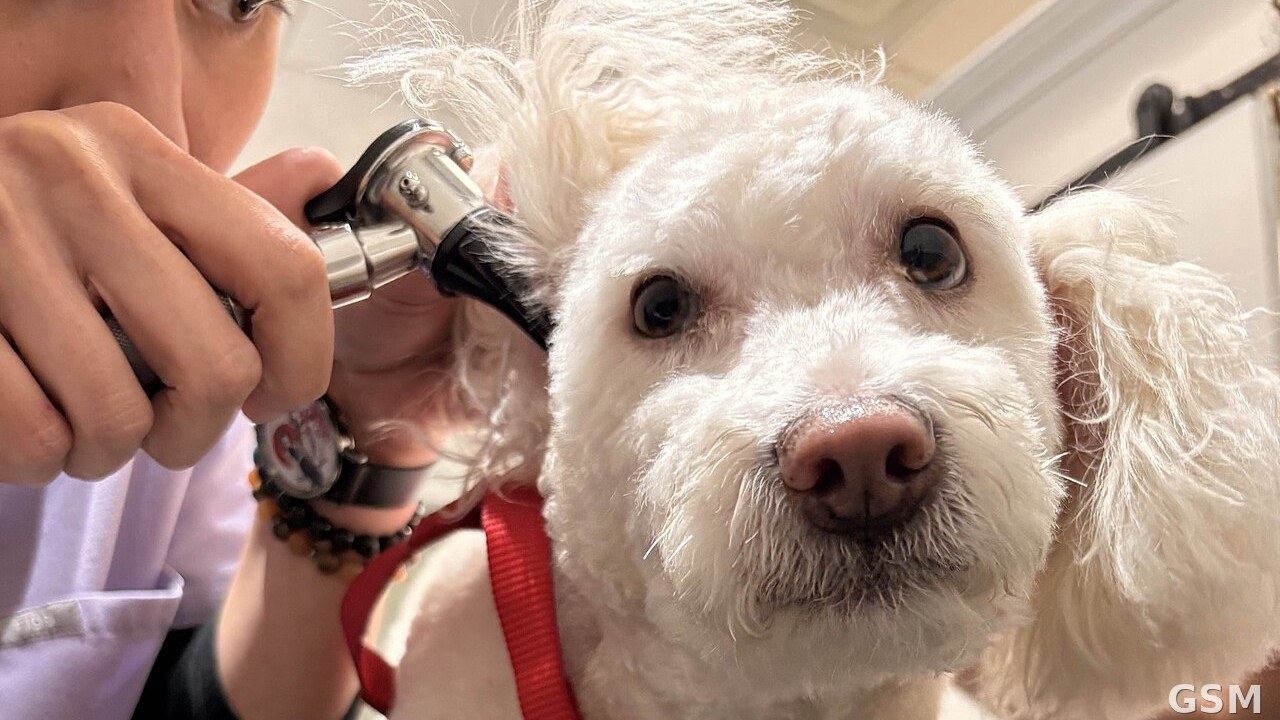
Photo: Wikimedia Commons 摄影,CC BY 4.0:兽医在诊所为一只白犬做检查(示意:犬只就医检查)
 Someone Is Paid to Be on a Nursing Home Resident's Side: Every State Has a Long-Term Care Ombudsman, and 监察专员热线 Reaches the Local Office2026-11-11
 There Is No Safe Level of Lead in a Child's Blood: CDC's Reference Value Is 3.5 Micrograms, and Medicaid Children Must Be Tested at Ages 1 and 22026-11-11