OPT Is How F-1 Students Work After Graduation: 12 Months per Degree Level, 24 More for STEM, a DSO Recommendation First and Then Form I-765 to USCIS
The Department of Homeland Security's Study in the States guidance describes Optional Practical Training (OPT) as the work permission that lets eligible F-1 students get real-world experience related to their field of study. Twelve months of regular OPT are available for each higher level of study, so a student may have 12 months for a bachelor's degree and another 12 months for a master's degree. OPT used before the program end date is pre-completion OPT and may be part-time or full-time; OPT used after the program end date is post-completion OPT and must be at least 20 hours per week or full-time.
The order of steps matters. A designated school official (DSO) first recommends OPT in SEVIS and issues an updated Form I-20; only then does the student apply to U.S. Citizenship and Immigration Services (USCIS) on Form I-765. The application must reach USCIS within 30 days of the DSO's recommendation: filing before the recommendation or after the 30-day window means denial and a lost fee. Once USCIS approves, it issues an Employment Authorization Document (EAD), and the student must not begin working before the start date printed on the EAD. One more line is firm: a student who has been authorized for 12 months or more of full-time Curricular Practical Training at the same level is no longer eligible for OPT.
STEM graduates have an additional path. Students who majored in a science, technology, engineering or mathematics degree designated by DHS can apply for a 24-month STEM OPT extension on top of regular OPT, up to 36 months in total, and students whose prospective employers filed a qualifying H-1B cap-subject petition may be covered by a cap-gap extension. While on OPT, students report employer information to their DSO and must report any change in name, address or employment within 10 days.
DHS published a proposed rule on OPT fees for public comment in October 2026; a proposal is not the current rule, and the process described here remains the one in force. Students planning to work in the United States after graduation should map the timeline with their school's international office a semester ahead. (Source: U.S. Department of Homeland Security)
Source: U.S. Department of Homeland Security
Published by GSM · USA (original Chinese edition)
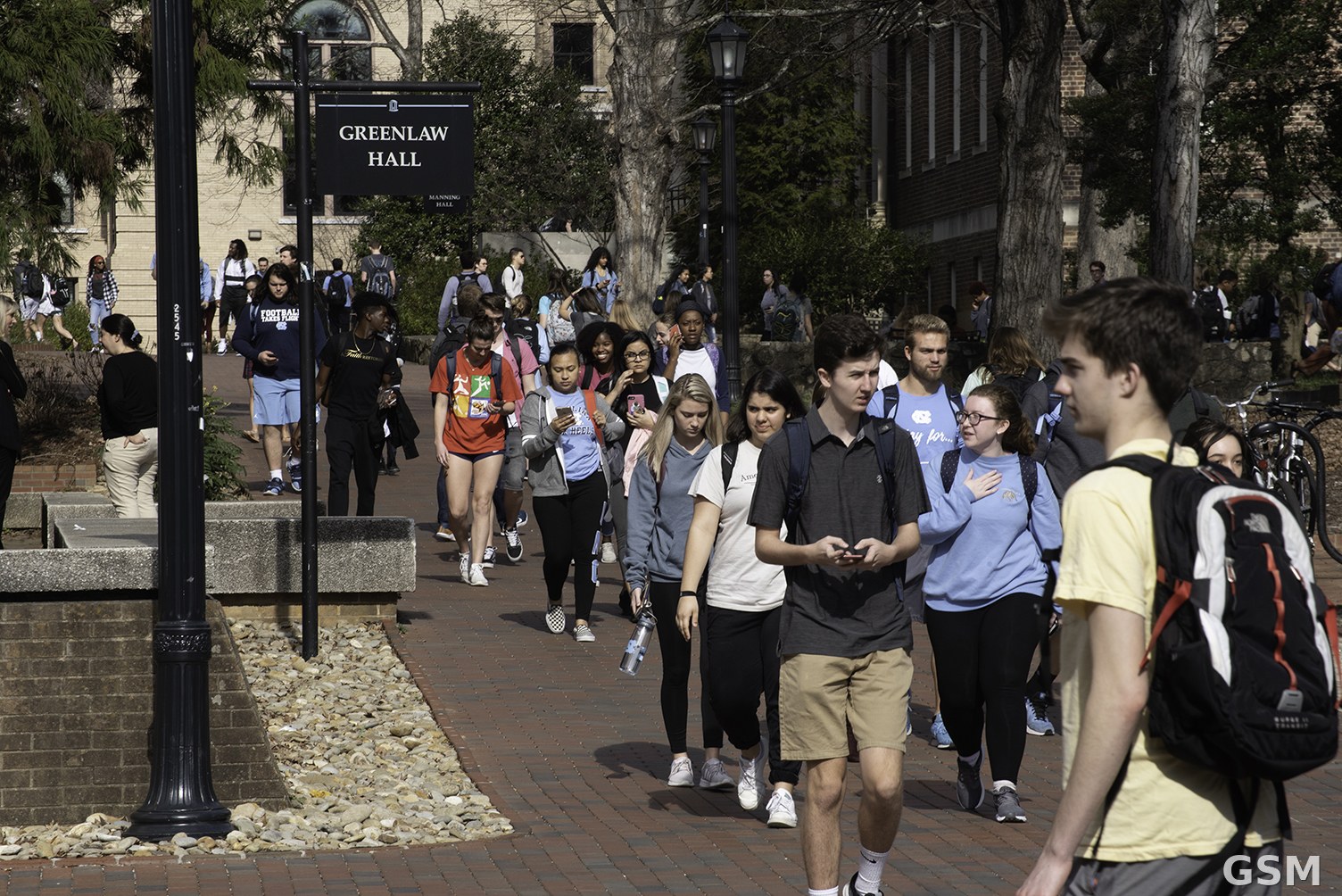
Photo: Wikimedia Commons 摄影,CC BY-SA 4.0:学生在北卡罗来纳大学教堂山分校校园里(示意:留学生校园生活)