Follow-Up: HHS Commits Up to $4.9 Million to Advance Ibogaine Research for PTSD
The U.S. Department of Health and Human Services (HHS) announced in Washington on November 12 that it will invest up to $4.9 million through the Advanced Research Projects Agency for Health (ARPA-H) to advance the development of ibogaine as a potential treatment for post-traumatic stress disorder (PTSD) and other serious mental illnesses, with Veterans a central focus. The department's National Institute of Mental Health (NIMH) also published a $20 million Notice of Funding Opportunity to build a research network studying rapid-acting psychotropic interventional drugs (RAPIDs), including ketamine, esketamine and psilocybin, with award recipients to be announced in the summer of 2027.
The ARPA-H commitment, up to $4.9 million over five years, funds the groundwork: preparation of Investigational New Drug Applications (INDs), securing clinical-grade ibogaine, and developing processes for sustainable domestic manufacturing. One selected team, led by the Mark Cuban Cost Plus Drug Company, PBC, will establish the regulatory, clinical, chemical and engineering foundation for a domestically manufactured, single-molecule ibogaine hydrochloride product. Separately, Beond, Inc. will deliver high-fidelity clinical data on ibogaine's safety, dosing, efficacy and durability. All awardees will open-source their research data.
HHS stressed that the awards fund regulatory and manufacturing groundwork only: they do not fund treatment of patients or human-subject research, and they do not authorize clinical trials or establish FDA approval. Future ARPA-H awards will evaluate ibogaine as a potential treatment for substance use disorders, including opioid use disorder, and the agency is pursuing multiple IND applications across more than one indication to raise the odds that at least one approach produces clear answers.
"Veterans kept their promise to this country. We must keep ours," Secretary Robert F. Kennedy Jr. said at the day's press conference. "Veterans have told us ibogaine changed their lives. Their experiences demand serious scientific investigation. We will pursue the evidence, confront the risks and put affordability at the center of this work."
VA Secretary Doug Collins said Veterans deserve effective treatments and clear answers about their benefits and risks, and that the VA looks forward to working with HHS to explore the possibilities of ibogaine and prepare its clinicians to deliver new treatments if they earn FDA approval. Al Bugazia, M.D., Senior Advisor for Special Projects at ARPA-H, who is leading the effort, said reports of successful ibogaine treatments are too promising to ignore, and that the goal is to deliver results in years, not decades.
HHS also flagged that ibogaine carries serious safety risks, including potentially life-threatening heart rhythm problems, and that future clinical studies must address participant screening, cardiac monitoring and independent safety oversight. If development succeeds and the medicine earns FDA approval, the department's goal is to make it available at the cost of production plus a fair margin, and HHS committed to making research findings public whether they show benefit, no benefit or harm.
The announcement advances President Trump's April directive to accelerate research into promising psychedelic treatments and builds on the HHS-VA partnership to expand clinical research, share evidence and prepare the health care workforce. HHS noted that Veterans in crisis, and anyone concerned about a veteran, can call 988 and press 1 to reach the Veterans Crisis Line.
Related: HHS Secretary Kennedy Holds Press Conference With Secretary Collins
(Source: U.S. Department of Health and Human Services)
Source: U.S. Department of Health and Human Services
Published by GSM · USA (original Chinese edition)
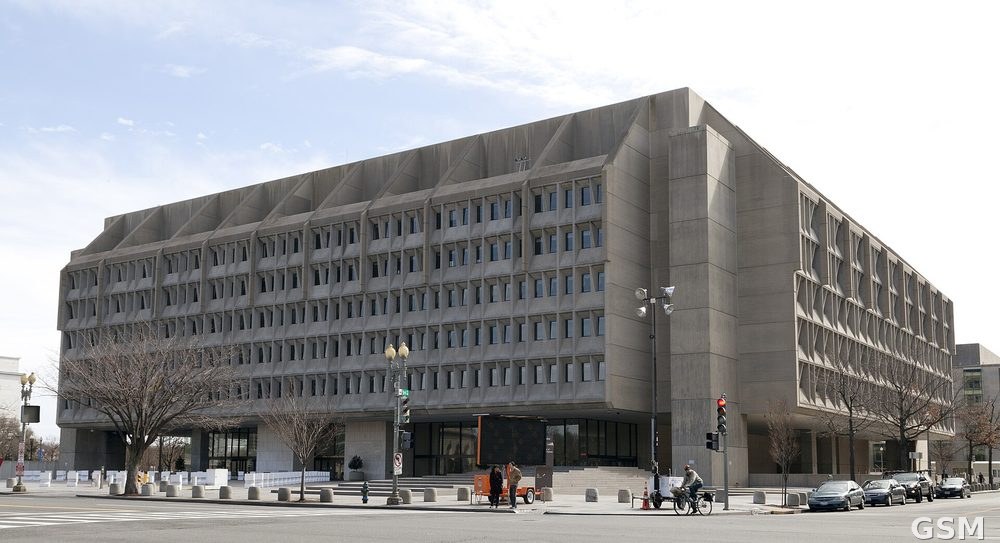
Photo: 图:位于华盛顿的美国卫生与公众服务部总部 Hubert H. Humphrey 大楼。画面:GSM联邦固定图库,美国卫生与公众服务部总部大楼照片。 / Photo: The Hubert H. Humphrey Building in Washington, headquarters of the U.S. Department of Health and Human Services. Image: GSM federal asset pack, headquarters building photograph.