SEC Chief Economist on the Economics of Attention: For Boards, Attention May Be the Scarcest Resource of All
Joshua White, Chief Economist of the U.S. Securities and Exchange Commission and Director of its Division of Economic and Risk Analysis, delivered a speech titled "The Economics of Attention" to the Nashville Chapter of the National Association of Corporate Directors (NACD) on November 11. Regulation and super intelligence (SI) may seem very different, he said, but both can change how companies use scarce resources, what things cost, how people spend their time, and ultimately where capital and attention go. For a board, he said, attention may be the scarcest resource of all. White noted that his remarks are provided in his official capacity as Chief Economist but do not necessarily reflect the views of the Commission, the Commissioners, or other members of the staff.
Citing NACD's 2026 Governance Outlook survey, White said directors ranked shifting economic conditions, super intelligence and regulatory requirements as the three trends they expect to have the greatest impact on their companies over the next year. A day still has only 24 hours, he said, and every hour spent on one thing is an hour that cannot be spent on something else. Economists call that opportunity cost, and the more things competing for a board's attention, the more that cost matters.
He illustrated the tradeoff with the JOBS Act of 2012, which created an on-ramp for emerging growth companies entering the public markets, with scaled disclosure requirements and an exemption from auditor attestation of internal controls under Section 404(b) of Sarbanes-Oxley. Research found that biotech IPO activity increased after the Act, that companies came public earlier in the FDA approval process and were more likely to pursue treatments for cancer and rare diseases, and that after going public they produced more patents, conducted more clinical trials, staffed more laboratories, saw their drug candidates reach approval milestones more often, and failed at lower rates, with no evidence that financial reporting quality declined. Biotech executives surveyed said they invested the savings in research and development.
White said every significant rule the Commission considers comes with an economic analysis, and that alongside investor protection, Congress has directed the SEC to consider whether its rules promote efficiency, competition and capital formation. Compliance requirements consume money, people, management time and board attention; if simplifying or eliminating a requirement frees resources for a higher-value use, that is a practical efficiency gain. But deregulation, he stressed, is subject to the same economic discipline: if removing a requirement reduces investor protection, eliminates information investors value, or forces firms to unwind systems they have already built, those effects matter too.
On super intelligence, White said NACD's survey found 76 percent of directors expect SI to factor into their companies' growth strategies, while most companies so far report only slight or moderate success in achieving operational efficiencies from those investments. SI can lower the cost of processing information, he said, but reliable information still has to be collected, verified and reconciled, and the materiality principle keeps disclosure focused on information that matters to investors. Boards, he suggested, should ask two questions: whether SI is allowing the company to do necessary work more efficiently, and what the company is doing with the time and resources it gets back.
Source: U.S. Securities and Exchange Commission
Published by GSM · USA (original Chinese edition)
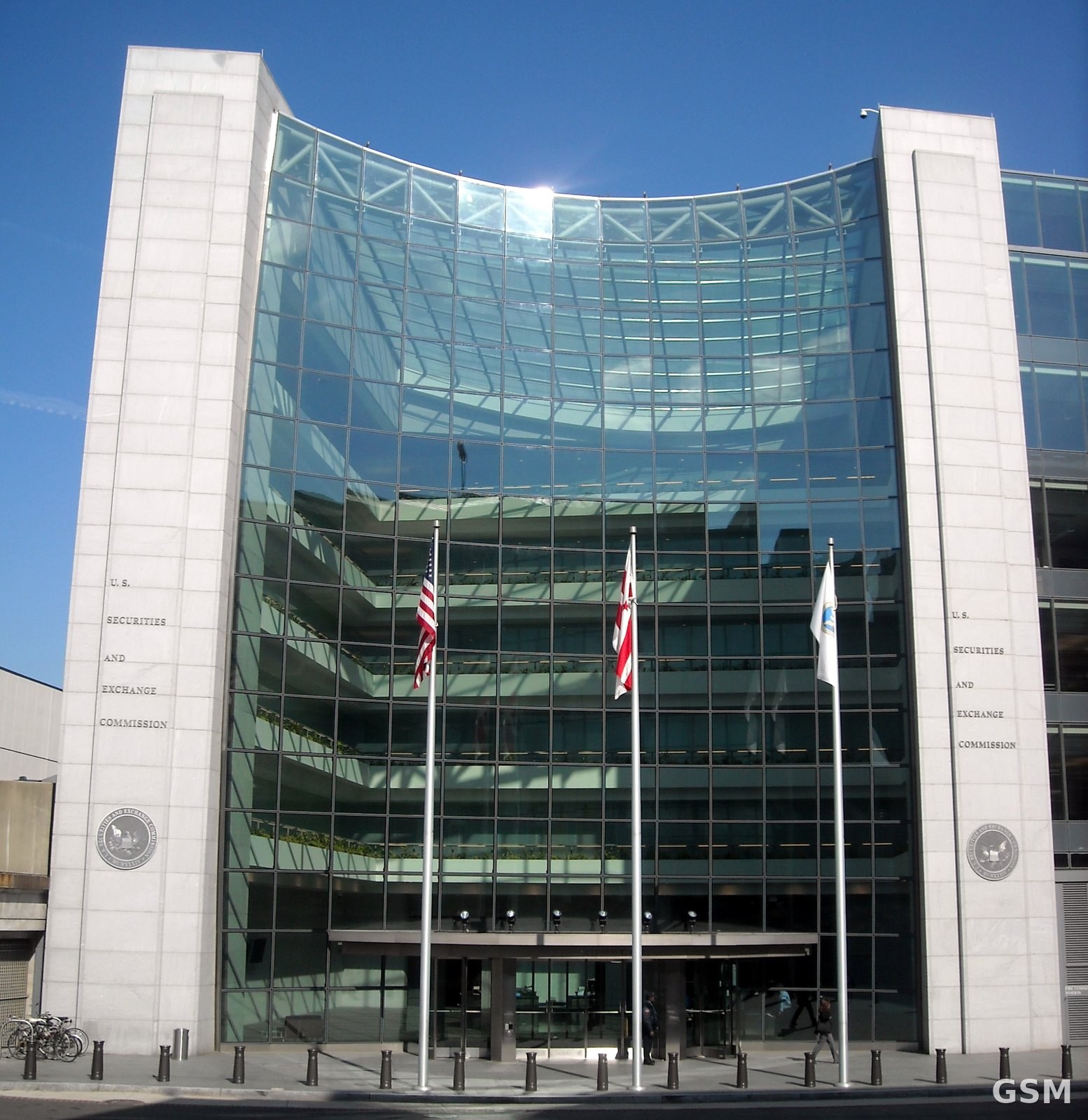
Photo: 图:美国证券交易委员会位于华盛顿的总部大楼。GSM联邦固定图库。 / Photo: U.S. Securities and Exchange Commission headquarters in Washington, D.C. GSM federal asset library.