
Silica-Modified Bacterial Nanocellulose Removes 98.2 Percent of Chemical Oxygen Demand From Petrochemical Wastewater: The Optimum Was pH 6.5, 250 Milligrams Per Litre and 30 Degrees Celsius in Scientific Reports, Published November 13
Scientific Reports published a study of silica-modified bacterial nanocellulose for treating petrochemical wastewater on November 13, 2026. The paper, by Zamani, Rastgar and Hedayati, carries digital object identifier 10.1038/s41598-026-79855-7, was received on June 22, 2026 and accepted on November 3, 2026. The study notes that petrochemical wastewater contains high concentrations of refractory organic pollutants, resulting in elevated chemical oxygen demand and serious environmental concerns. The team synthesized a silica-modified bacterial nanocellulose nanocomposite by the sol-gel method and evaluated it for chemical oxygen demand removal from petrochemical wastewater. Under the optimized conditions of pH 6.5, an adsorbent dosage of 250 milligrams per litre and a temperature of 30 degrees Celsius, the nanocomposite achieved a chemical oxygen demand removal efficiency of 98.2 percent. The paper qualifies the result in the same passage: the performance showed reasonable correspondence with experimental trends, although quantitative model predictions should be interpreted cautiously due to the significant lack of fit.
(Source: Scientific)
Source: Scientific
Published by GSM · USA (original Chinese edition)
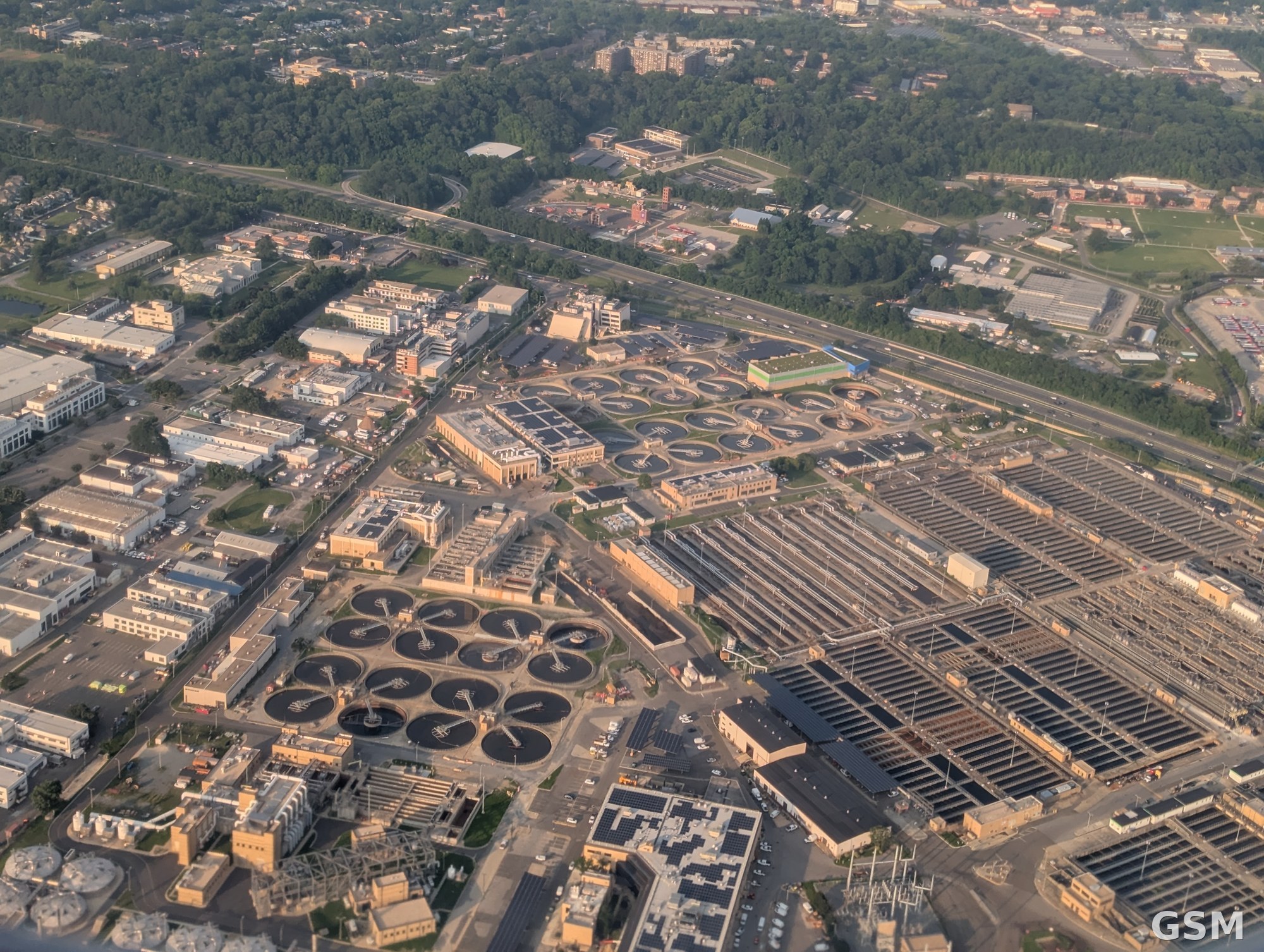
Photo: 图:污水处理厂的航拍全景。Sdkb,CC BY-SA 4.0,经 Wikimedia Commons。 / Photo: Sdkb, CC BY-SA 4.0, via Wikimedia Commons.
 Silicon Carbide Nanomaterials in Disc Brake Pads: 0.5% Loading Raised Average Brake Force by Up to 19%, With Fade Resistance Up to 130°C2026-11-14
 PEBA-PEMA Blend Membrane Separates 1-Butanol With Flux of 0.19 kg/m2/h and Separation Factor of 15.5 at 5 Percent PEMA, Published in Scientific Reports on November 132026-11-14