NOAA Releases 2025 Strandings Report: 8,058 Confirmed Marine Mammal Strandings in the U.S., Above the Long-Term Average
NOAA Fisheries on November 13 released the 2025 Report of Marine Mammal Strandings in the United States. In 2025, there were a total of 8,058 confirmed cetacean (whale, dolphin, and porpoise) and pinniped (seal, fur seal, and sea lion) strandings in the United States, higher than the 2006–2024 average of 6,422. The report is the seventh installment in a series of annual stranding reports compiled by the Marine Mammal Health and Stranding Response Program.
A significant harmful algal bloom off Southern California in early 2025 resulted in elevated strandings of sick and dead marine mammals, primarily California sea lions and common dolphins, the report said.
Under the program's definition, a marine mammal is considered stranded if it is dead on a beach or floating in the water; alive on a beach but unable to return to the water; alive on a beach and in apparent need of medical attention; or alive in the water and unable to return to its natural habitat without assistance. Not all pinnipeds on a beach are stranded, as seals, fur seals, and sea lions spend time on beaches to rest, molt, and breed.
Common causes of strandings identified through examinations and necropsies include infectious diseases from parasites, bacteria, fungi, and viruses; non-infectious diseases including cancer; harmful algal blooms and associated biotoxins; injuries from vessel collisions, entanglement in active and derelict fishing gear, and ingestion of marine debris or other human interactions; malnutrition; pollution exposure; separation of pups and calves from their mothers; and human disturbance or harassment. Unusual weather or oceanographic events such as hurricanes, tropical storms, and marine heatwaves may also be related. In many cases the causes remain undetermined, especially when carcasses are found in advanced states of decomposition.
Stranding response is carried out by the U.S. Marine Mammal Stranding Response Network, authorized under the Marine Mammal Protection Act. Responding to strandings helps minimize public health and safety risks, support animal welfare, and gather data for science, management decisions, and law enforcement investigations. NOAA Fisheries asks the public to keep a safe and legal distance from stranded marine mammals and to report them to the regional 24/7 hotline with the date, time, location, number of animals, their condition, and species if known; only trained and authorized responders should approach, touch, or handle a stranded animal.
(Source: National Oceanic and Atmospheric Administration)
Source: National Oceanic and Atmospheric Administration
Published by GSM · USA (original Chinese edition)
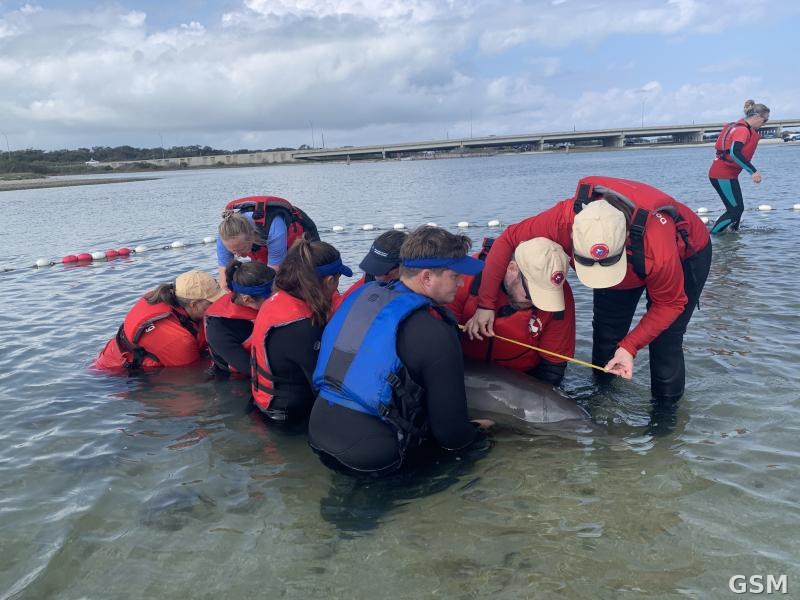
Photo: 搁浅宽吻海豚在德州 Rockport 浅滩获救援(Texas Marine Mammal Stranding Network 摄,NOAA Fisheries 官方发布)